For most jewellery retailers, the daily rhythm of business revolves around what we might consider ‘contemporary concerns’. Humming beneath the surface of that modern machinery, both literal and conceptual, lies something remarkably ancient.
Indeed, day-to-day, most jewellers might find themselves thinking about fluctuating precious metal prices, jewellery trends, the impact of lab-created diamonds on the market, and stresses about staffing and marketing – that kind of thing.
With that said, beyond jewellers, few retailers can claim a direct connection to the earliest chapters of human civilisation. Fewer still can claim to practice techniques that, despite today, involve advanced technology, may even be innately recognisable to people who lived as long as 5,000 years ago.
Casting and refining remain foundational processes at the very heart of jewellery manufacturing, despite being among humanity’s oldest technological achievements.
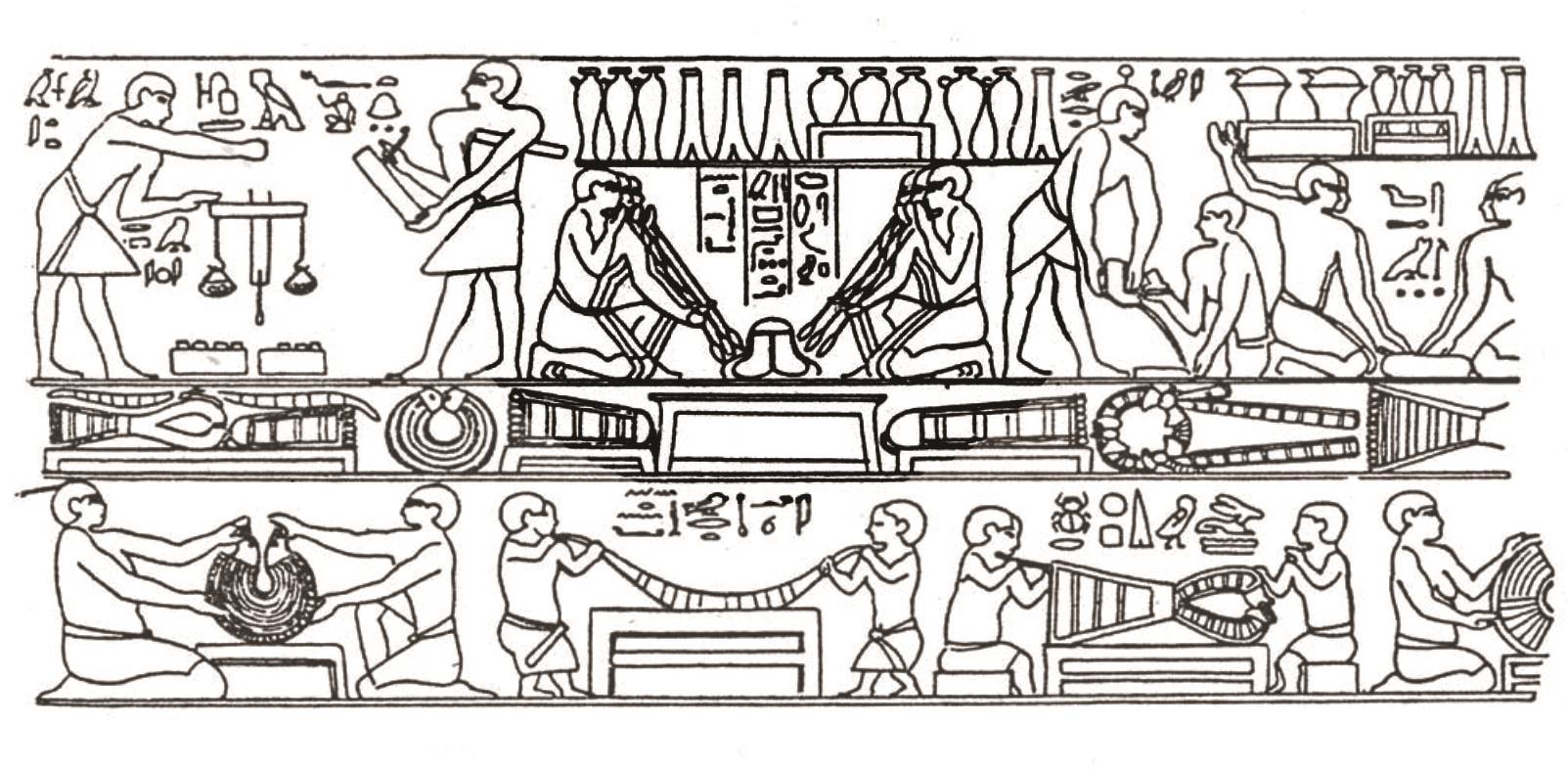 |
| A relief from the tomb of Mereruka at Saqqara, c. 2300 BCE, documents goldsmithing in extraordinary detail. Across its registers, scribes weigh metal, craftsmen work blowpipes over charcoal furnaces, and molten gold is cast and beaten into sheet. Finished ornaments fill the centre of the relief, while the lower register shows workmen crafting elaborate jewellery — evidence of a highly organised and specialised trade thousands of years in the making. | Source: T. G. H. James, The British Museum |
While today’s workshops rely heavily on computers, software, and precision equipment to function, the principles remain very much the same. Melt, shape, purify, and repeat.
For jewellery retailers, this continuity represents more than just mere manufacturing history. It’s something that makes jewellery distinct from a long line of other consumer categories.
So many areas of manufacturing and retail – whether it be electronics, furniture, clothing, or homewares – have evolved rapidly over time, becoming increasingly disposable and less connected to their origins.
While shades of this may be applicable to this trade, the same cannot be said for jewellery as a whole. And underpinning all of it are traditions that can be traced back to the earliest moments of human history.
The First Jewellers
Long before humans learned to work metal, they adorned themselves with shells, bone, teeth, beads, and carved stone. Archaeological discoveries suggest humans were creating personal ornaments at least 100,000 years ago.
Researchers suggest that these crude adornments were used to communicate identity, status, spirituality, and belonging – just as jewellery is today. Jewellery, in other words, existed before civilisation itself. Ahiad Ovadia of Israel University explained the phenomenon rather poetically in an interview with the Jerusalem Post.
“Something in our human mind is attracted to those smooth round objects like shells and stones,” said Ovadia.
“It is not by coincidence that the first ornaments were made from shells. Every kid collects those shells and brings them home to play with. It is really amazing to see this through human history.
“Jewellery is saying something about yourself; you are extending yourself so people can see. It is amazing to see that that already started to happen 120,000 years ago. This indicates self-awareness, which is a big leap forward in the cognitive ability of humans to identify themselves as unique individuals within a group.
“As far as we know, this is an attribute unique to humans.”
The introduction of what we today consider precious metals transformed this early landscape. Gold became especially important because, unlike iron or copper ores, it could often be found in nature in metallic form.
Early humans did not initially need complex smelting technologies to use it; native gold could be hammered, shaped, and polished
using relatively simple tools.
Some of the oldest known gold artefacts, including those discovered at the Varna Necropolis in modern-day Bulgaria and
dated to around 4600–4200 BCE, reveal that goldsmithing had already become highly sophisticated more than six millennia ago.
Even at this early stage, jewellery is believed to have carried immense social significance. Gold objects were associated with power, ritual, prestige, and wealth. In many respects, that relationship remains unchanged today.
For modern jewellery retailers, there is something striking about this continuity. A contemporary customer purchasing a gold bangle, signet ring, or pendant may be engaging in behaviours fundamentally similar to those of ancient civilisations separated from us by thousands of years.
One discovery changes everything
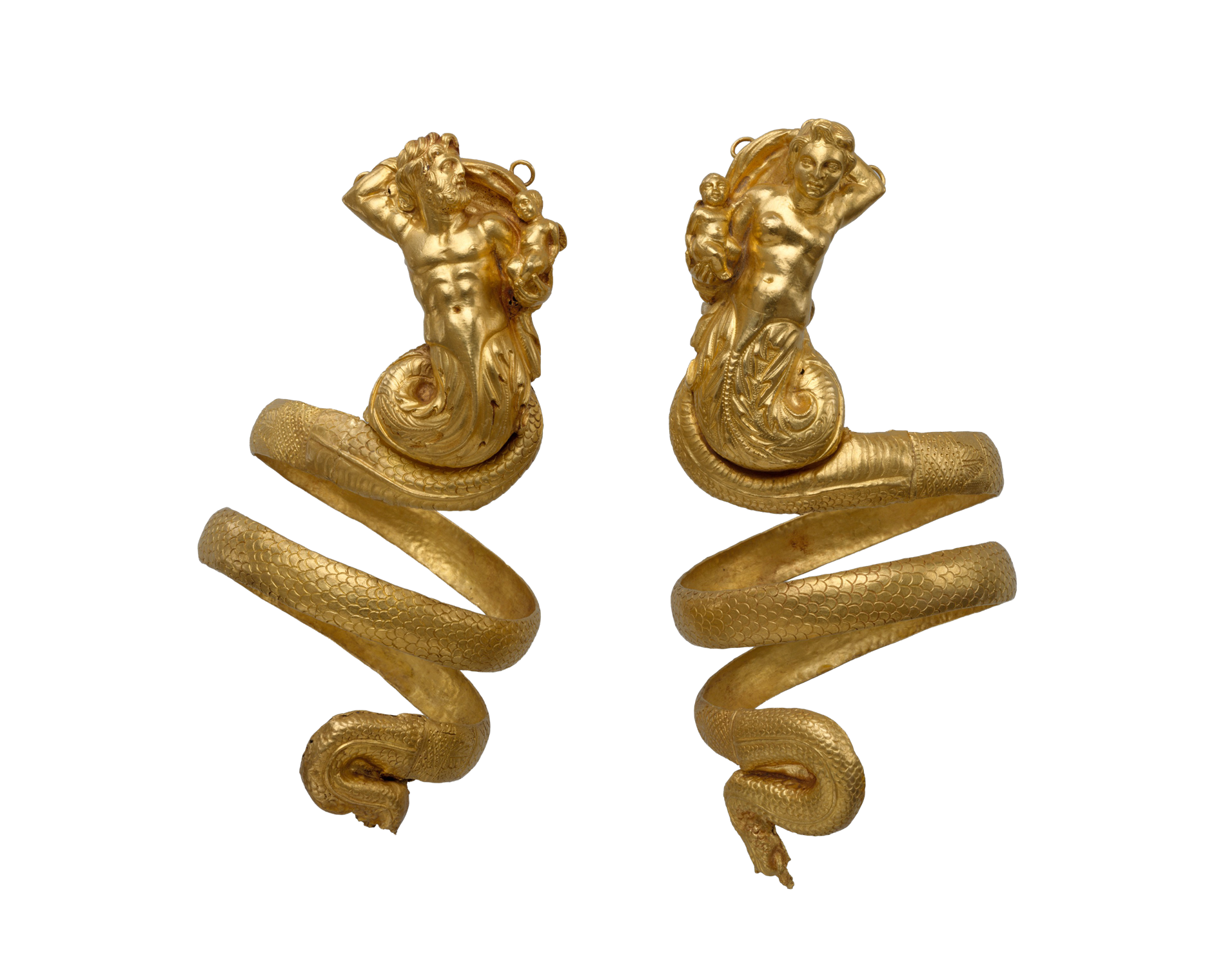 |
| Using the lost-wax casting method, these Hellenic gold armbands were made around 200 BCE. The serpentine armbands depict paired tritons cradling winged Eros figures and were so heavy that they required stitching directly to garments. | Source: The Met |
One of the most important technological breakthroughs in jewellery history was the development of lost-wax casting, also known
in French as cire perdue.
Archaeological evidence suggests versions of the process were being used as early as 3700 BCE in the Middle East. The method
was revolutionary because it allowed craftspeople to create intricate metal objects with previously impossible detail and, perhaps more importantly, consistency.
The process itself is elegantly simple.
An object is first sculpted in wax. The wax model is then encased in clay or investment material. When heated, the wax melts away, leaving a cavity into which molten metal can be poured. Once cooled, the mould is broken apart to reveal the finished object.
“If jewellery is a form of expression, then lost wax casting is the language behind that expression. It allows imagination, belief, memory, identity, and emotion to be solidified into metal forms that can be worn, treasured, and passed down,” a report from FlashForge explains.
“Lost wax casting was not ‘invented’ by any single civilisation. Instead, it appeared almost simultaneously across different cultures.
“This tells us something profound: Before humans mastered systematic metalworking, they had already understood that wax can be shaped, fire can transform it, and metal can remember it.
“From that moment onward, humanity gained the ability to preserve life and thought in lasting form.”
Modern jewellery casting still follows this same essential process. Of course, today’s casting and refining environments use far more advanced equipment, backed by a rigorous scientific understanding; however, the principles remain the same.
It could even be argued that an ancient goldsmith, transported into a workshop today, might, to some degree, even understand what is unfolding. That continuity is extraordinary. So many industries bear little resemblance to their historical origins.
Jewellery, by contrast, continues to rely on processes developed thousands of years ago because they remain highly effective.
Casting enabled ancient artisans to produce more complex rings, amulets, pendants, and ceremonial objects than ever before. It positioned jewellery at the centre of many cultures. It also helped establish jewellery manufacturing as a specialised trade.
As civilisations expanded across Mesopotamia, Egypt, the Indus Valley, Greece, Rome, and later Asia and Africa, casting techniques evolved alongside them. Jewellery became increasingly sophisticated, both technically and artistically.
Importantly, these advancements were not isolated developments. They travelled through trade routes, conquests, migration, and cultural exchange.
In many ways, jewellery manufacturing might be considered among the earliest examples of global technological transfer.
Refining: The Invisible Backbone
In many cases, it seems likely that the challenge facing early metalworkers was consistency. Naturally occurring gold and silver often contained impurities or varying compositions.
To create dependable jewellery alloys and facilitate trade, metals needed to be purified.
Ancient Egyptians are believed to have pioneered some of the earliest refining techniques around 3000 BCE, using methods such as salt cementation and fire refining to separate gold from other metals.
This was a transformative development. Refining allowed craftspeople to exert greater control over factors such as purity, colour, hardness, and workability. It enabled the standardisation of value and laid the foundations for systems of trade, taxation, and wealth storage.
In essence, refining turned precious metals into reliable commercial commodities. For today’s jewellery retailers, refining often remains somewhat invisible compared with diamonds, colour gemstones, branding, or design. Yet it continues to underpin the entire industry.
Every manufacturing workshop generates scrap. Every bench produces filings, polishing dust, offcuts, sweeps, and unused alloy. Every repair job contributes recoverable material.
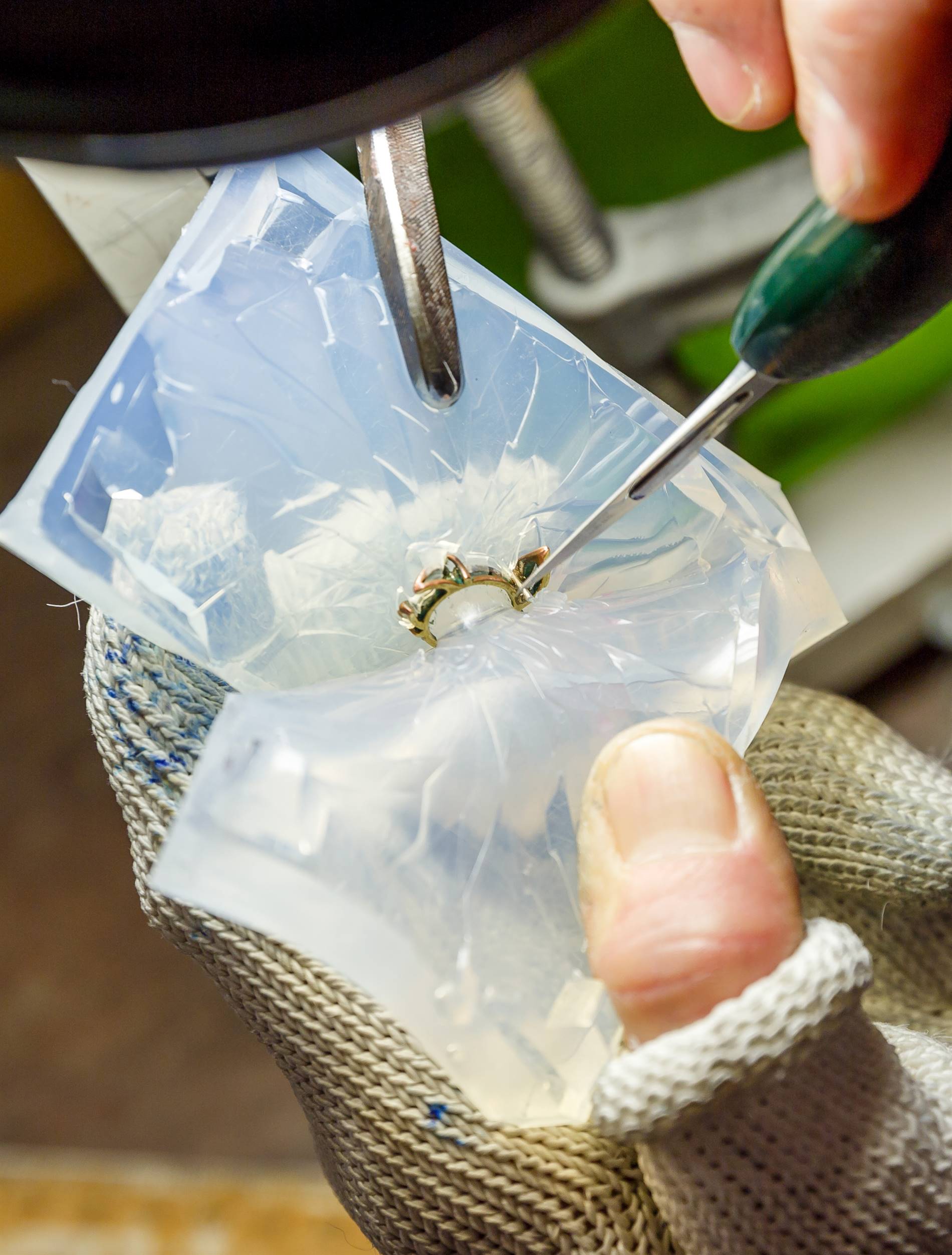
The modern refining industry transforms this waste back into usable precious metal. This circularity is one of the jewellery industry’s defining characteristics. Unlike many retail sectors, jewellery materials are rarely truly discarded.
Indeed, gold mined thousands of years ago may have taken countless forms. At one stage, it may have been coins, ceremonial objects, antique jewellery, bullion, or wedding bands.
 |
| Morris & Watson |
Eventually, it will be refined and return to the market once more.
This, among other factors, is why the term ‘recycled gold’ is an increasingly contentious matter in the jewellery industry. Recycling innately involves waste, and gold is never wasted.
It has always been valuable, a point succinctly made by Assheton Carter, CEO of TDi Sustainability and The Impact Facility, in a recent interview with the New York Times.
“There are two sources of gold,” he explained.
“There’s freshly mined gold, and then there’s recycled gold. But the important thing to note is that no gold is wasted. No one in their right mind is going to throw gold away. So recycled gold isn’t really any better.
“It’s not like getting recycled paper where the rest goes into the landfill. It’s just gold, and gold just goes round and round.”
Indeed, compared with jewellery, very few consumer products can claim such permanence.
Ancient Craft, Modern Technology
Throughout history, advances in jewellery manufacturing have mirrored broader advances in science, engineering, and industrial capability.
The Greeks and Romans refined alloying techniques and organised workshop production. Medieval European goldsmiths documented casting methods and established hallmarking systems. Renaissance artisans elevated jewellery manufacturing into an art form.
Naturally, industrialisation changed everything. The nineteenth century introduced mechanised production, precision tooling, and eventually electrolytic refining, which dramatically improved precious metal purity standards.
The twentieth century accelerated this evolution further. Technologies developed during wartime manufacturing, particularly investment casting techniques used for industrial components, eventually found their way into jewellery production.
Today, digital technologies have transformed the workflow yet again. Jewellery retailers increasingly operate within a manufacturing ecosystem built around CAD design and 3D printing, all of which are supported by advanced alloy science.
Despite all of this innovation, the industry’s core principles remain ancient.
That duality is part of what makes jewellery unique. Few industries combine cutting-edge technology with traditions that stretch back to the dawn of civilisation.
For independent jewellers and retail businesses, this history is more than an interesting narrative. It is a powerful point of differentiation.
Modern retail is increasingly dominated by disposability. Fast fashion, consumer electronics, and trend-driven products are often designed for replacement rather than permanence.
Jewellery can and does operate differently. Customers do not simply purchase jewellery because they need an object. They purchase meaning.
Engagement rings commemorate commitment. Wedding bands symbolise continuity. Heirloom pieces preserve family memory. Anniversary gifts mark milestones. Religious jewellery carries spiritual significance. Custom pieces celebrate identity and personal history.
The emotional durability of jewellery mirrors the physical durability of precious metals themselves. This is where the stories of casting and refining become commercially relevant.
When retailers speak about craftsmanship, heritage, or tradition, they are not engaging in marketing hyperbole. They are referring to an unbroken lineage of human behaviour and technical practice spanning thousands of years.
A gold ring sold today exists within a continuum that stretches back to the earliest metalworkers of ancient Egypt and Mesopotamia. That perspective carries weight in an era dominated by synthetic experiences and short cycles.
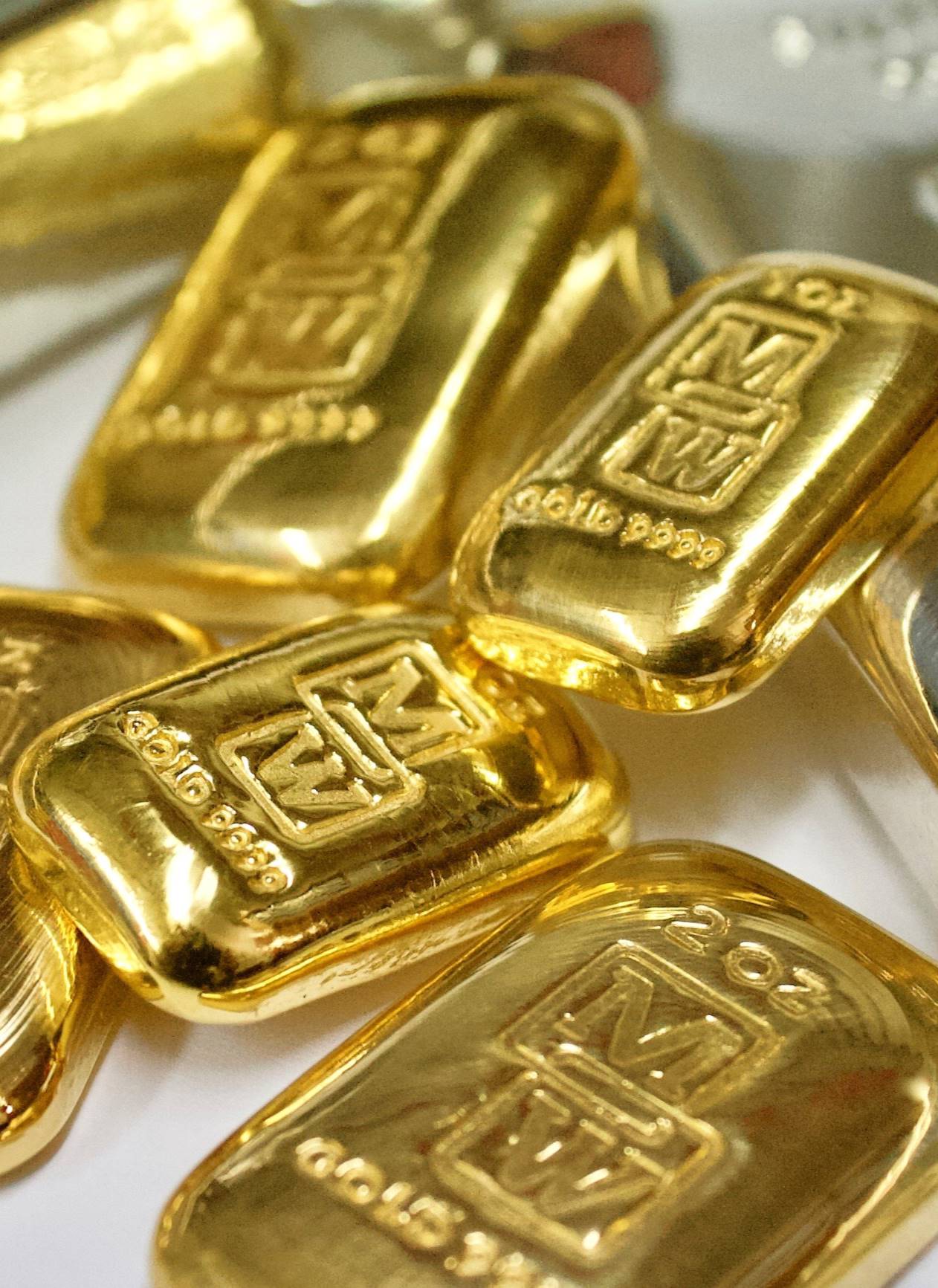
Historically, precious metals were almost always recycled. Ancient coins were melted down into jewellery. Broken ornaments became new objects. Scrap was continually refined and reused. In many respects, the industry has always operated as a circular system.
Today’s refiners perform this role on a vastly more sophisticated scale, recovering valuable metals from manufacturing waste, obsolete jewellery, industrial products, and secondary sources.
The point remains the same: Unlike disposable goods, jewellery is designed to survive generations.
 |
| Morris & Watson |
Continuing the Tradition
Perhaps the most remarkable aspect of casting and refining is not how much they have changed, but how much they have endured.
The tools may look different. Workshops may rely on electricity and computers to function; however, the essential act remains the same. Metal is heated, transformed, purified, shaped, and passed forward.
That continuity gives the jewellery industry a rare cultural depth. Retail jewellers are not simply selling products; they are participating in one of humanity’s oldest creative and commercial traditions.
Few retailers can genuinely claim that their industry has remained culturally relevant for more than 5,000 years. Jewellery can! And perhaps that is why jewellery continues to hold such a unique place in retail.
While trends evolve and technologies change, the human desire to mark identity, celebrate milestones, display status, express love, and preserve memory remains fundamentally constant.
The ancient goldsmith and the modern jeweller are separated by millennia, yet connected through the same enduring materials and motivations. Casting and refining are more than manufacturing processes. They are reminders that the jewellery industry occupies a rare position at the intersection of history, technology, emotion, and commerce.
For retailers navigating a rapidly changing market, that may be one of the industry’s greatest strengths.
Read eMag