Opal has been on a remarkable journey. Few colour gemstones have experienced such a dramatic reversal in public perception.
Once burdened by a century of superstition and dismissed by many as a symbol of misfortune, opal has re-emerged as one of the jewellery industry’s most captivating gemstones. Today, Australia’s national gemstone occupies an increasingly prominent place in the collections of the world’s leading luxury jewellery designers.
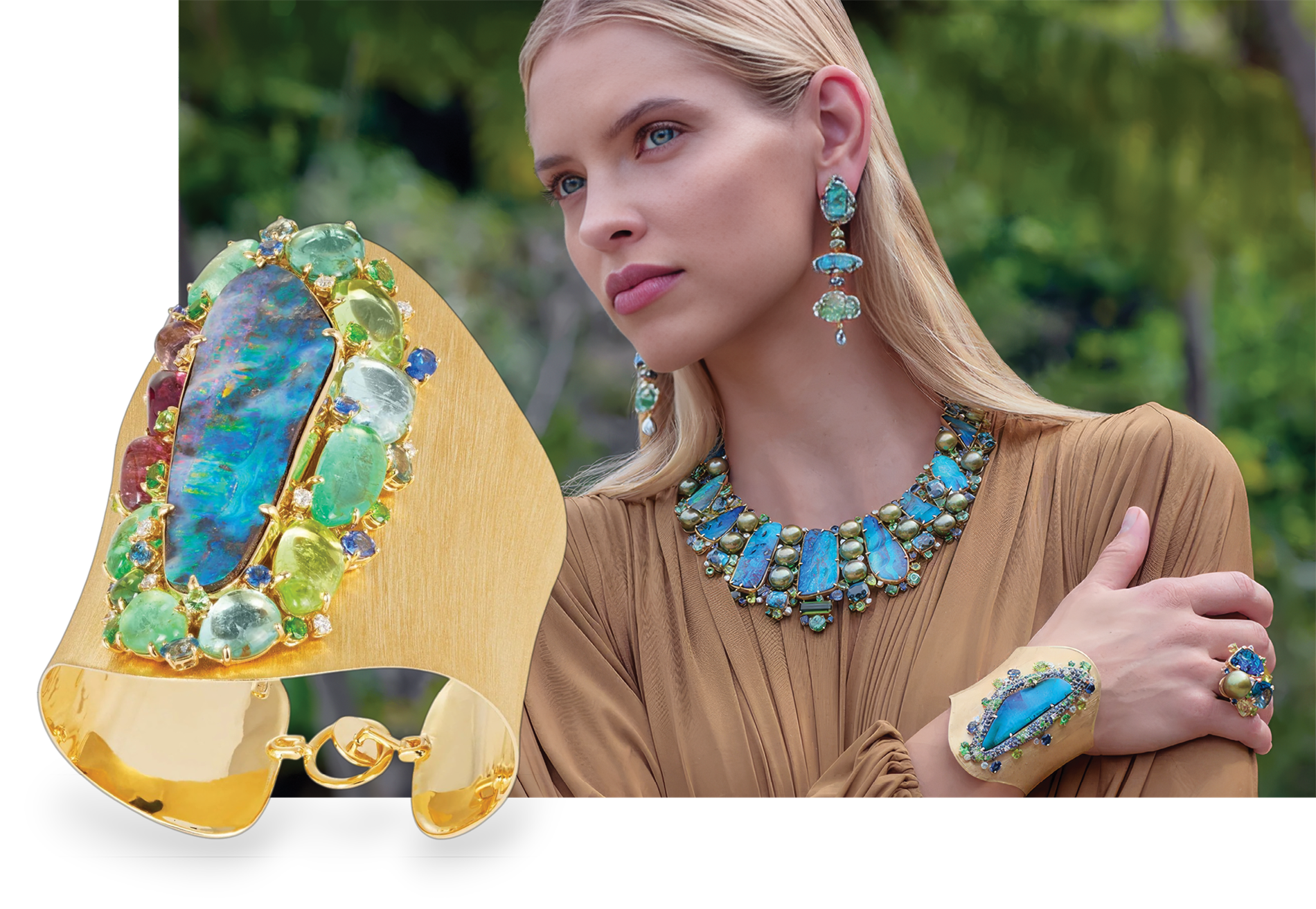
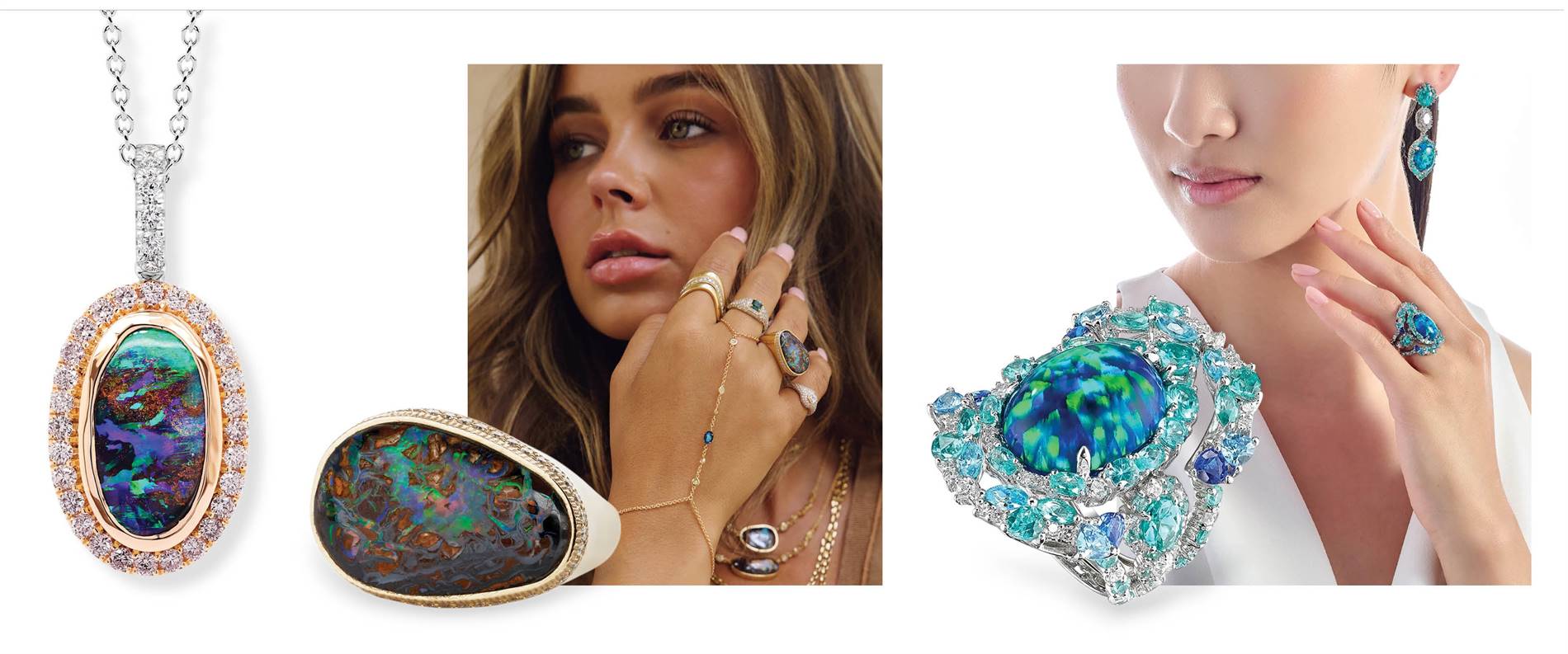
From high jewellery collections to red-carpet appearances, opal is no longer viewed as an unconventional choice. It has become a statement of individuality, rarity, and exceptional design. The evidence is difficult to ignore.
As Australian Opal Association president Ruth Benjamin-Thomas once explained, anyone can signal ‘luxury’ and ‘status’ through a logo; however, consumers can see through it. Not everyone has the confidence to choose a one-of-a-kind opal.
“International designers understand something that Australians have often overlooked. Opal offers differentiation in a sea of standardised colour,” writes Benjamin-Thomas.
 |
| Margot Mckinney |
“While sapphires, aquamarines, and emeralds are traded within relatively predictable colour parameters, opal resists uniformity. No two gemstones are alike. That individuality is not a flaw; it is its greatest commercial strength.”
“Opal is having its moment. The opportunity is real, and so is the demand and global attention. Now the question is whether we, as an industry, will rise to meet it together.”
With so much enthusiasm surrounding opal today, it is easy to forget that this wasn’t always the case. For generations, the colour gemstone carried a reputation that many jewellers would struggle to explain and even fewer could justify.
Despite its extraordinary beauty, opal was widely regarded as a symbol of bad luck. It was a superstition so deeply embedded in popular culture that it influenced purchasing decisions for decades.
So, why is opal flourishing today? That’s an easy question to answer – just take a look at one. The better question is, how did one of the earth’s most extraordinary natural treasures come to acquire such an ill-fitting reputation in the first place?
Richer history than most
The idea that opal is ‘common’ is merely the latest in a long line of misconceptions surrounding Australia’s national gemstone. For much of the modern era, the more pervasive belief was considerably stranger. Generations of consumers accepted that opal was somehow unlucky, particularly if worn by anyone other than those born in October.
Some even believed it invited illness, misfortune, or death. Fortunately, today’s jewellery market is rather more rational.
That specific superstition, concerning birthstones, quickly collapses under even the slightest scrutiny. It’s embarrassing to think that it ever existed at all. If it was bad luck to wear opal if it isn’t your birthstone, why wouldn’t the same logic apply to diamonds, emeralds, sapphires, or any other birthstone? Are engagement rings somehow cursed if the bride wasn’t born in April? Nonsense!
Like many Australians, I encountered the myths around opal long before I knew anything about colour gemstones. As a child, I loved wandering through the stalls at a Saturday-morning market near my home.
It was the kind of place where cheap toys, pony rides, and every imaginable trinket competed for attention. One jewellery stall appeared every weekend; its display filled with colourful opals that seemed almost impossibly bright.
I remember pointing to one of the pieces and admiring it. My parents promptly ushered me away, explaining that opals were “bad luck”. In fairness, they may simply have been looking for a polite way to avoid buying an opal ring for a seven-year-old.
The point, however, remains the same. My parents weren’t gemmologists, nor were they particularly superstitious people. Like countless others, they had simply inherited the belief that opal was somehow unlucky, somewhere along the way.
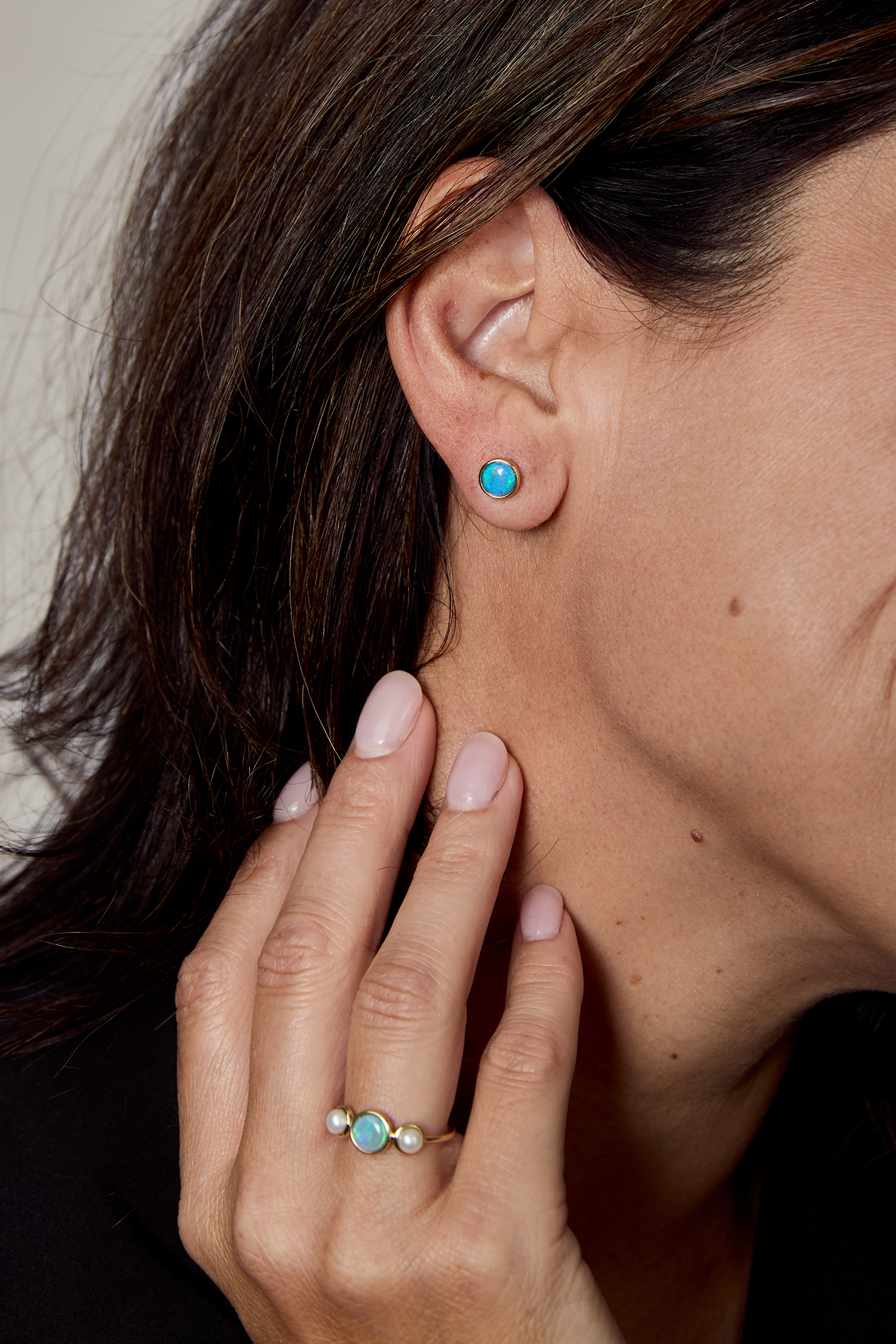
The irony is that history tells an almost entirely different story. Long before opal acquired its unfortunate reputation, it was celebrated across civilisations as a gemstone of extraordinary beauty and immense significance. Rather than symbolising bad fortune, it was commonly associated with hope, protection, prophecy, and divine favour.
 |
| Ikecho Australia |
One of the earliest recorded descriptions belongs to the Roman scholar Pliny the Elder, who struggled to adequately describe the gemstone’s remarkable play of colour.
“Made up of the glories of the most precious gems, to describe them is a matter of inexpressible difficulty,” he wrote.
“For there is amongst them the gentler fire of
the ruby, there is the rich purple of the amethyst, there is the sea-green of the emerald, and all shining together in an indescribable union.
“Others, by an excessive heightening of their hues, equal all the colours of the painter, others the flame of burning brimstone, or of a fire quickened by oil.”
This admiration extended well beyond the Roman Empire. Across many Indigenous Australian cultures, opal held profound spiritual significance and featured in Dreaming stories associated with the Rainbow Serpent. The gemstone was often regarded as a tangible fragment of the rainbow itself and as a physical reminder of the Creator’s presence upon the earth.
Elsewhere, Arabic legend suggested opals fell from the heavens in flashes of lightning. Ancient Greeks believed the gemstone bestowed prophecy and protected its owner from disease, while the Romans considered it a symbol of love and hope, naming it ‘opalus’ — simply “precious stone.”
A curse born from fiction?
Given this history, an obvious question emerges. How did one of humanity’s most admired gemstones become synonymous with bad luck? Unfortunately, there is no universally accepted answer; however, many researchers trace the superstition to an unlikely source — not geology, religion, or folklore, but Victorian literature.
In 1829, Sir Walter Scott published Anne of Geierstein, a historical novel featuring the mysterious Lady Hermione, whose magical opal loses its brilliance after being touched with holy water. Soon afterwards, the enchantment surrounding the character is broken, and she is reduced to ashes.
Readers appear to have drawn a conclusion Scott almost certainly never intended: the colour gemstone itself was cursed. Writing in The Curious Lore of Precious Stones (1913), renowned American mineralogist George Frederick Kunz argued that the novel did more than any genuine superstition to shape public opinion.
“There can be little doubt that much of the modern superstition regarding the supposed unlucky quality of the opal owes its origin to a careless reading of Sir Walter Scott’s novel, ‘Anne of Geierstein’. The wonderful tale contains nothing
to indicate that Scott really meant to represent opal as unlucky.”
 |
| Ellendale Diamonds | Jacqui Aiche | Anabela Chan |
The historical record appears to support this view. There is supposedly little evidence that opal was considered unlucky before the mid-19th century.
Yet Victorian fiction continued to reinforce the idea. Stories such as Charles Dickens’ ‘The Opal Ring’ helped embed the superstition into popular culture, until repeated storytelling gradually transformed fiction into accepted wisdom. Kunz believed there may have been a far more practical explanation.
“A possible explanation of the superstitious dread that opals used to excite some time ago may be found in the fact that lapidaries and gem-setters to whom opals were entrusted were sometimes so unfortunate as to fracture them in the process of cutting or setting,” he wrote.
“This was frequently due to no fault on the part of the cutters or setters, but was owing to the natural brittleness of the opal. As such, workmen are responsible to the owners for any injury to the gems; they would soon acquire a prejudice against opals and would come to regard them as unlucky stones.
“Very widespread superstitions have no more foundation than this, for the original cause, sometimes quite a rational one, is soon lost sight of and popular fantasy suggests something entirely different and better calculated to appeal to the imagination.”
Astrologer Isidore Israel Kozminsky reached a similar conclusion in The Magic and Science of Jewels and Stones (1922), lamenting that “perhaps against no other gem has the bigotry of superstitious ignorance so prevailed as against the wonderful opal.”
Whether born from fiction, coincidence, or simple misunderstanding, the result was the same. One of the world’s most extraordinary colour gemstones spent generations burdened by a reputation it never deserved.
The raw truth
Fortunately, perceptions change. If the previous century was defined by unfounded superstition surrounding opal, the current one is increasingly characterised by renewed confidence in its future.
That optimism extends well beyond luxury jewellery brands and into the very communities where Australia’s opals are discovered.
Across the country’s historic mining districts, recent developments suggest the industry is entering a period of greater stability after years of uncertainty. Few communities understand the significance of opal better than White Cliffs.
Mining has been central to the north-west New South Wales township since the late 19th century, supporting local businesses, tourism operators, accommodation providers, and generations of prospectors. Yet for almost eight years, the industry’s future remained uncertain.
Following Native Title matters raised in 2018, new mineral claims could not be granted across the town’s primary mining field, leaving many miners unable to expand or renew their operations while governments and Traditional Owners worked towards a legal resolution.
That uncertainty has finally been resolved. The declaration of the White Cliffs Main Field as an Approved Opal or Gem Mining Area under Section 26C of the Native Title Act 1993 provides the legal framework necessary for mineral claims to be granted and renewed once again.
For local miners, the announcement represented far more than an administrative decision.
“From a miners’ perspective, being able to peg new ground is something like a dream come true,” White Cliffs Miners Association president Troy Karkoe said.
“The White Cliffs miners cannot express our gratitude enough for the help from the Member for Parkes on what has been a very trying time for the whole community – 2,761 days to be precise.
“The boost to the whole community will benefit everyone – opal shops, Air BnBs, the local store, hotel and underground motel will all benefit with the increase in tourism.”
The broader economic impact was also recognised by NSW Minister for Natural Resources Courtney Houssos.
“We understand how important opal mining is to the White Cliffs community. This determination provides long-needed certainty for White Cliffs and supports an industry that has supported the community for more than a century,” Houssos said.
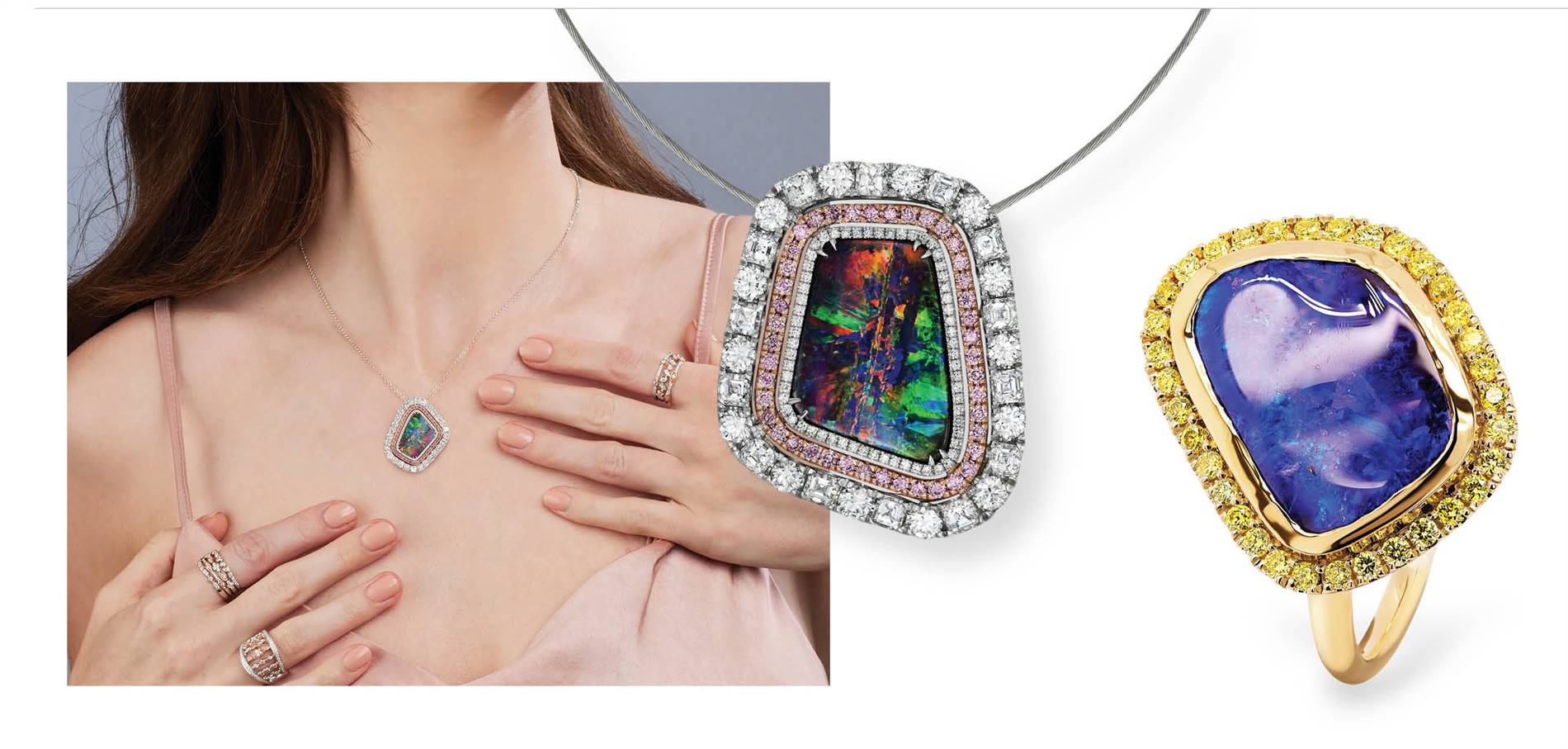
“White Cliffs is one of only two opal mining districts in NSW and produces some of the rarest types of opal in the world. This decision protects local jobs, strengthens tourism and supports the long-term future of the community.”
 |
| Pink Kimberley | Ellendale Diamonds |
A similar story has unfolded further north. Late last year, Queensland opal miners welcomed confirmation that long-held mining tenures within the former Vergemont Station would be retained despite the area’s transition towards protected conservation land.
The acquisition of the vast property had created months of uncertainty for miners who feared a new national park designation could ultimately prevent generations of families from continuing their work.
Instead, the Queensland Government confirmed that the existing opal mining area would not only remain but be expanded, allowing mining activity to continue alongside broader environmental conservation objectives.
“It’s pure relief,” Queensland Boulder Opal Association secretary Alison Summerville said.
“I’ve made several phone calls today to particular families who have been waiting on tenterhooks, and it’s a wonderful Christmas present for all of us.”
While the circumstances differed, the outcomes in both White Cliffs and Queensland point to the same conclusion.
Australia’s opal industry is increasingly recognised not simply as a historic curiosity but as an important regional employer, tourism asset, and contributor to the nation’s jewellery trade.
That confidence extends beyond mining itself.After more than a decade of consultation, Australian industry representatives have also nearly completed work on a comprehensive opal classification framework for presentation to the World Jewellery Confederation (CIBJO).
Developed through collaboration between the Gemmological Association of Australia, the Australian Opal Association, the Jewellers Association of Australia, and CIBJO, the proposed Opal Guide aims to establish internationally recognised standards for opal classification and nomenclature.
For retailers, the significance is considerable. Consistent terminology improves consumer confidence, strengthens transparency throughout the supply chain, and reduces opportunities for misleading or deceptive marketing practices.
Much as the diamond industry has benefited from universally understood grading standards, the opal sector is working towards a common language that can be adopted across international markets.
Taken together, these developments tell an encouraging story. For decades, opal was forced to overcome misconceptions largely held by consumers. Today, the conversation has shifted from superstition to standards, from uncertainty to investment, and from folklore to long-term industry development.
That may prove to be one of the clearest indicators, yet that opal’s renaissance is no passing trend.
A gemstone rediscovered
Opal itself has never changed. For millions of years, it has displayed the same extraordinary play of colour that captivated ancient civilisations, inspired Indigenous Australian Dreaming stories, and now commands the attention of the world’s leading brands. What has changed is the way people perceive it.
A superstition that lingered for generations is giving way to a renewed appreciation of opal’s rarity, individuality, and unmistakably Australian identity. That shift is evident throughout the industry, from international jewellery collections and renewed investment in historic mining communities to efforts to establish global classification standards that strengthen consumer confidence.
For independent jewellers, this should be compelling. Modern consumers increasingly seek authenticity, provenance, and products with a story to tell. Few colour gemstones can offer a richer narrative than Australian opal. It is unique by nature, impossible to replicate, and no two stones are ever exactly alike.
Perhaps that is the greatest irony of all. A gemstone once dismissed because of an imaginary curse is now being embraced for something entirely real: its remarkable beauty. Sometimes, history has a way of correcting itself. For the opal industry, that time has finally arrived.
Read eMag