Why do we still wear watches? After all, they’re an outdated tool, right? A relic?
It’s a question people ask from time to time – no pun intended - and it’s never easy to answer.
After all, the wristwatch is a piece of technology whose most basic function is now almost entirely redundant.
We carry smartphones that tell us the time accurately, while cars, computers, televisions, and countless household appliances display it for us. And if that weren’t enough, smartwatches can tell us the time while tracking our exercise, monitoring our health, delivering messages and reminding us where we are supposed to be.
So why, in a world where time is essentially everywhere, do people still want something on their wrist whose original purpose was simply to tell them what time it is? It’s a question you need to be able to answer confidently, should a curious customer ever ask.
The answer is that the watch stopped being a tool primarily dedicated to telling time a long time ago.
The wristwatch began first and foremost as a tool. According to some researchers, the idea of ‘portable time keeping’ dates back to the 16th century, when European watchmakers began developing increasingly small mechanical clocks.
Some of the earliest examples are described as miniature spherical timepieces that could be carried or suspended from a chain.
Eventually, the pocket watch became the dominant form of personal timekeeping – and would eventually become a wardrobe staple.
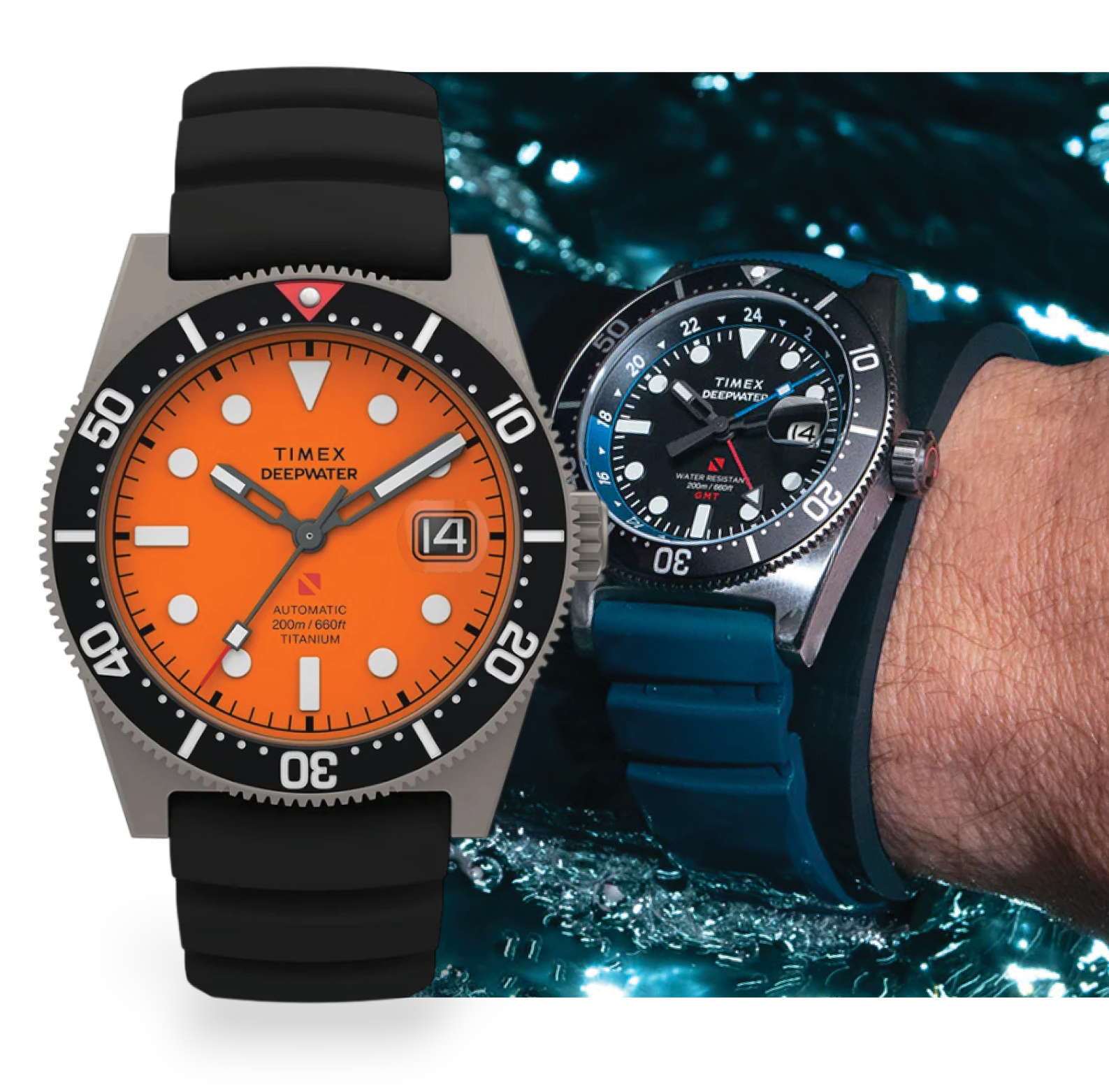 |
| Timex |
The wristwatch initially had a rather different reputation and was largely thought of as feminine. People thought of it as jewellery rather than a ‘serious’ timekeeping instrument. Men carried pocket watches.
That changed as the military began to capitalise on the practical advantages of having the time immediately available. During World War I (1914-1918), soldiers needed to coordinate operations precisely, and reaching into a pocket to retrieve a watch was hardly convenient when both hands were otherwise occupied. The wristwatch offered a simple solution.
Military adaptation helped transform the image of watches.
What had once been regarded as feminine became practical, rugged and masculine.
During the post-war period the wristwatch had become an essential part of the modern man's wardrobe.
That said, practicality remained in the equation.
For much of the 20th century, you wore a watch because you needed one. A diver's watch could measure elapsed time underwater; a pilot's watch or chronograph could assist with aviation; military watches were designed around legibility, durability and reliability.
The watch had a job to do, and eventually technology threatened to take it away.
The arrival of quartz technology in the late 1960s and its rapid adoption during the 1970s represented one of the greatest challenges traditional watchmaking had faced.
Quartz watches were accurate, reliable, and comparatively inexpensive, and for the ordinary consumer, it became difficult to justify paying a premium for an intricate mechanical movement simply to achieve a less accurate version of the same result.
Watchmakers faced an uncomfortable question. If an inexpensive quartz watch could tell the time more accurately, what exactly was the customer paying for?
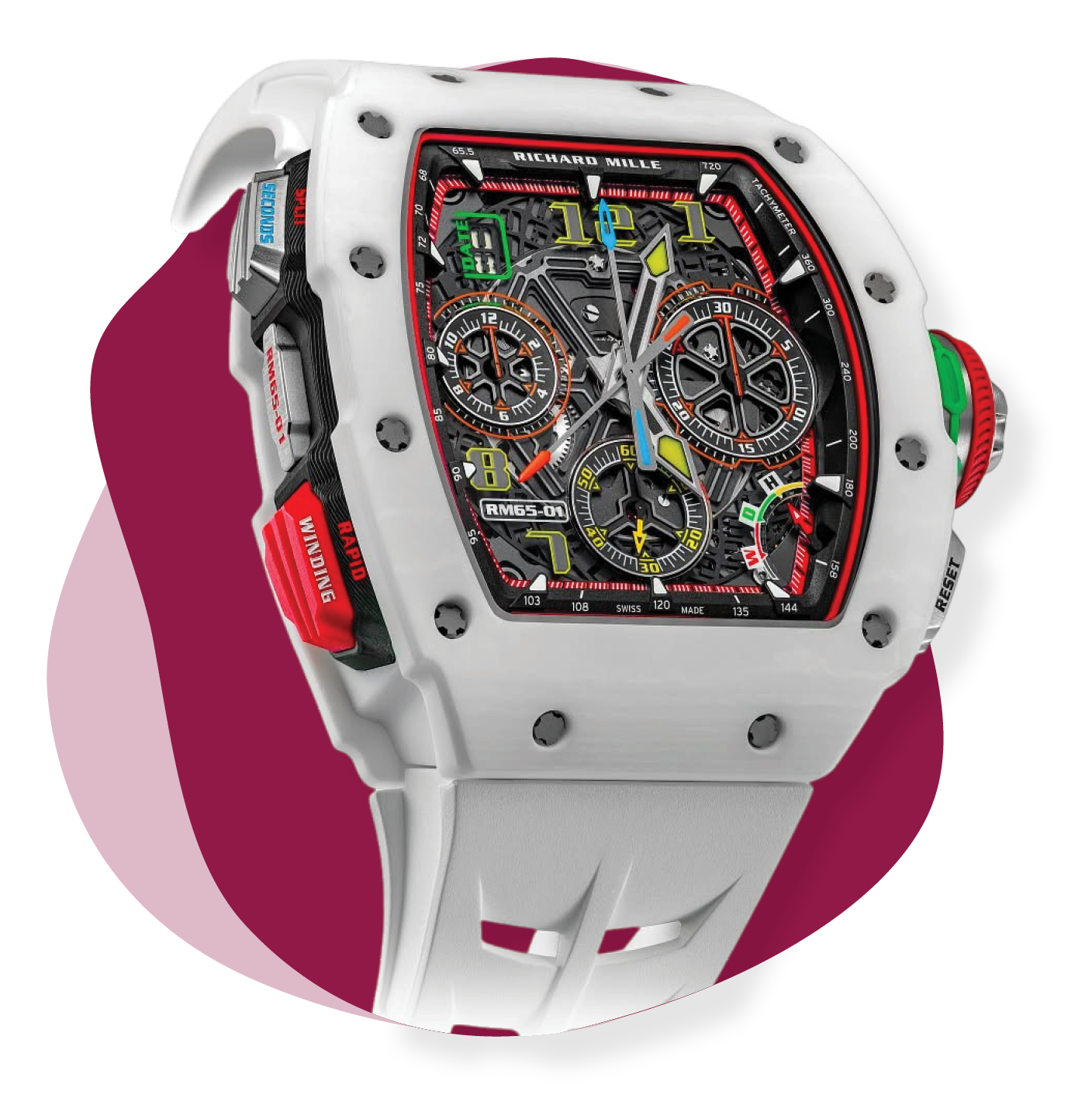 |
| Richard Mille |
Rather than competing with the newcomer on accuracy and price, traditional watchmaking increasingly emphasised the qualities quartz couldn't easily replicate.
Those were craftsmanship, engineering, heritage, complexity, exclusivity and design. Mechanical movements became something to admire and market.
As this happened, the watch began to shift from a necessary instrument to an object of desire, and that transformation would prove invaluable when the next technological threat arrived.
The mobile phone seemed capable of finishing the job that quartz had started. By the 1990s and early 2000s, consumers were increasingly carrying a device that could tell them the time wherever they went.
The iPhone debuted in 2007, and more than 700 million smartphones were sold in 2012.
Once smartphones became ubiquitous, the argument became even stronger. Why wear a watch when the device in your pocket could not only tell you the time, but also manage your calendar, send messages, provide directions, and do hundreds of other things?
And yet, the predicted demise of the wristwatch never materialised. Instead, consumers increasingly stopped buying watches because they needed to know the time. They bought them because they wanted the watch itself.
That distinction is crucial to understanding the modern market. A contemporary watch can be a fashion statement, a status symbol, a piece of engineering, a collectable, or an expression of personality. Its usefulness as a timekeeping device may be almost incidental.
This is especially true of men's watches, which occupy a curious position in the world of personal adornment. Many men would never consider wearing a bracelet, might regard a necklace as too conspicuous, and have no interest whatsoever in traditional jewellery.
And yet these same consumers will happily spend thousands – or tens of thousands – of dollars on a watch. In many respects, the watch is the acceptable face of male jewellery.
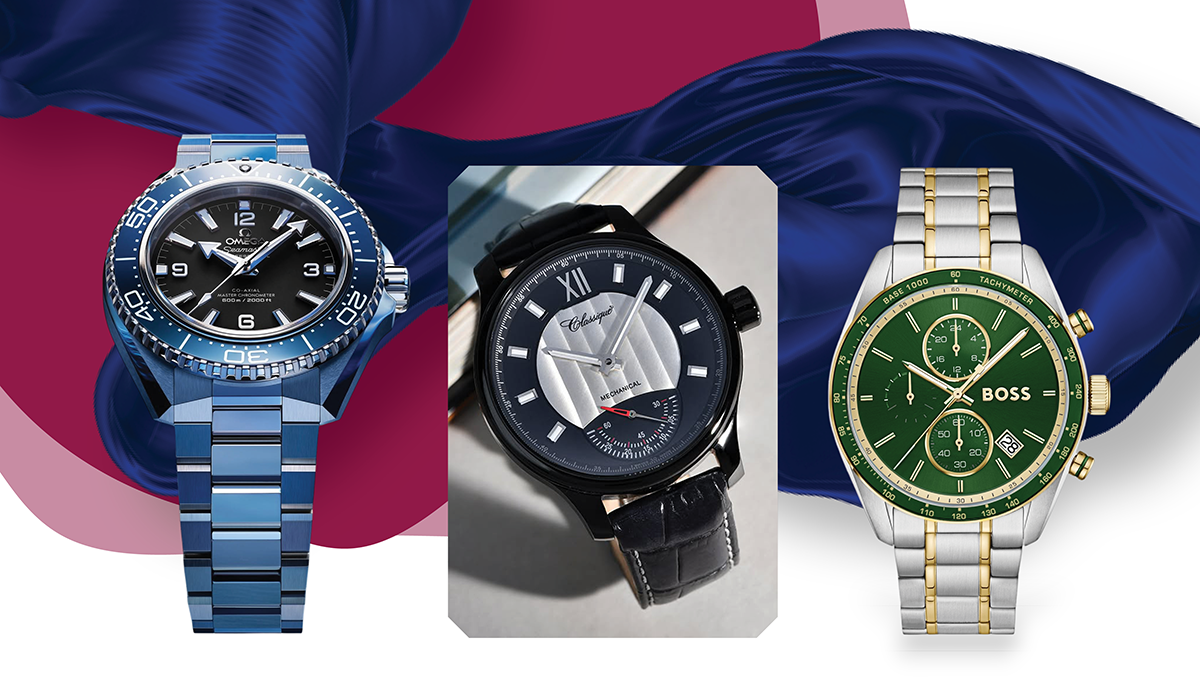 |
| Omega | Classique | Boss |
Some deliberately wear an expensive watch to display wealth or achievement. For others, the signalling is more subtle.
A particular model may signal an appreciation of craftsmanship, an interest in horology, or membership in a particular community.
Someone who knows watches may immediately recognise a particular reference, movement, or complication, while everyone else simply sees an attractive object on the wrist.
That private language is part of the appeal. Recently, the Sydney Morning Herald shared an anecdote that highlights just how alive the passion for traditional watches is. The piece, humorously, is dedicated to men who wear two watches at once. Among them is Andrew Raso, co-founder of Online Marketing Gurus, who exemplifies the modern watch enthusiast.
"I mean, sometimes it does look pretty stupid wearing two watches," he says.
"But – and I know this sounds weird – I never use those watches to tell the time. Ever. I rely on my Apple Watch for that. I wear my other watch for fashion purposes. I rarely even set the time on it."
As a brief aside, and as absurd as it may sound, I relate strongly to this example. I have a lovely Seiko that I got as a gift many years ago. It stopped ticking for one reason or another, and I’ve never taken the time to get it fixed – but I’ll still wear it at weddings. No one notices, it doesn’t bother me, and I love that watch – so why not?
It is certainly an amusing sight, but it also perfectly illustrates how the category has evolved. The smartwatch has won the functionality argument, while the traditional watch is doing something else.
As part of that same article, Raso even describes one end of the luxury market as an ‘FU’ watch – something deliberately excessive whose value may only be appreciated by someone who knows watches.
"A Richard Mille," he explains, "someone who knows watches will see it and understand its value, but to anybody else, it just looks like a normal watch."
That is an evolution for an object that began life as a practical instrument. The owner isn't necessarily buying something that everybody will notice. Sometimes the appeal is precisely that only the right people will.
Status is only one reason consumers keep wearing watches. A watch can also provide one of the simplest ways for someone to express their personality, and for many men, there isn't necessarily much room for individual expression.
The right timepiece can subtly change the character of an otherwise conventional outfit. A vintage watch conveys something different from a modern sports model; a complicated mechanical piece says something different again.
A colourful or unconventional design can introduce personality without requiring the wearer to completely overhaul their wardrobe.
Unlike clothing, a watch doesn't have to change every season, and I think that helps explain its appeal as a collectible. Not long ago, a man might have received a gold watch for his 21st birthday and worn it for most of his adult life. Perhaps he would receive another as a retirement gift if he stayed with one company long enough.
The idea that he might need a box containing half a dozen watches before he reached 40 would have seemed absurd. Take from me, a relatively typical 30-year-old male - today, the collector's box is practically part of the culture.
And how could we ignore what is possibly then the simplest explanation of all: people just like watches. I’m sure most people would agree there is something compelling about the idea of hundreds of tiny components working together inside a case small enough to sit on the wrist, all to perform a task a quartz crystal can do more accurately and with considerably less fuss.
That apparent inefficiency is part of the magic. Nobody needs a mechanical watch and that is precisely why the enduring passion behind craftsmanship can be so fascinating.
Modern watchmaking has increasingly embraced this idea, allowing the mechanics beneath the dial to become part of the visual experience rather than something that needs to remain hidden. Open worked movements, exhibition casebacks, and elaborate complications let the wearer see the engineering that makes the object work.
As many designers have observed, contemporary watchmaking increasingly lets mechanics determine how a watch looks, feels, and responds to its wearer. Technology is not simply hidden inside the design; it becomes part of the design itself.
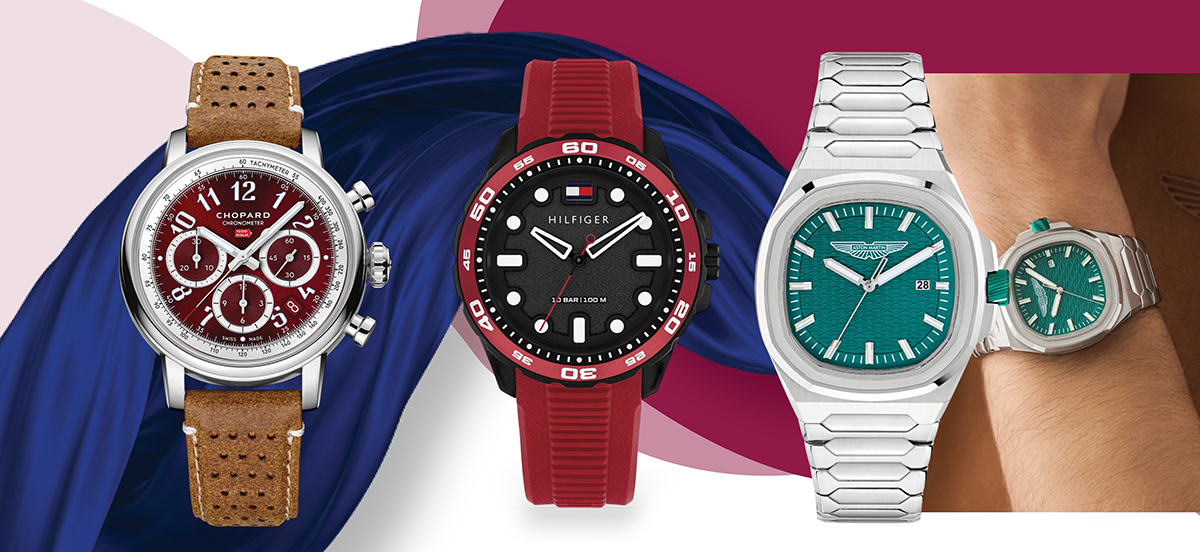 |
| Chopard | Tommy Hilfiger | Aston Martin |
At the same time, watchmaking and jewellery more broadly are moving closer together. Diamonds and colour gemstones can extend beyond the conventional dial and become part of the structure, colour and character of the entire watch. Designers will take inspiration from jewellery, sculpture and ancient art to create pieces that feel less like conventional instruments and more like miniature worlds built for the wrist.
For jewellery retailers, that convergence is worth watching. The traditional division between watches and jewellery is becoming increasingly blurred because the reasons people buy the two categories have become remarkably similar.
A customer may buy a watch because it is beautiful, because it complements their style, because it marks an achievement, because they admire its craftsmanship or simply because they want to own it.
None of those reasons has anything to do with telling the time, which brings us back to that final horse of the ‘Horological Apocalypse’ as a threat to traditional watchmaking: the smartwatch.
This time, surely, the traditional watch was finished! Unlike the mobile phone, the smartwatch lives in exactly the same place as the watch it threatens to replace. It doesn't simply tell the time; it tracks exercise, monitors health, displays messages, provides navigation and performs an expanding range of functions.
Yet the traditional watch has survived this challenge too. The reason may be that smartwatches and traditional watches are increasingly serving fundamentally different purposes.
One is a piece of technology designed around utility and connectivity; the other can be craftsmanship, jewellery, personal history, or identity.
As the example above shows, some consumers simply want both, and the apparent contradiction is revealing.
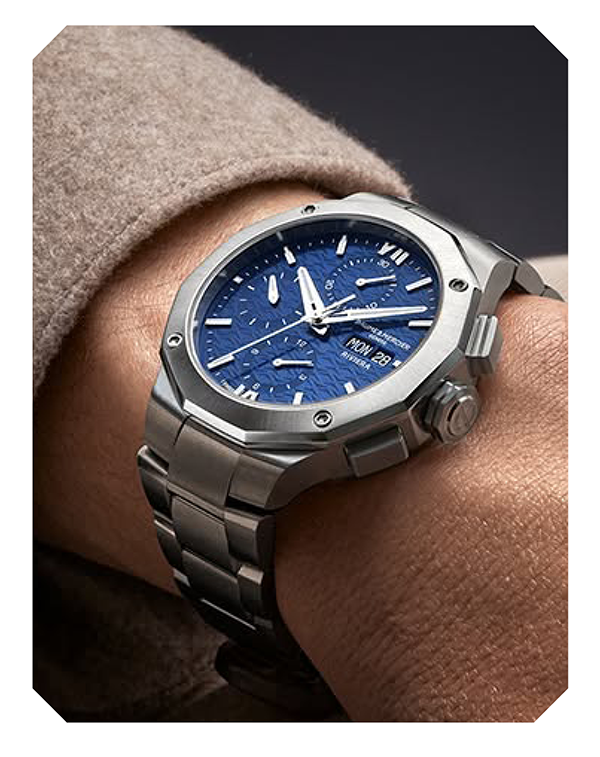 |
| Baume & Mercier |
The fact that someone can wear an Apple Watch for its functionality and a mechanical watch for its beauty suggests that the two products aren't competing for the same role – despite what many people initially feared.
Said another way, one tells you the time and the other can tell somebody something about you. By wearing the latest Apple product, also worn by wearing millions of other people, you aren’t saying anything particularly interesting about yourself. But with a classy watch, you are.
The question isn't whether a customer needs a watch. In most cases, they don't. The smartphone solved that problem a long time ago.
The more useful question is what the customer wants from the object on their wrist – the same line of questioning you’d ask someone buying a ring or necklace.
For one customer, it might be practicality and reliability and for another, fashion. Someone else may be fascinated by mechanical engineering, while another customer is looking for a recognisable luxury brand that reflects an achievement or aspiration. Another customer may simply fall in love with a particular piece.
That last motivation should not be underestimated - jewellery has never been particularly good at justifying itself through practical necessity. Nobody needs a diamond ring to tell them they are engaged; nobody needs a gold bracelet because their wrist would otherwise be bare. We buy these things because they represent something – love, celebration, achievement, identity or simply the pleasure of owning something beautiful. The watch exists in the same territory.
One final point worth considering is the appeal of longevity. A smartphone is designed to be replaced as soon as technology changes. More accurately, a smartphone is designed to be replaced as soon as the newer model is released.
A smartwatch is tied to batteries, software and an ecosystem that will inevitably evolve. A well-made mechanical watch, by contrast, can be serviced, repaired, and worn for decades. It can acquire scratches and marks that become part of its story, and can be handed from one generation to another.
Indeed, watches can sit comfortably alongside jewellery because they can fulfil many of the same emotional and aspirational roles. It can be a milestone gift, a personal reward, a fashion purchase, a collector's piece or the beginning of a much longer relationship with a business or brand.
The technology has changed; however, the desire for beautiful, personal, and enduring objects has not - and maybe it never will.
Read eMag