It’s set to be a momentous year for the global white diamond business.
The diamond landscape has consistently been described as being in a period of sustained ‘recalibration’ in recent years, driven by shifts in pricing, supply and demand dynamics, and major swings in consumption patterns. Indeed, it has been some time since the diamond business was said to be stable.
As jewellers navigating a hotly contested terrain, natural and lab-created diamonds are forced to share centre stage, and the trade is almost unrecognisable compared with a decade ago.
Market forces are compounded by evolving consumer preferences, fierce debate over marketing philosophy, and intensifying pressure from the lab-created alternative,which now commands meaningful share across key categories.
For Australian jewellery store owners, the stakes are immediate. Inventory, pricing strategy and marketing are not defined by the certainties of yesterday, but by how well retailers can navigate a market in transition.
Writing for The Diamond Press, industry analyst Avi Krawitz recently published a list of predictions for the diamond trade across the year ahead. His analysis touched on many of the more literal market forces, such as supply, demand, and pricing, while also acknowledging more metaphysical issues, including consumer preferences and marketing strategy.
As Krawitz noted, the diamond market has endured ‘three punishing years’ leading up to 2026, describing the impact of sustained pressure across mining, manufacturing, and retail.
“The combined impact of shifting consumer preferences, retail dynamics, and weaker demand is reducing diamond supply requirements across the pipeline,” Krawitz explains.
“Global diamond production fell to multi-decade lows of around 100 million carats in 2025 and is likely to remain near those levels in 2026 and beyond. The diamond industry has long been driven by volume, but the emphasis is shifting toward extracting greater value from fewer goods to reinforce the scarcity of diamonds.”
The analysis continued, as Krawitz suggests, with jewellery store owners increasingly forced to refine their strategic approach to diamonds.
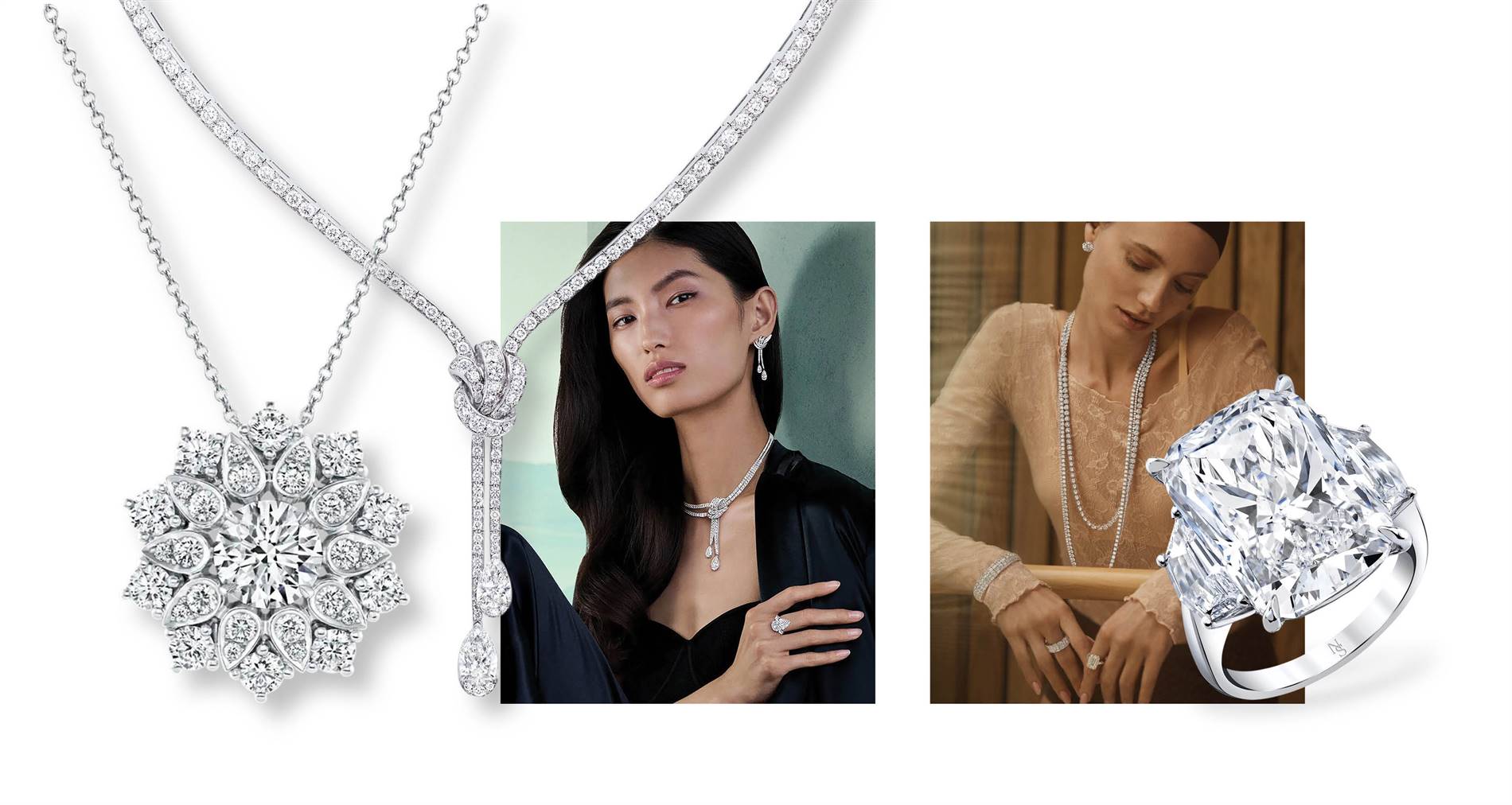 |
| Harry Winston | Graff | Norman Silverman Diamonds |
“That transition will accelerate in 2026, led by retail jewellers confronting a strategic choice, whether to pursue higher volumes of lower-value synthetics or position themselves around higher-value natural diamonds,” he adds.
“Balancing both models will become increasingly difficult, particularly for independent jewellers, as each demands a different pricing and sales approach and a distinct value proposition.”
The sale of the De Beers Group, the world’s largest supplier of diamonds, continues to hang over the industry like a black cloud.The decision to sell the company was initially announced in May 2024 as part of a restructuring.
According to recent reporting, the De Beers sale is progressing, with the timeline now dependent on financing and market conditions, according to CEO Duncan Wanblad. Angola, Namibia, and various private sector entities have expressed interest.
In February 2025, Wanblad stated that Anglo aims to divest most of its 85 per cent stake in De Beers by the end of the year. He noted that finalising the process now depends on financing amid a weakening diamond market; however, expressed optimism that the sale could be completed before the end of the year.“I’m still hoping that it’s going to get done this year,” Wanblad told reporters.
According to industry analyst Robert Bouquet, the sale of De Beers is about much more than the supply of diamonds, as the company has been positioned as the de facto ‘leader’ of the trade for decades.
“What remains to be seen is who the final winner of this process will be - and with whose actual money - and what it actually means for the various parties, and then what the outcome will mean for the rest of the diamond industry,” Bouquet says.
“It is important to recognise that the relevance of this issue far exceeds the actual market share of De Beers due to its breadth of activities outside of its core role of mining.
“With all that said, at the end of the day, Anglo American wants to sell, and may be driven to conclude a deal. The degree to which the company is concerned with the broader future of the diamond industry is unclear.”
Market volatility is only part of the story. The white diamond category is contending with broader cultural and economic forces that are proving equally disruptive.
Consumer preferences are evolving rapidly, and securing the attention and loyalty of younger customers is increasingly complex in a digital-first environment. Today’s consumers are exposed to endless product alternatives and competing narratives about value. The raw emotional dominance diamonds once enjoyed is no longer guaranteed.
Lab-created diamonds continue to present a highly visible alternative, particularly for price-sensitive customers, while colour gemstones are benefiting from renewed interest in individuality and self-expression.
At the same time, discretionary spending remains under pressure. In Australia and globally, persistent cost-of-living concerns have sharpened purchasing decisions, encouraging consumers to scrutinise prices and postpone significant commitments.
Beyond product competition, jewellers are also contending with a generational shift toward experience-based spending, such as travel, dining, and lifestyle purchases. This competes directly with traditional milestones associated with jewellery purchases.
For retailers, the challenge is no longer simply stocking the right product. It is articulating why diamonds deserve priority in an increasingly crowded value equation.
Consumers are once again prioritising experiences over products after COVID-19 interrupted the previous cycle of experience-led spending. Travel, dining, and live events are being emphasised, particularly across social media platforms, fueling aspiration and imitation,” Krawitz explains.
“The trend transcends income brackets. Ultra-high-net-worth consumers continue to showcase their access, from destination dining and bespoke travel to courtside seats at marquee sporting events.
“At the same time, Gen-Z consumers are channelling their discretionary budgets toward adventure and experiences, becoming more selective in how and where they spend on luxury goods.”
Krawitz suggests that the surge in accessible luxury, a key driver of sales increases over the past few years, is losing steam, as buyers become more selective and discerning.
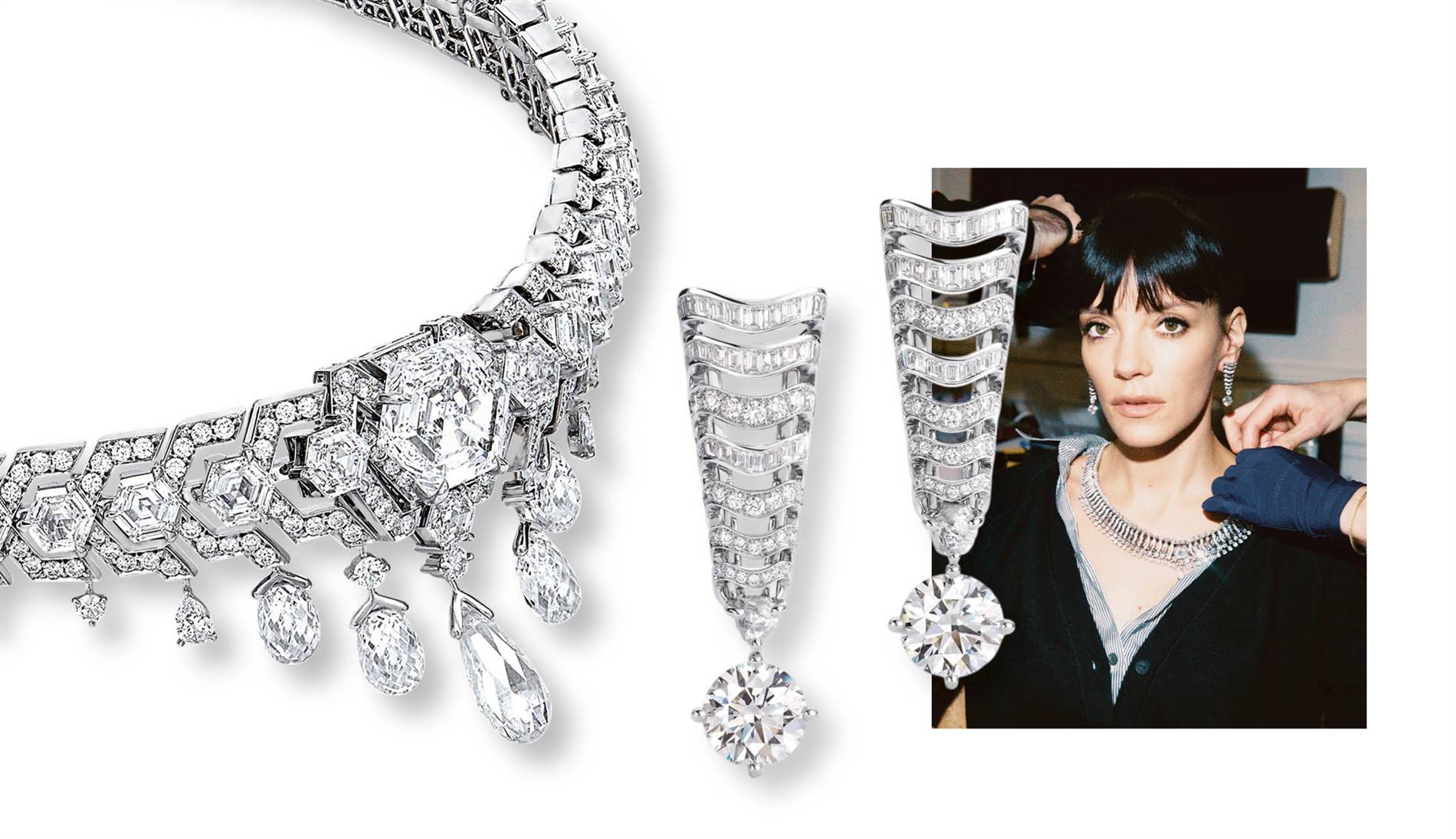 |
| David Morris | De Beers |
“That shift has slowed the momentum of affordable luxury, which helped propel the broader luxury market in the immediate post-COVID-19 period. In 2026, rising selectivity will intensify and increasingly shape purchasing behaviour in the jewellery market,” he reveals.
At the same time, lab-created diamonds are steadily capturing an increasing share of the market, a trend underscored by changing consumer behaviour in the bridal sector. A major survey of recently married couples highlights the increasing acceptance and popularity of lab-created diamond jewellery.
The 2026 Real Weddings Study, conducted by wedding planning platform The Knot, surveyed more than 10,000 US couples married in 2025. Results revealed that 61 per cent of respondents had purchased an engagement ring featuring a lab-created diamond, a striking 239 per cent increase compared with 2020.
This rapid uptake illustrates how lab-created stones have moved beyond niche interest and into mainstream purchasing decisions, signalling both opportunity and disruption for retailers navigating the white diamond category. Diamond Foundry CEO Martin Roscheisen summarised this sentiment in his contribution to The Great Diamond Debate III.
“It was also said that jewellers would start to notice that they sell jewellery products, not raw materials. Diamonds, like gold and steel, are materials, not products,” Roscheisen suggests.
“Jewellery is something different - just as flour, butter, and eggs are not patisserie. Indeed, the jewellery business will remain alive and well for the foreseeable future, using quality components, including lab-created diamonds.
“The allure of diamonds holds; however, US consumers do not care to pay to support foreign miners for a product that is literally atomically identical. These consumers see through the marketing claims of supposed scarcity that have never been true.”
Last year’s tension between the natural and lab-created diamond camps spilled into open dispute over marketing strategy, exposing deep philosophical divides within the global diamond industry.
At the centre of the controversy were a series of high-profile campaigns from natural diamond proponents that shifted from polished messaging to bolder, more confrontational tactics. Critics argued that these approaches risked leaning on visibility from lab-created stones and could alienate younger consumers by relying on fleeting slang and directly naming the competition.
Others defended the shift as necessary to define natural diamonds in contrast to alternatives and protect the category’s emotional and economic value.
A broader debate about identity, relevance, and strategy in a market where lab-created stones are now mainstream has emerged, with the right narrative becoming a strategic imperative.
Marketing will undoubtedly remain a hot topic in 2026 after the signing of the Luanda Accord, a global natural diamond marketing initiative.
The diamond industry now recognises that demand will not rebound without coordinated marketing support, prompting a renewed focus on promoting the category.
Funding for the Natural Diamond Council (NDC) is set to increase, with a portion of commitments made under the Luanda Accord expected to be delivered.
Despite the noise, there is little evidence to suggest that the enduring allure of natural diamonds is on the verge of disappearing. Through a range of challenges, natural diamonds have retained cultural, emotional and symbolic weight that extends beyond simple product economics.
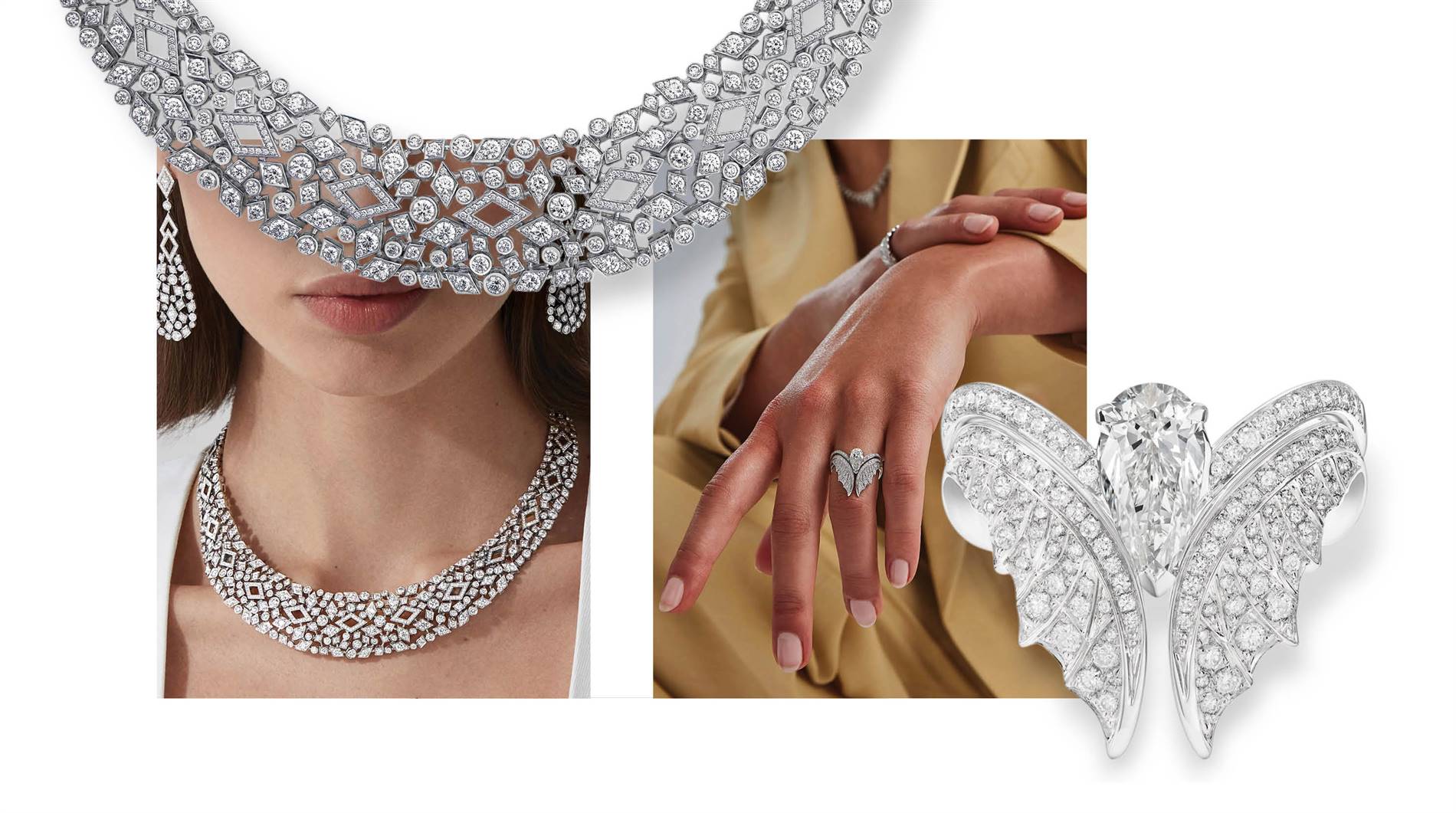 |
| Garrard | Stephen Webster |
They remain closely tied to life milestones, including engagements, anniversaries, and generational heirlooms, in a way few luxury goods can replicate.
While price competition and alternative categories may reshape buying patterns, rarity, geological origin and long-standing social meaning underpin their appeal.
For retailers, the task is not to defend a fading category, but to reinforce and clearly articulate what has always made natural diamonds distinct.
Outgoing Natural Diamond Council CEO David Kellie says that when turning to history, lessons about the unshakable appeal of diamonds are self-evident.
“The French Crown Jewels, witnesses to royal splendour and the Napoleonic reappropriation, embody the symbolic power and cultural influence of natural diamonds.
“They remind us how much this precious stone has marked our collective memory and continues to inspire contemporary creation,” writes Kellie.
“From there, diamonds spread across cultures and continents, symbolising eternal love, power, and enduring value. For centuries, natural diamonds have been woven into human culture, from royalty to cinema, fashion to sports.
“They have a timeless brilliance and versatility that transcends trends. Diamonds commemorate life’s milestones, and their value remains from one generation to the next.”
World Diamond Council CEO Feriel Zerouki echoed this sentiment during her contribution to the Great Diamond Debate III and suggested that while the market is facing a period of disruption, the powerful relationship between diamonds and people will stand the test of time.
“A natural diamond is the result of deep time and human craftsmanship. It is finite, irreplaceable, and filled with story.
“It carries the weight of history and the light of emotion, passed down through generations, tied to personal and national milestones, from economies to emotional connections, Zerouki explains.
“The future of our industry depends on our ability to protect what is real, not by attacking others, but by elevating truth. Natural diamonds are not just stones; they are symbols of human progress and partnerships that build education, healthcare, and independence.
“They prove that business and purpose can coexist, and that development rooted in integrity endures far beyond trends.
“Nature has already made her point. A billion years in the making, under unimaginable pressure, she created perfection. That is the story worth telling, the story of something real, rare, and enduring. That is nature’s mic drop.”
Indeed, natural diamonds have weathered disruption before, and their cultural and emotional resonance remains deeply embedded in the jewellery sector.
While market dynamics may evolve, rarity and symbolism continue to anchor their appeal.
For retailers, confidence in that enduring narrative may prove just as important as pricing strategy in the years ahead.
Read eMag