Over the past 15 years, few developments have reshaped the Australian jewellery industry as decisively as the rapid ascent of CAD/CAM technology.
It is remarkable to consider that, not so long ago, Computer-Aided Design (CAD) and Computer-Aided Manufacturing (CAM) were viewed with caution and suspicion in the jewellery business. As recently as the early 2010s, much of the trade remained hesitant to embrace these emerging technologies.
This was despite the fact that many other parallel trades had done so decades before. A report published by Jeweller in 2012 documented the ongoing industry debate over whether this technology represented a glowing opportunity
or a dire existential threat.
Indeed, compared with other manufacturing sectors, jewellery has been notably slow to adopt digital tools. At the time, some feared that CAD/CAM would erode traditional craftsmanship and undermine tried-and-true established business models. Instead, the opposite occurred.
Widespread acceptance of emerging technology was driven by forces that would otherwise seem contradictory. One such example was the popularity of branded jewellery. The branded jewellery boom may have delivered strong sales volumes; however, it compressed margins and intensified competition.
Retailers found themselves stocking the same popular collections as competitors bound by supplier pricing structures, and limited in their ability to differentiate. At the same time, consumers increasingly demanded ‘individualisation’
and ‘personalisation’ in jewellery products.
Consumers increasingly shifted away from mass-produced products in favour of pieces that reflected identity and sentiment. For retailers, this created a complex balancing act. Businesses were asked to meet demand for custom work while maintaining efficiency, profitability, and consistent production standards.
The question became unavoidable: how could independents reclaim margin and restore a sense of uniqueness? As consumers sought individuality, demand for bespoke design and personalised services steadily increased. This trend accelerated sharply during the COVID-19 pandemic.
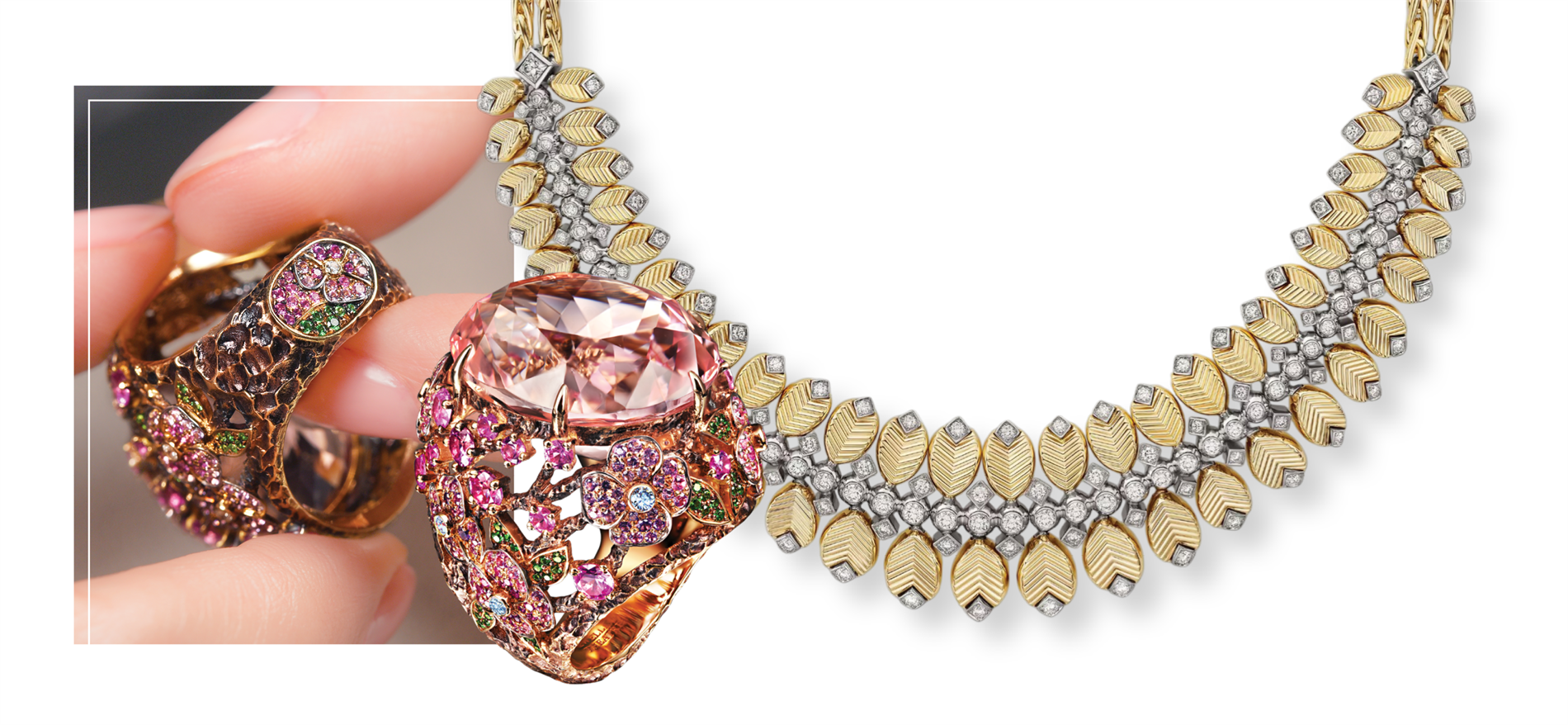 |
| Blooming Sakura Ring by Jewellery Theatre | Grain de Café Necklace by Cartier |
In this environment, CAD/CAM evolved from a perceived threat to a strategic asset, equipping retailers with the tools to reclaim control, rebuild margins, and reassert their creative identity.
Custom-made jewellery may restore exclusivity; however, it also introduces complexity. One-off designs demand greater labour input, extended consultation, multiple revisions, and intricate manufacturing processes. All of these factors may increase costs and delay turnaround times. For retailers attempting to rebuild margin through custom work, the risk was clear. Exclusivity cannot come at the expense of efficiency.
This is where CAD/CAM software altered the equation. By streamlining design, enabling precise digital modelling, and reducing reliance on time-consuming manual processes, the technology allows jewellers to produce complex pieces more quickly and accurately.
More importantly, it restores a measure of commercial control over workflow, production timelines, and margin. The industry’s changing attitude toward digital tools begins to make sense when viewed through this lens.
The urgency is amplified by structural challenges within the trade. Australia’s jewellery workforce is ageing, and apprenticeship numbers remain insufficient to replenish technical skills at the required rate. At the same time, consumer appetite for customisation continues to increase.
Last year, industry data suggested that three to four weeks is considered an acceptable turnaround time for a newly designed and manufactured piece. Yet capacity is tightening. Three years ago, around one-third (34 per cent) of retailers acknowledged they were unable to meet that benchmark.
More recently, the situation has deteriorated significantly, with 63 per cent reporting that they cannot consistently deliver custom work within four weeks. In this environment, technology is no longer optional; it is operationally critical.
Against this backdrop, it is hardly surprising that more jewellers are embracing emerging technologies and embedding new tools into their businesses. Scientific and technological advancement has reshaped virtually every retail sector over the past two decades; the jewellery industry, long cautious by nature, is no exception.
Retailers consistently report that CAD/CAM unlocks design potential that was previously constrained by time, labour, or technical limitations.
Complex designs can be explored digitally before a single step is taken. For some, the technology enables the creation of pieces that would once have been dismissed as impractical or simply unprofitable.
The commercial implications are significant. By allowing designs to be broken down into precise digital components, CAD/CAM streamlines manufacturing and finishing without compromising quality. Production becomes more predictable, revisions more controlled, and material waste more manageable. In turn, high-end and custom-made jewellery is no longer the exclusive domain of elite designers with vast workshop resources.
Perhaps most importantly, the psychological barrier has shifted. Intricate designs that once demanded weeks, or even months, of painstaking labour can now be executed with greater confidence and efficiency. The result is a recalibration of what is commercially viable.
Finally, the consumer benefits. Aspirational, design-led jewellery becomes more accessible, while retailers retain the ability to
price competitively without eroding margin. In a market defined by both individuality and value sensitivity, that balance is powerful.
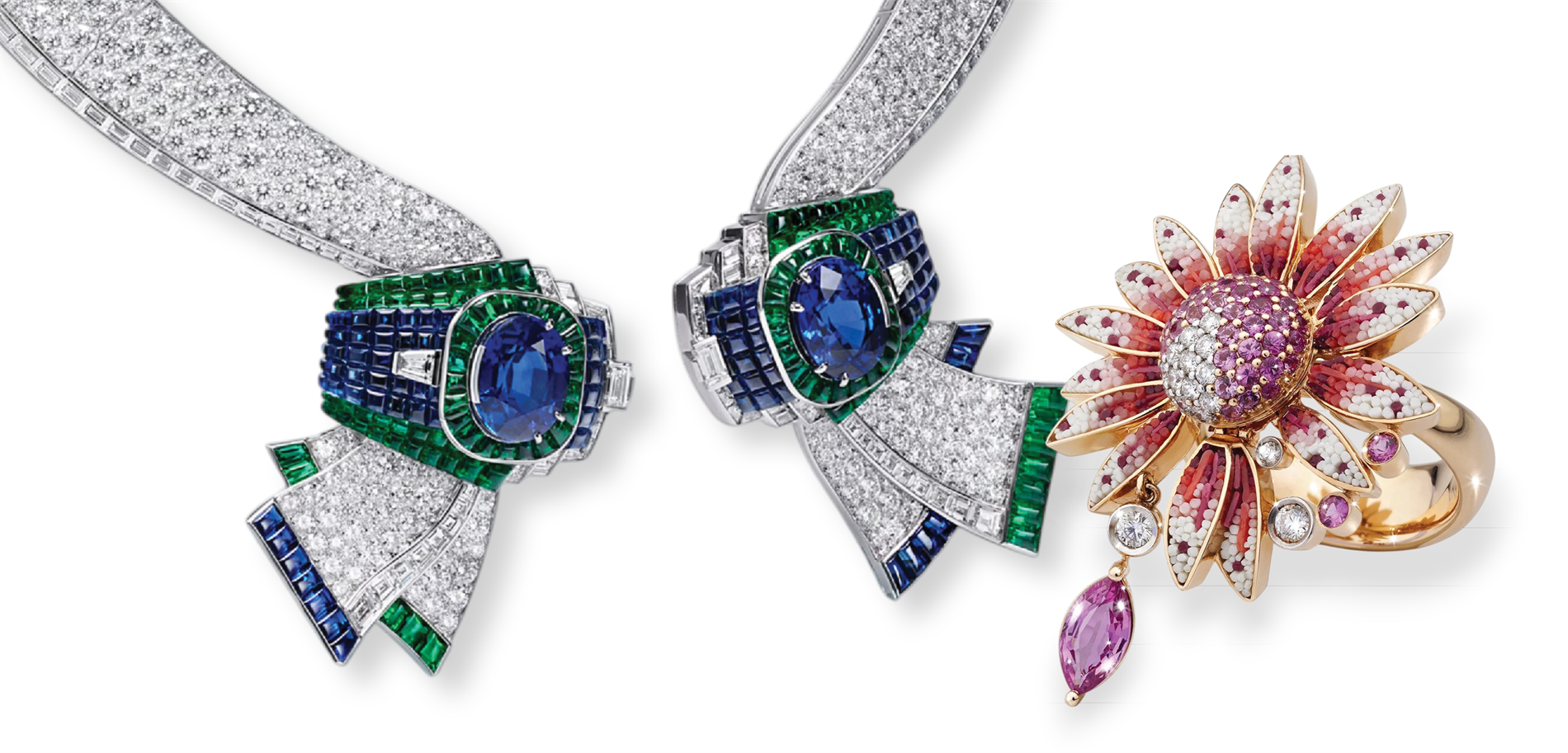 |
| Pierres de Caractère™ by Van Cleef & Arpel | Pink Daisy Ring by Sicis Jewels |
In the lead-up to last year’s International Jewellery Fair, buying group Showcase Jewellers hosted its design awards. Freedom by Kath Proszkowiec of Enigma Jewellers in Newcastle took out the CAD/CAM category.
For many retailers, one of the most commercially valuable aspects of CAD/CAM is not simply manufacturing efficiency, but communication. The ability to present a precise digital render before production begins fundamentally changes the conversation about custom design.
As Proszkowiec explains, it reduces ambiguity, builds client confidence, and minimises costly revisions.
“As we are in the era of customisation and personalisation, CAD/CAM is essential for our businesses,” Proszkowiec tells Jeweller.
“Hand crafting is a beautiful skill and talent which allows for artistic licence and ability to re-use precious metals.
“CAD/CAM allows clients to be able to visualise designs before they are brought to life and gives designers such as myself the ability to be very particular with intricate and detailed designs.”
Beyond new designs, CAD/CAM is also proving invaluable in the restoration and reimagining of existing jewellery. Heirloom pieces, often rich in sentiment but complex in construction, traditionally demand painstaking replication. Digital modelling now offers a more efficient and precise alternative, particularly when accuracy is paramount.
“CAD/CAM offers the ability to design jewellery with multiple settings, and often many stones with different shapes and sizes or with multiple precisely matched and calibrated settings,” Proszkowiec continues.
“Old-fashioned or heirloom pieces can also be easily recreated using CAD/CAM. This saves on labour costs and again ensures an accurate remake of the original piece.”
Proszkowiec’s experiences mirror those of many other jewellers. What was once considered a value-added extra has, in many stores, become a basic expectation. As consumers become increasingly accustomed to visual previews in other retail categories, the same standard applies to fine jewellery.
Carlo Romeo of Carlo Romeo Jewellers in Perth tells Jeweller that digital renders are simply business as usual in the contemporary market, particularly given sky-high precious metal prices.
“CAD has now become the norm, as it’s an expectation that customers can see the final product before we commence the manufacturing,” he explains.
“It also gives us the ability to quote the job correctly, and with the price of gold today, this has become more important.”
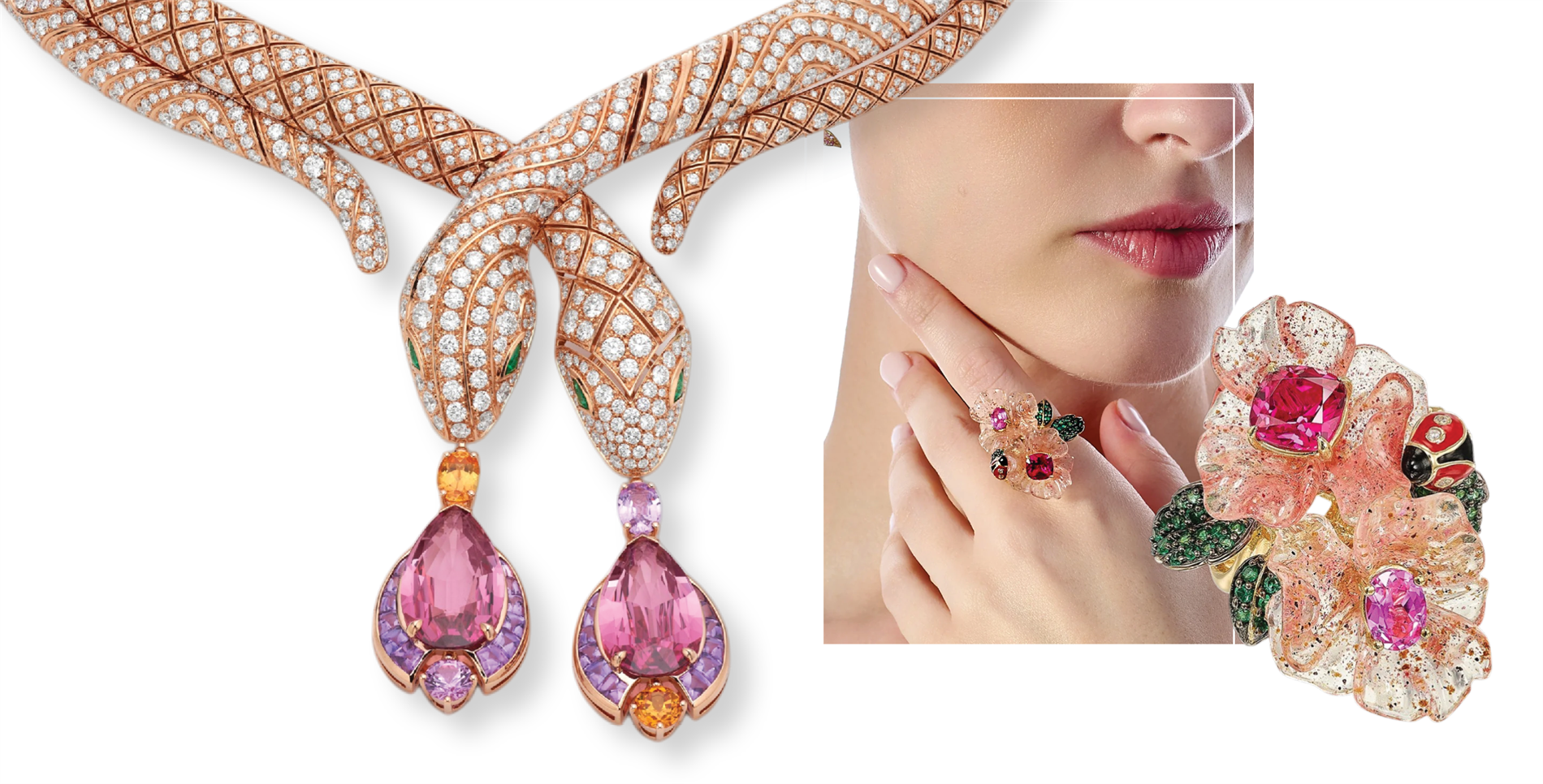 |
| Invisible Violet Necklace by Bulgari | Beetroot & Dragonfruit Garden Ring by Anabela Chan |
CAD/CAM isn’t just about speed; it’s about refinement. Digital modelling allows jewellers to troubleshoot and optimise designs before any metal is touched. As Joshua Rogers of Fairfax & Roberts in Sydney explains, the technology reduces errors and ensures the final piece meets both creative and technical standards.
“CAD is a very important tool for our business. Most of our pieces are still handmade; however, CAD allows us the opportunity to see pieces in 3D before committing precious metal and manufacturing time to a project,” Rogers reveals.
“We’re able to then optimise the designs before handmaking the piece. It is also an extremely helpful tool for the bespoke side of our business.”
At the same time, additive manufacturing, more commonly known as 3D printing, has moved far beyond its early industrial origins to become a cornerstone of modern jewellery production.
While the technology began in the 1980s, its adoption was initially confined to aerospace, automotive, and medical sectors. Jewellery, with its highly detailed and artisanal demands, remained on the periphery for some time.
The real shift came in the late 2010s when falling costs made 3D printing accessible to small businesses and independent jewellers. Suddenly, the limits of custom-made design were dramatically expanded.
The broader industrial momentum underscores the technology’s potential. From bioprinted implants to 3D-printed rocket engines, additive manufacturing has proven its versatility and reliability across industries. For jewellers, this translates into tangible benefits: rapid prototyping, efficient commissions, and smarter inventory management. High-value, customised pieces can now be produced faster, more accurately, and more profitably than ever before.
Artificial Intelligence (AI) now represents the next frontier in this digital evolution. While CAD/CAM digitised manufacturing, AI is beginning to reshape the design process itself. For time-poor retailers balancing customer demand with tightening workshop capacity, this capability is commercially compelling.
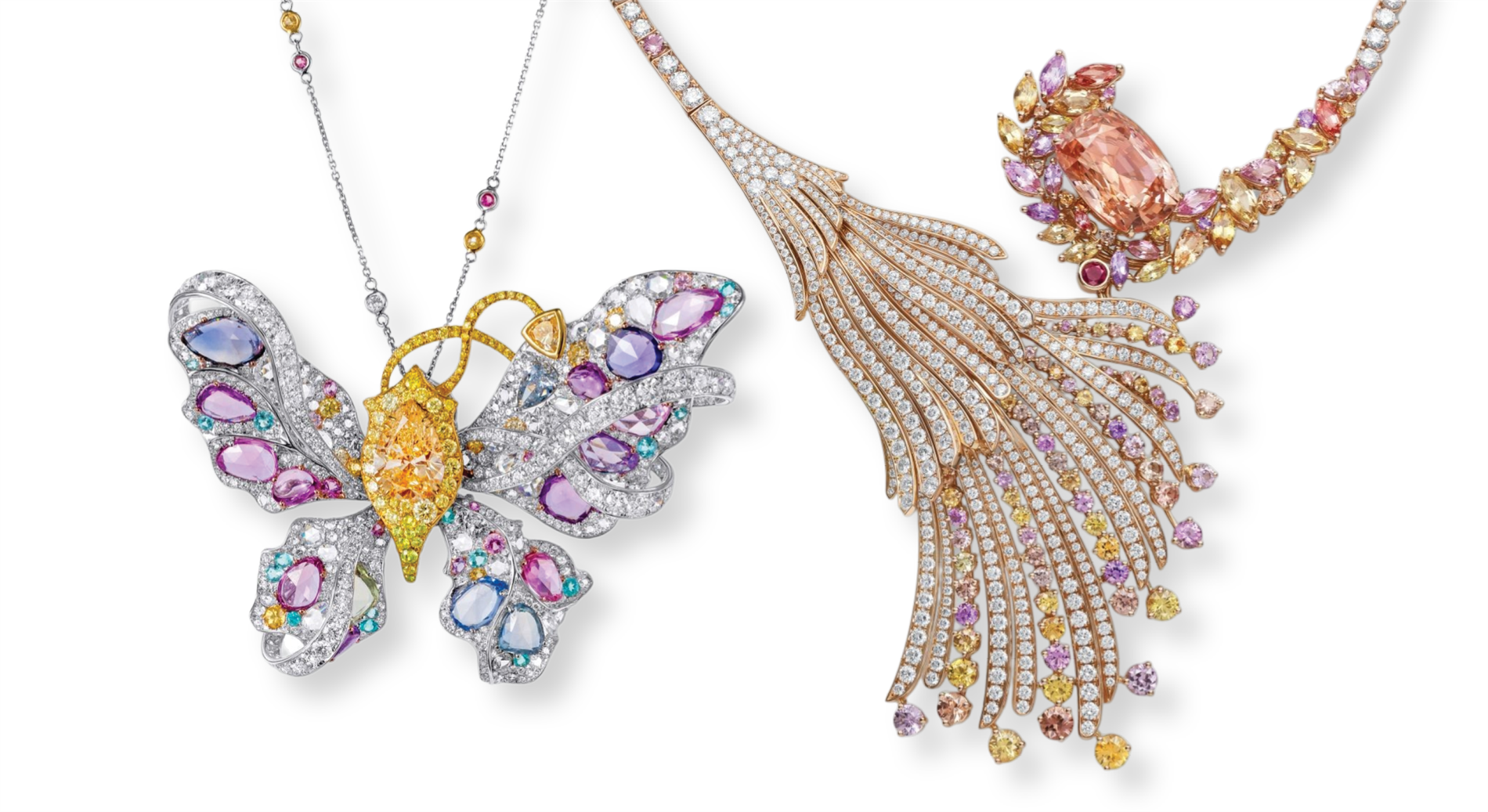 |
| Monet Butterfly Pendant by Anna Hu | Blushing Wing Necklace by Gübelin |
AI-driven tools can also interpret customer preferences, past purchases and visual references to generate initial design concepts aligned with individual taste. Rather than replacing the designer, this technology functions as an intelligent assistant. It accelerates ideation, reduces revision cycles, and strengthens customer engagement at the consultation stage.
Importantly, AI enhances predictability. By simulating wearability, stress points and production feasibility before manufacturing begins, jewellers can refine pieces with greater confidence.
As with CAD/CAM before it, the value of AI lies not in diminishing craftsmanship, but in augmenting it. It’s about improving efficiency while preserving creative authority and margin control.
As previously noted, industry research published earlier this year highlighted the increasing pressure on local jewellers to cater to the surging demand for custom-made pieces.
That same report, unsurprisingly, found that almost all (96 per cent) respondents anticipate the need to provide substantially more hours of jewellery manufacturing services in the next 12 months.
Looking ahead over the next three years, 70 per cent of respondents forecast a need for 20 hours or more of manufacturing services per week. Facing these demand challenges, it seems inevitable that jewellers, such as Proszkowiec, will continue experimenting with technologies.
“Looking forward, with the ability reproduce an item easily with CAD/CAM, the opportunity to replicate cost-effectively allows us the opportunity to grow and scale our businesses,” she says.
What was once regarded with scepticism has become central to the commercial sustainability of modern jewellery retail. CAD/CAM, 3D printing and now AI are not displacing craftsmanship; they are reinforcing it. It’s about providing the precision, predictability and scalability required in an increasingly custom-weighted market.
As labour constraints intensify and consumer expectations continue to rise, technology offers independents a pathway to protect margin, manage workflow and even unlock creative potential. In a trade defined by sentiment and individuality,
digital tools are no longer optional.
Read eMag