It’s a commercial reality: price typically outweighs not only narrative, but every other factor in a purchasing decision. The Great Diamond Debate has waged on for the better part of a decade, yet this fundamental truth continues to underpin the conversation.
Every consumer has principles that influence the products they do and do not purchase. For some, it may be tradition; for others, sustainability. Broadly speaking, however, most gravitate towards the most financially accessible option, and it’s a dynamic that continues to shape the jewellery market.
In a review interview with Vogue, a Pandora spokesperson made a rather bold statement. Senior vice president Mads Twomey Madsen suggested that eventually, lab-created diamonds will become ‘the norm’. In effect, she is positioning lab-created stones as the default choice for future consumers.
“Lab-grown diamonds offer better value and lower impact on the environment. Simply because the products are identical, they will become the norm,” Madsen said.
“Many would not have considered buying a diamond before, but can do it now. And some choose to get a bigger diamond without compromising on quality.”
It would be foolish not to acknowledge that this is exactly what Madsen should be expected to say, given that Pandora has been exclusively selling lab-created diamonds for several years. Even so, the broader premise is difficult to ignore.
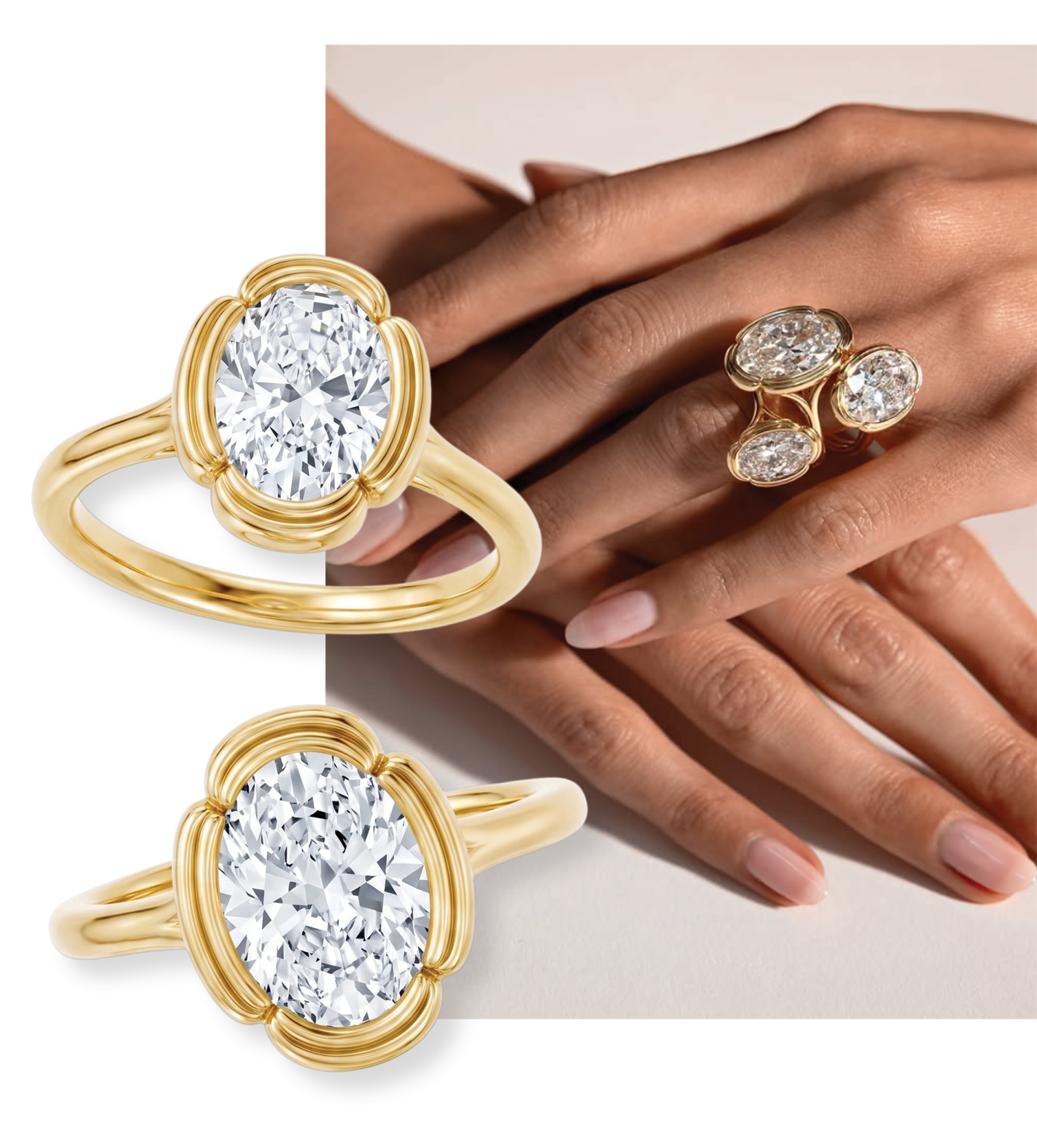 |
| Lab-grown diamond retailer Jean Dousset has addressed the pricing pressures of lab-grown diamonds by focusing on significantly larger lab-created stones. By positioning the brand as a leader in oversized lab-grown diamonds and high jewellery, it offers a compelling point of differentiation in a highly competitive market. |
It’s debatable whether or not lab-created diamonds are a lower-impact product when it comes to environmentalism, and it’s equally important to question whether ‘sustainability’ is a genuinely significant criterion for consumers when shopping for jewellery. The commercial argument (budget) is far clearer.
With that said, it’s worth asking if Madsen reached the correct conclusion while using the ‘wrong maths’. There is, after all, mounting evidence to support her prediction.
For example, a large survey of recently married couples highlighted the rising popularity of lab-created diamond jewellery. The study, conducted by The Knot, a wedding-planning company, surveyed more than 10,000 US couples who married in 2025.
The 2026 Real Weddings Study found that 61 per cent of consumers who participated in the survey had purchased an engagement ring featuring a lab-created diamond, a 239 per cent increase since 2020.
That figure also represented a significant increase from 2024, when the number of consumers purchasing a lab-grown centre stone surpassed 50 per cent for the first time. Among many factors, the report attributed this change to “economic pragmatism.” In other words, price is proving decisive.
In a recent interview with the ABC, it was suggested that younger consumers would drive sales of lab-created diamond jewellery to new heights in the coming years. Marty Hurwitz, founder of the Global Diamond Trade Organisation (GDTO), said market share for lab-created diamonds could be as high as 70 per cent by the end of 2026.
“These buyers prize sustainability, transparency, and digital fluency — values that are already reshaping every corner of discretionary spending,” Hurwitz said.
“Our research estimates show the current retail market share between 50 and 60 per cent in favour of lab-grown diamonds in Australia.”
This shift is not only theoretical. In the same report, penned by business reporter Yiying Li, Justin Linney of Linneys in Western Australia noted a decline in sales of natural diamond rings priced between $4,000 and $8,000. Within this bracket, consumers appear increasingly willing to consider lab-created alternatives.
Myrtle Polymenopoulos, the operations manager for Austen & Blake in Australia and New Zealand, offered a more balanced interpretation of this trend.
She suggested that lab-created diamonds are not replacing natural stones but rather expanding the market.
“Lab-grown diamonds are reshaping the world of jewellery,” Polymenopoulos said.
“They have made larger stones, distinctive settings or bespoke creations accessible without stretching a customer’s spend.
“It should be a considered choice with consumers fully aware of the facts and, importantly, the origin of their diamond.”
For some retailers, the rise of lab-created diamonds signals something broader than price competition. Secrets Shhh, the 23-store fashion jewellery retailer, was sold to overseas interests after being placed into voluntary administration in December 2025.
Under the management of the insolvency firm FTI Consulting, Secrets International Pty Limited and its subsidiaries (trading as Secrets Shhh) were sold to Amaar Jewels, a privately owned jewellery group headquartered in Dubai.
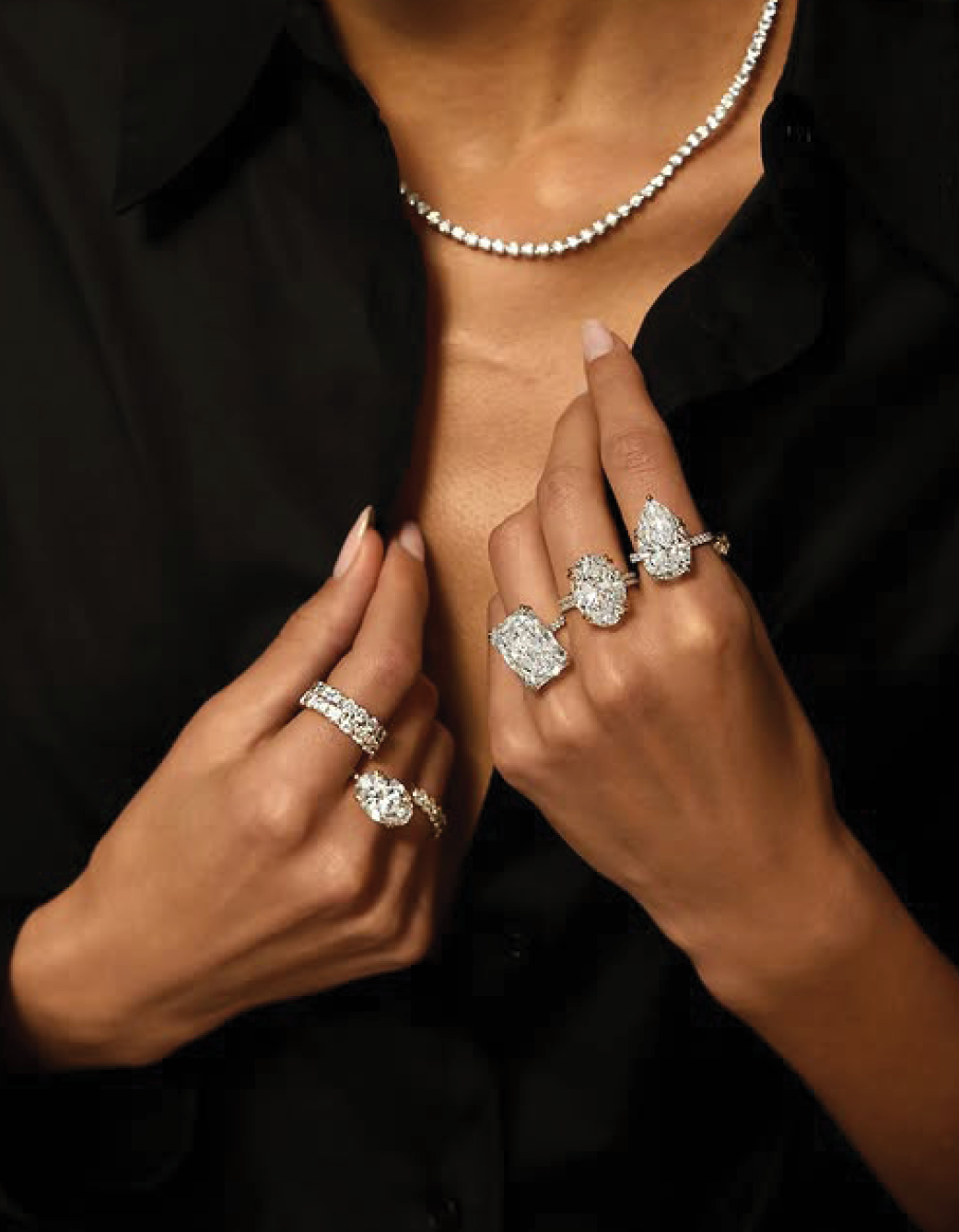 |
| Lab-created diamond retailers don’t need to compete on the same terms as traditional engagement rings. Instead of leading with “lab-created” or carbon origins, they can use size as their standout advantage - offering larger stones that deliver greater emotional impact, which is what buyers have always valued most. | Source: Jean Dousset |
The company has been rebranded as Secrets by Amaar, and in a recent interview with 7News, co-founder Mihika Kothari said the rise of lab-created diamond jewellery represented a broader cultural shift in how consumers perceive luxury.
“Lab-grown diamonds sit at the centre of that shift, not as an alternative to fine jewellery, but as its next evolution,” she said.
“The customer who chooses a lab-grown diamond isn’t settling; she’s investing with intention. She wants something genuinely beautiful, lasting and aligned with what she believes without compromising on luxury craftsmanship or modern design.”
“Beyond the ethics, lab-grown diamonds mean buyers can access larger, higher-grade stones without compromise.
That shift in perception is also reflected at the sales counter. 9News recently published a report detailing the market tension between natural and lab-created diamonds, which was aired on A Current Affair.
A contributor to the report was Talitha Cummins of The Cut, who estimated that lab-created diamond jewellery accounted for more than half of her business.
“Even up to a couple of years ago, there was a real stigma around lab-grown diamonds, but that’s dissipated in the last couple of years as people understand more about what they actually are,” she said.
“There’s really a strong demand for lab-grown diamonds. They’ve democratised the market, and they just essentially mean that you can get a larger stone for your money.
“I think lab-growns can make people’s dreams come true. It’s a difficult time that we’re living in. People are struggling to make ends meet, and I think this gives younger people a great option.”
However, the story is not one-directional. Reporters also spoke with George Bakoulas of the Australian Diamond Company, who said he has observed growing consumer interest in natural diamonds.
“So I think that creates a bit of a dilemma for a lot of people, because it’s not like you’re getting a fake handbag or a fake watch or anything like that. They’re ultimately exactly the same thing,” he said.
“I would say the lab-grown diamonds are probably about 70 per cent to 80 per cent more affordable. I really think the introduction of lab-grown diamonds has been a positive thing for our industry, because it gives the consumer choice.
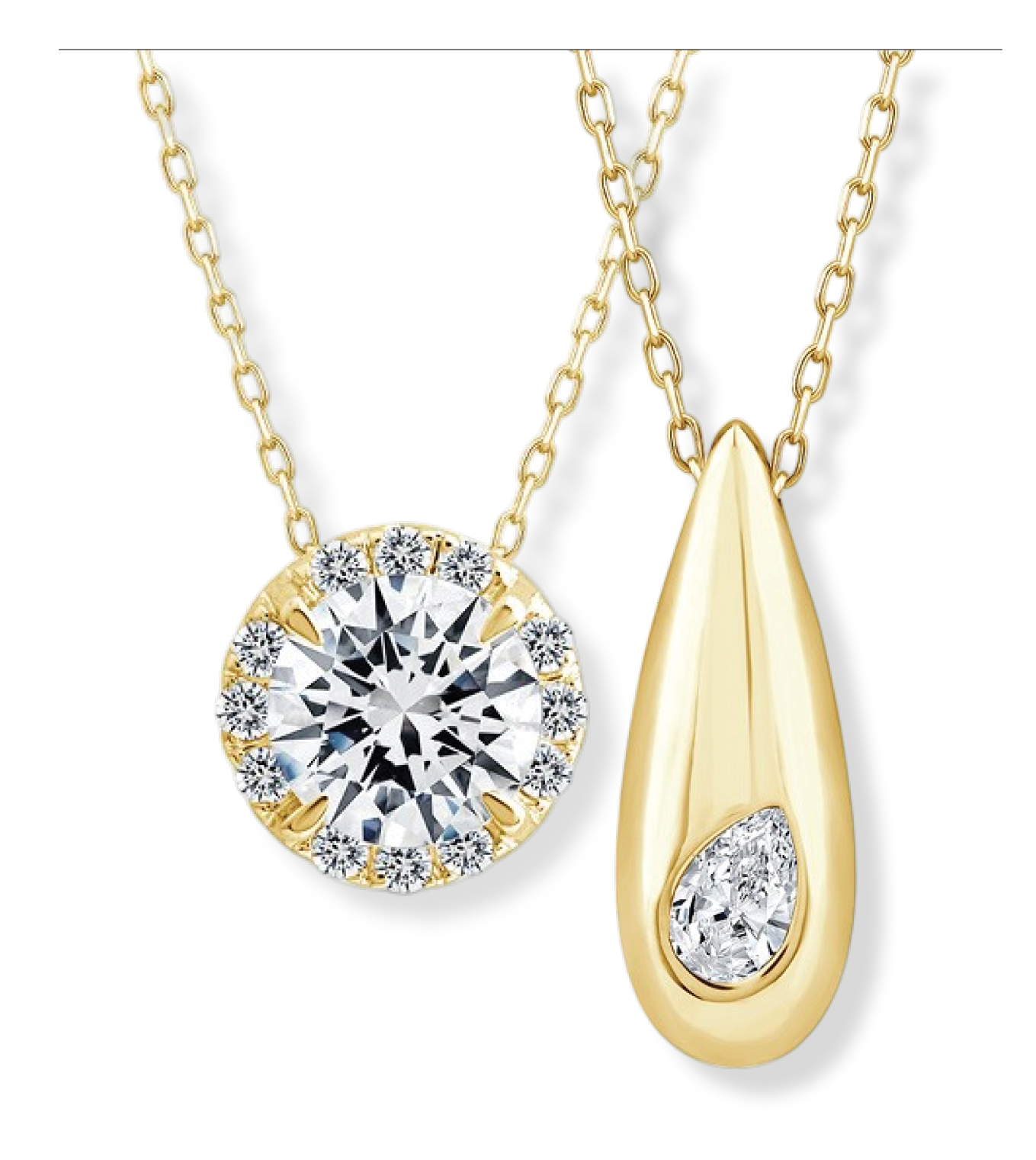 |
| Lab Diamonds by DGA |
“Ever since there was a big take-up of lab-grown diamonds, we’ve started to see the pricing of natural diamonds come down considerably. In fact, I think it’s probably the lowest I’ve seen natural diamonds in terms of pricing for quite a long time.
“It’s been a bit of a win-win for everybody if you ask me.”
In January, INSTORE published the findings of a survey of more than 100 jewellery retailers, gauging sentiment on a range of questions concerning lab-created and natural diamonds.
More than half (51 per cent) of participants weren’t worried about lab-created diamonds being a threat to natural stones. A further 25 per cent said the category could ‘possibly’ be a threat, while 18 per cent expressed direct concern.
“Lab-grown diamonds are firmly in the product mix right now, and numerous jewellers have found a way to profit from them,” the report explains.
“But the market hasn’t finished having its say — one jeweller already sees a two-tier market now: lab for fashion or young buyers. If that split persists, the category may further diverge, with lab-grown diamonds potentially moving towards lower price segments, following the lead of former diamond substitutes like cubic zirconia or moissanite, while natural diamonds become the higher-end signal.”
Alongside these shifts, one issue continues to surface: confusion. The key issue remains consumer confusion around lab-created and natural diamonds. More than 70 per cent of participants acknowledged that the coexistence of the two categories led to consumer confusion.
When it comes to confusion, there are many things that likely confuse people. The most obvious difference is between the two; however, resale value may be the more confronting reality.
A report, admittedly somewhat unusual, recently illustrated this. One widely shared example, reported by Yahoo, highlighted the disconnect. A Sydney teacher was emotionally stunned when she discovered what the resale value of her lab-created diamond engagement ring was. Purchasing for $9,000 in 2021, it was now valued at just $500.
Rob Bates of The Jewelry Wire highlighted this report as an example of the ongoing confusion among consumers.
“Labs are a legitimate product and are here to stay. However, it is fair to note that they are different from products jewellers have traditionally carried, because of their steep price decreases and limited trade-in value. Perhaps it’s time to discuss—in a respectful, non-disparaging way—how jewellers should handle this issue,” Bates explained.
“In 2024, Signet added a note to its lab-grown jewellery stipulating the stones may lose their value. I’ve talked to smaller jewellers who offer similar warnings, and they’re mostly met with shrugs. People don’t buy engagement rings expecting to get divorced.”
He continued: “That said, some consumers clearly do consider diamonds a store of value. While I don’t believe it should be mandatory, I do think that jewellers should inform shoppers that the diamond they’re buying has limited trade-in value, just as a best practice. It probably won’t affect sales, but buyers should still know, just in case. The last thing you want is a customer having their jaw hit the floor.”
For retailers, this creates a practical challenge. It’s not just what to sell, but how to explain it.
That challenge points to a broader shift in the role of the jeweller. Product knowledge is no longer enough; interpretation is now part of the service.
Education builds trust, and trust builds value. In this environment, education is emerging as a key differentiator. Customers today are not afraid to ask questions. In fact, they expect answers.
Whether it’s understanding the difference between diamond types, metal choices, or design considerations, the jeweller who can clearly and confidently guide that conversation immediately stands apart.
But this is not about overwhelming the customer with technical detail; it’s about clarity. It is about giving customers the confidence to proceed.
Because while price may be driving the shift towards lab-created diamonds, it is confidence - in the product, in the information, and in the retailer - that will ultimately determine where that sale is made.
Read eMag