Few geological stories carry the romance and gravitas of the Argyle Mine, discovered in 1979. Located in Western Australia’s remote Kimberley region, the Rio Tinto operated site was once the largest diamond mine on Earth.
It was said to be visible from space and responsible for 90 to 95 per cent of the world’s pink and red diamonds before its closure in November 2020.Yet for all its staggering scale, Argyle’s most extraordinary legacy lies in what it produced least: pink diamonds, which accounted for less than 1 per cent of output.
Indeed, a year’s entire haul of ‘pinks’, as Rio Tinto’s Patrick Coppens once memorably noted, would fit inside a single Champagne flute. That scarcity, paired with unrivalled colour saturation, turned Argyle pinks into one of the most coveted collectibles on the planet.
The annual Argyle Tender, an invitation-only event launched in 1984, became the industry’s most prestigious showcase. It fuelled mystique and fierce competition among dealers and collectors alike. The mine’s impending closure only intensified demand, sending prices soaring even through the disruptions of the pandemic.
Now, six years on, with Argyle silenced and rehabilitation underway, the diamond world faces an uncertain future for pinks. Small volumes continue to emerge from abroad, but none replicate the distinctive hues that defined the Argyle.
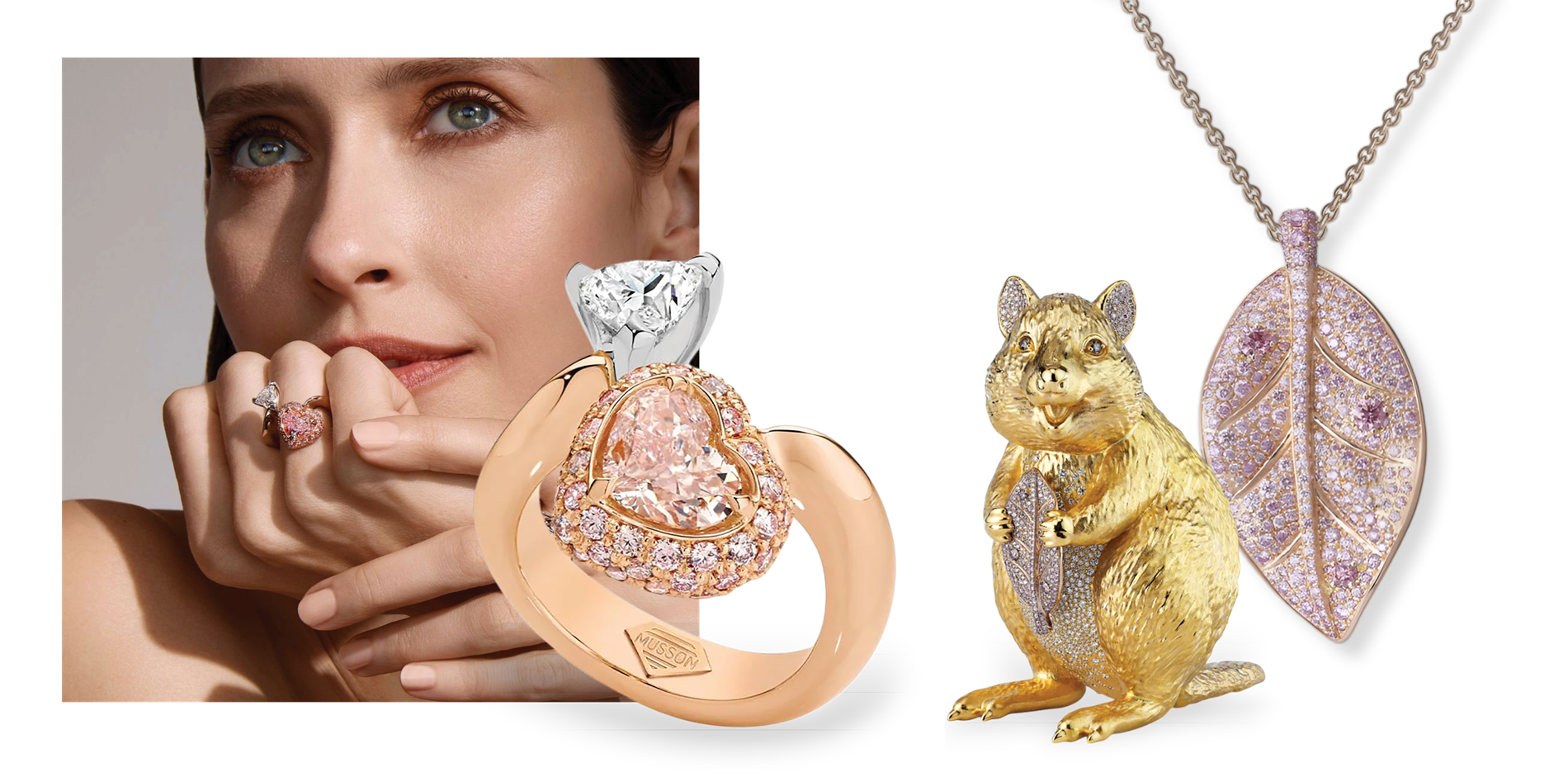 |
| Musson | Linneys |
Over the years, industry voices have been consistent, insisting that supply will only tighten and value will only climb.
What began with geologist Ewen Tyler’s stubborn search through the Australian outback has become an enduring chapter in the story of luxury itself. Argyle may be closed, but its diamonds, and the extraordinary legend surrounding them, are far from finished.
The ‘father’ of Australian diamonds
Tyler discovered all three of Australia’s diamond mines – Argyle and Ellendale in Western Australia, and Merlin in the Northern Territory. Acting against conventional wisdom, Tyler spent the better part of a decade searching Australia’s vast interior for diamond-bearing kimberlites where none had looked before.
On the verge of having his funding withdrawn, Tyler’s staff finally found a diamond in a rock sample; however, the journey was only beginning. In a candid interview with Jeweller, Tyler reflected on a career that reshaped Australia’s place in the global diamond trade and very nearly didn’t happen at all.
He began his search in 1969, employed by London-based Tanganyika Holdings, scouring the Kimberley region by helicopter and small boat for signs of kimberlite pipes.
The breakthrough came on the eve of his 45th birthday in 1973, when a rock sample yielded a single diamond. It was the first confirmed find in the region.
Had it not appeared, Tyler admitted he was facing the end of his funding and likely his career in exploration.
Six more years of painstaking work followed before his staff finally stood on the Argyle site in 1979.
By the mid-1980s, the mine was operational, and Australia had become one of the world’s largest diamond producers.
The obstacles, however, were relentless and included a hostile press, sceptical buyers who claimed Australian diamonds would shatter on the polishing wheel, and a state government that imposed punishing royalties and resisted fly-in-fly-out operations.
At the time of the interview, he remained actively involved in exploration south of Argyle and was convinced that more diamonds, including pinks, awaited discovery across the continent.
While Tyler passed away in October, his parting advice carries the irreverence of a man who defied the odds: people who search for diamonds, he says, have rocks in their heads — but it’s a lot of fun.
Getting what you paid for?
Of course, there are other sources of pink diamonds, including Brazil, Russia, South Africa, Tanzania, Angola, and Canada. However, volumes are low, and quality is inconsistent. Nothing has matched Argyle, which is why provenance has become so important for consumers.
In a market where a single word of provenance can mean a six-figure swing in value, the question of certification has become the defining issue for pink diamond collectors.
Since the closure of the Argyle Mine, the premium on confirmed-origin stones has only intensified. With it, the urgency to prove exactly where a diamond came from. The challenge was, and remains, significant. Argyle diamonds only began receiving laser inscriptions in 2005, and initially only for stones of 0.2 carats and above.
This means the vast majority of pinks produced during the mine’s peak years carry no official marking linking them to their source. For collectors, this gap between legacy and paperwork represents both a frustration and an opportunity for misrepresentation.
Science, however, is closing that gap. Perth-based Delta Diamond Laboratory, led by John Chapman, uses ultraviolet, infrared, and laser analysis to identify the geological signatures unique to Argyle stones. These are distinct nitrogen concentrations and atomic structures.
Professor John Watling has taken the concept further, developing what he describes as an “inorganic DNA” fingerprint capable of pinpointing the section of a kimberlite pipe from which a diamond originated.
Rio Tinto has also moved to protect the brand, launching its Icon Partner program in 2022 to manage certification, curate remaining inventory, and combat opportunistic operators trading on the Argyle name without authorisation.
The message for buyers is clear: in a post-Argyle world where supply is finite and demand relentless, a pink diamond is only as valuable as the proof behind it.
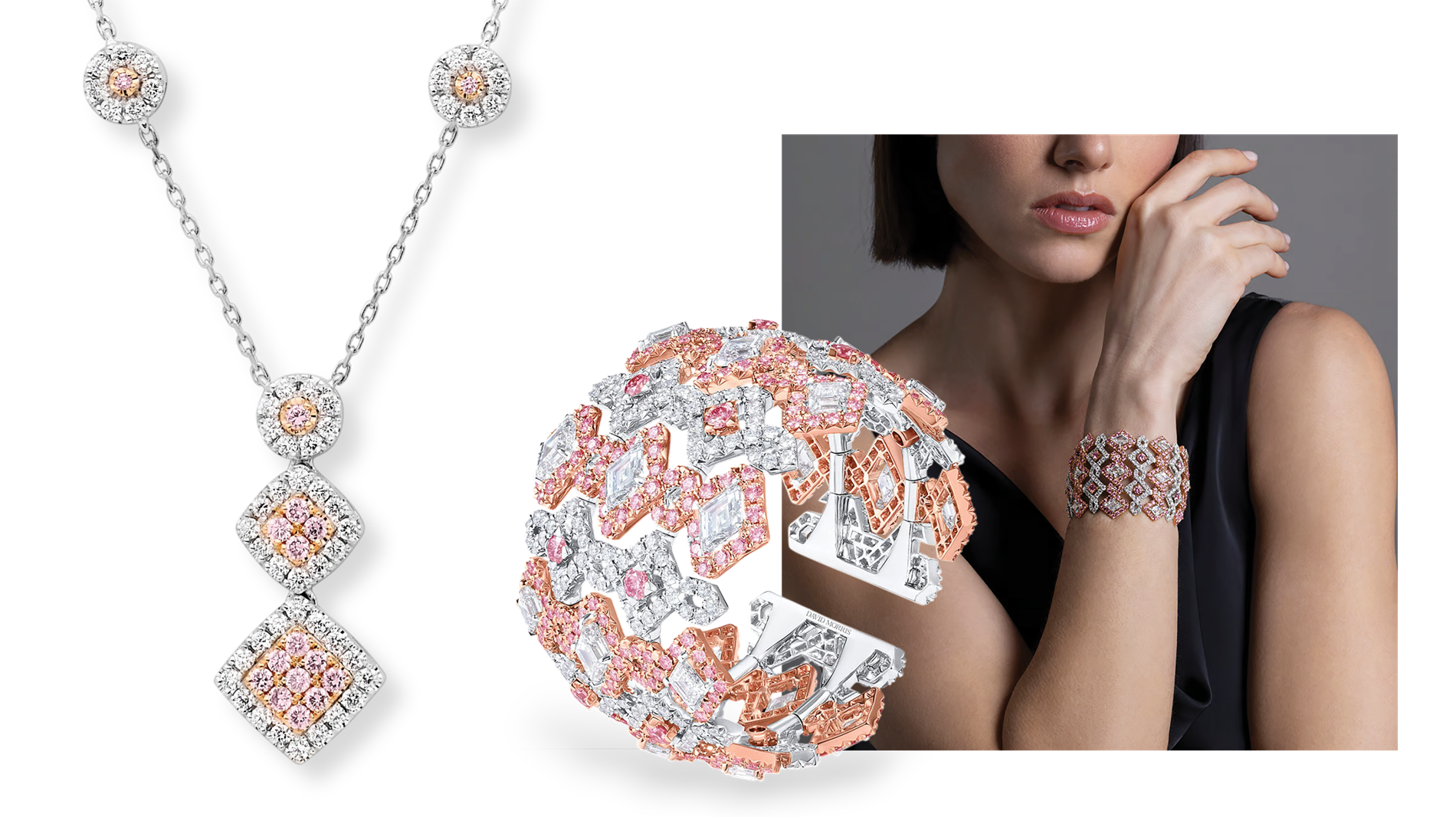 |
| Ellendale Diamonds | David Morris |
The impact of auctions
Just handling a pink diamond will make anyone quickly realise why they are so popular, and expensive. Their beauty is obvious; however, other factors come into play when it comes to pricing.
For example, do high-profile auctions raise awareness and boost the popularity of fancy-colour diamonds, especially pinks? It’s a question worth asking in an era when headline-grabbing sales routinely dominate luxury news cycles.
Do blockbuster auctions actually translate into broader consumer interest in fancy colour diamonds, or do they simply preach to an already converted congregation?
The evidence point to a bit of both. High-profile sales at Christie’s, Sotheby’s, and Phillips undeniably generate enormous visibility. When a 6-carat pink diamond fetches $USD12 million in Geneva, or a fancy red Argyle stone returns nearly triple its estimate, the resulting media coverage reaches audiences far beyond the traditional collector base.
Phillips reported that around 40 per cent of its jewellery buyers are now aged 50 or under. It’s a demographic shift driven largely by digital marketing, social media, and the accessibility of online bidding platforms that emerged during the pandemic.
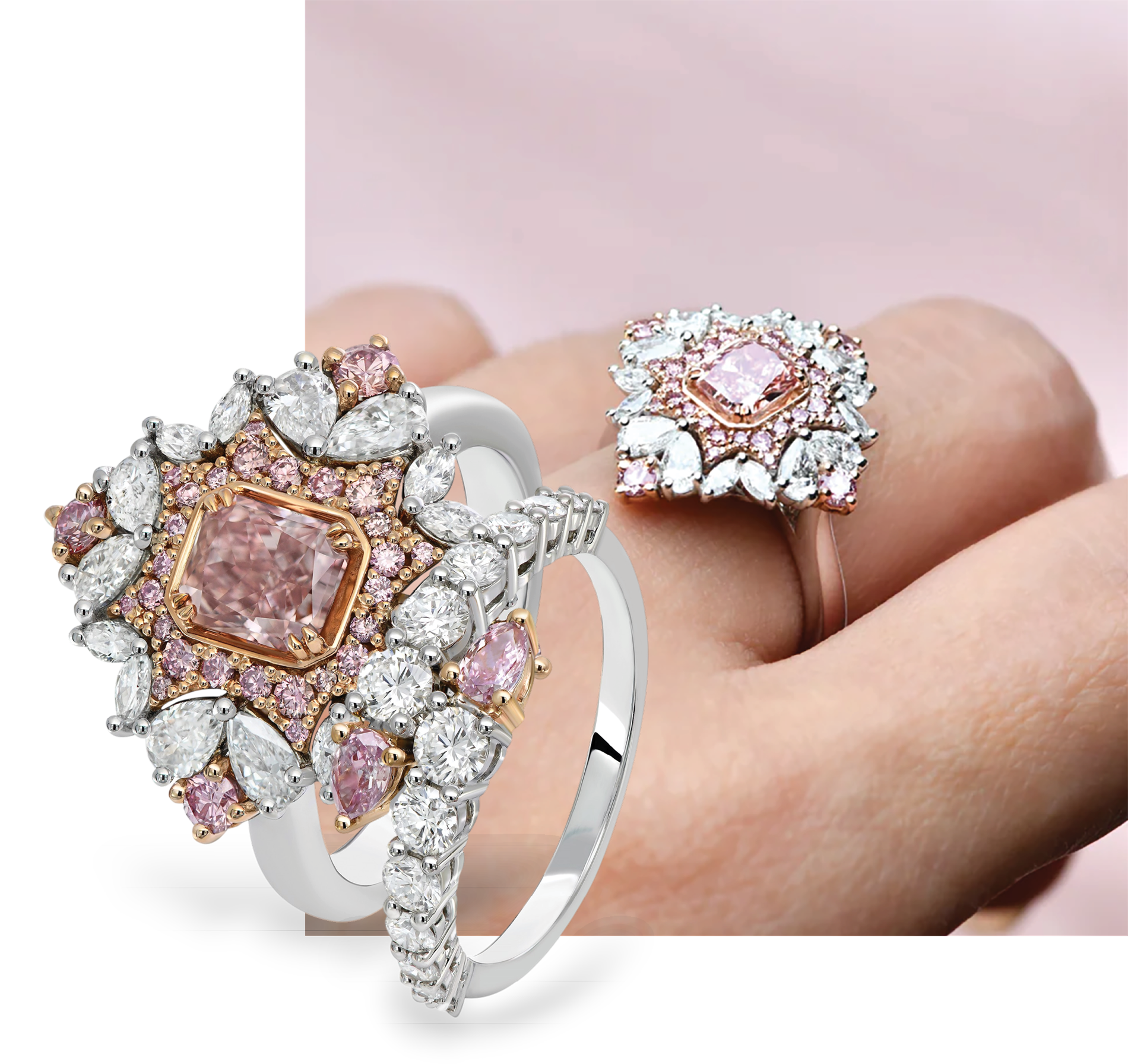 |
| Pink Kimberley |
Yet the relationship between auction spectacle and market confidence is not without risk.
When stones go unsold, as one happened with an Argyle pink in Sydney and three fancy colour diamonds at Phillips in New York, the optics can dent perceptions of value, even when individual results are not reflective of wider market trends.
Industry supplier Shubham Maheshwari of Kunming Diamonds argued that fancy colour diamond collectors are fundamentally different from typical diamond buyers: more passionate, more knowledgeable, and more committed to the category long-term.
Auctions, he contended, fuel that enthusiasm and keep the conversation alive. The broader takeaway is nuanced. Auctions serve as both a marketing engine and a market barometer for fancy colour diamonds. They educate, they excite, and they occasionally disappoint; however, their role in sustaining the profile and prestige of these extraordinary stones is, on balance, undeniable.
Creating perfection
There is no doubt that a quality loose stone is a sight to behold; however, it takes an artisan to turn it into a wearable creation. Just as an artist works with the best available materials, jewellers enjoy creating jewellery with rare and elusive diamonds and gemstones.
There is a particular pride that burns in the eyes of a jeweller when they speak about their finest work. Nothing seems to ignite that fire quite like a pink diamond.
The numbers alone tell a compelling story. Pink diamond jewellery continues to command staggering returns at international auctions. Each sale reinforces the global appetite for these stones and the craftsmanship that frames them. But it’s at the bench, not the auction podium, where the real magic happens.
From Linney’s freeform Pink Lake Ring crafted in their Subiaco workshop, to Musson’s decade-old Satine Angel with its angel-wing clusters of pear-shaped white diamonds, to the moveable wings of Hartmann’s Pink Butterfly Brooch in Copenhagen, each piece reflects an almost obsessive commitment to doing justice to the stone at its centre.
Nina’s Fine Diamond Jewellery went so far as to spend over 500 hours completing its Crescendo exhibition of ten pieces featuring more than 400 Argyle pinks, then invited the public to try them on rather than lock them behind glass.
What emerges from these conversations is a shared conviction: pink diamonds demand audacity. They push designers to test their limits precisely because the material’s rarity and beauty do not tolerate mediocrity.
And it is that relentless creative ambition, perhaps as much as geological scarcity, that ensures these stones will captivate for generations to come.
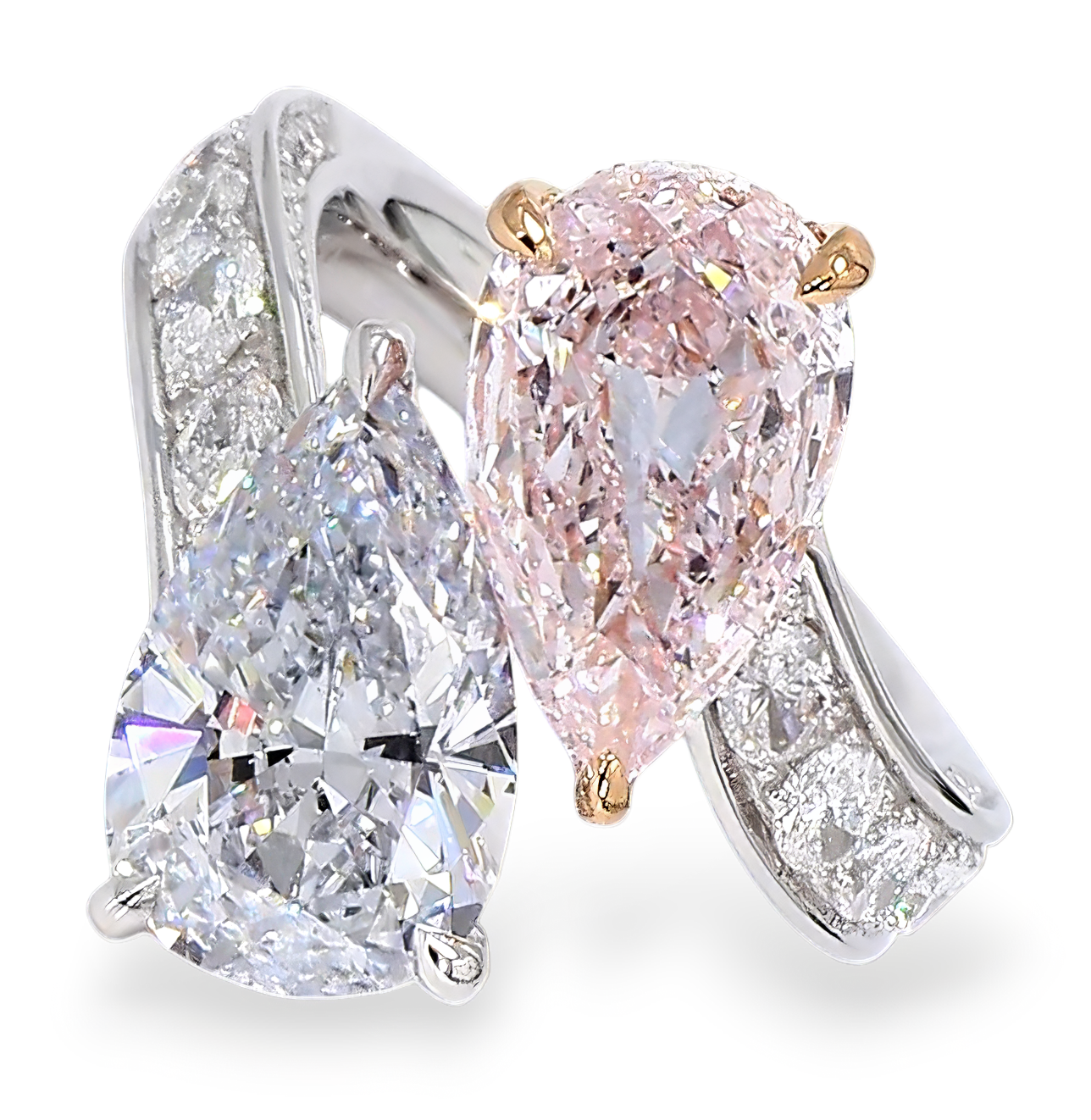 |
| Glajz |
What does the future hold?
In many respects, the story of Argyle pink diamonds is no longer about what remains in the ground, but what continues above it. In private vaults, on the market, and, most importantly, in the showcases of discerning retailers. For Australian jewellers, this presents both a challenge and a remarkable opportunity.
Scarcity is now absolute. Unlike other luxury categories where supply can respond to demand, Argyle pink diamonds exist within a closed chapter of history. Every stone in circulation is finite, and every sale reshapes the market. For retailers, this elevates the importance of education, storytelling, and, above all, trust.
Customers are no longer simply purchasing a beautiful diamond; they are investing in provenance, rarity, and legacy. The ability to confidently communicate origin, certification, and long-term value has become a defining competitive edge.
At the same time, the enduring allure of pink diamonds offers something increasingly rare in modern retail: true differentiation. In an industry often challenged by commoditisation, these diamonds remain immune.
Argyle may be silent; however, its influence continues to echo across the trade.
Read eMag