Consumers are increasingly influenced by and reliant upon the internet and social media during the product purchasing process. It’s something of an unavoidable condition of the modern retail market.
For some, this represents a somewhat ‘dystopic’ view of where consumer attitudes are heading. For others, however, this shift has presented an opportunity – a shortcut to consumer attention.
Indeed, the jewellery industry has undergone a profound transformation over the past two decades, and there’s little reason to believe that the changes will ever stop – Bob Dylan said as much in 1964, and far wiser men and women reached the same conclusion hundreds, if not thousands, of years earlier.
While much of the conversation has focused on changing consumer tastes, digital disruption, and shifting retail habits, one of the most significant developments for this trade specifically has been the rise of branded jewellery.
For independent retailers, this evolution has long been identified as a valuable opportunity. In an increasingly crowded marketplace, branded jewellery offers somewhat of a shortcut to a tool that so many businesses spend years trying to achieve. That tool is immediate access to an engaged and loyal fanbase.
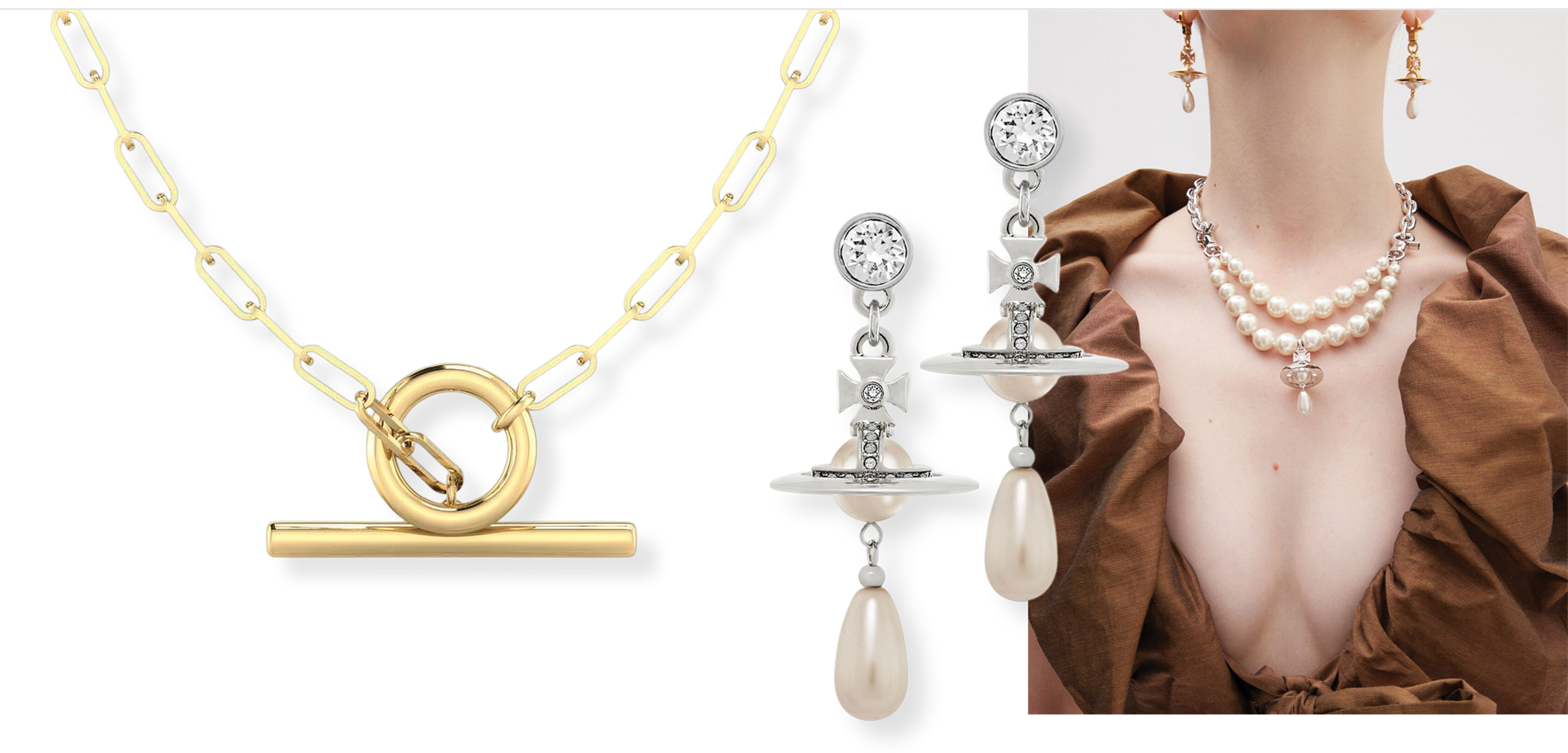 |
| Gold Vermeil By DGA - Duraflex Group Australia | Vivienne Westwood - West End COllection |
Before exploring why these matters, it is important to distinguish between two concepts that are often mistaken for one and the same: jewellery brands and branded jewellery.
Jewellery brands typically operate through a vertically integrated model, designing, manufacturing, and retailing their collections exclusively through company-owned channels.
These products are generally unavailable to independent retailers and exist outside the traditional wholesale ecosystem.
Branded jewellery, by contrast, is specifically developed for distribution through independent retailers.
It allows jewellers to remain autonomous while benefiting from the marketing power, consumer recognition, and reputation of an established brand.
Fashionably late to the party
Compared with many other retail categories, jewellery was relatively slow to embrace the concept of branding. Once upon a time, the vast majority of jewellery stores featured products displayed in whatever order or variation the owner or manager felt best – price, design, theme, or target consumer – it was the dealer’s choice. Somewhere in the store sat watches, each proudly displaying a brand name – somewhat at odds with the rest of the store.
 |
| UNOde50 - TImesupply |
Consumers purchased watches largely because of the brand attached to them. Jewellery purchases, meanwhile, were more commonly driven by aesthetics, craftsmanship, or material value – or perhaps even just a particularly charismatic member of the staff.
That dynamic began to shift dramatically in the early 2000s. Much of the change can be traced to the success of Pandora, which demonstrated that jewellery could command the same level of brand loyalty traditionally associated with watches, fashion, and beauty products. Importantly, Pandora achieved this while operating through a wholesale distribution model, allowing independent jewellers to stock the brand and benefit from its increasing popularity.
The formula proved highly effective. As consumer demand accelerated, many other jewellery companies adopted a similar approach, with some building strong brand identities while partnering with independent retailers. Others, naturally, failed, such is the nature of the market.
Since those days, branded jewellery has long escaped the label as a niche concept. It has evolved into and remains a significant and influential category in the market. Yet the environment in which these brands operate has evolved once again.
The difference now is where consumers begin their purchasing journey.
The new path to purchase
More than 20 years later, the modern consumer rarely walks into a jewellery store without first conducting some form of research.
Whether browsing social media, reading reviews, watching product videos, or comparing prices online, shoppers increasingly arrive in-store with a clear understanding of the products and brands they intend to purchase.
Recent research from Monash University highlights this changing behaviour. While Australian consumers continue to demonstrate a strong preference for physical shopping experiences, online research and digital engagement have become deeply embedded in the purchase process.
Unsurprisingly, the pandemic accelerated this shift dramatically. Online shopping participation reached unprecedented levels during COVID-19 restrictions, then moderated as consumers returned to stores – many with a relatable level of enthusiasm, given the living nightmare that the pandemic represented for most people.
However, digital engagement has remained a permanent feature of retail behaviour.
The result is a retail landscape in which physical locations remain critically important; however, digital channels increasingly influence purchasing decisions before customers enter a store.
Additional studies show that the overwhelming majority of Australian consumers use digital platforms to research retailers and products, even though almost all continue to shop in physical stores.
Search engines remain a primary source of information, while social media, online reviews, influencer content, and comparison platforms all play increasing roles in product discovery.
For younger consumers in particular, social media has become the most powerful influence. Recommendations from influencers, creators, and online communities often shape perceptions of brands long before a customer encounters a product in-store.
In other words, today’s consumers frequently scroll before they stroll. For independent retailers, this new paradigm presents both a challenge and an opportunity. Building a digital audience from scratch requires significant investment in content creation, advertising, and ongoing marketing. Branded jewellery offers a shortcut.
Why do consumers follow the crowd?
The increasing influence of digital channels on purchasing decisions is not simply a matter of convenience. It is also rooted in human behaviour.
Consumers have always looked to others for reassurance when making decisions, particularly when a purchase carries emotional significance or financial consideration.
Psychologists often refer to this tendency as ‘social proof’. It’s the idea that people use others’ actions and opinions to help determine what they should do. This sounds like the kind of insight that might be credited to ‘Captain Obvious’ – but it’s important to understand.
In practice, this can take many forms. A positive review, a recommendation from a friend, a celebrity endorsement, or even seeing a product repeatedly appear across social media feeds can all contribute to a perception of trust and desirability.
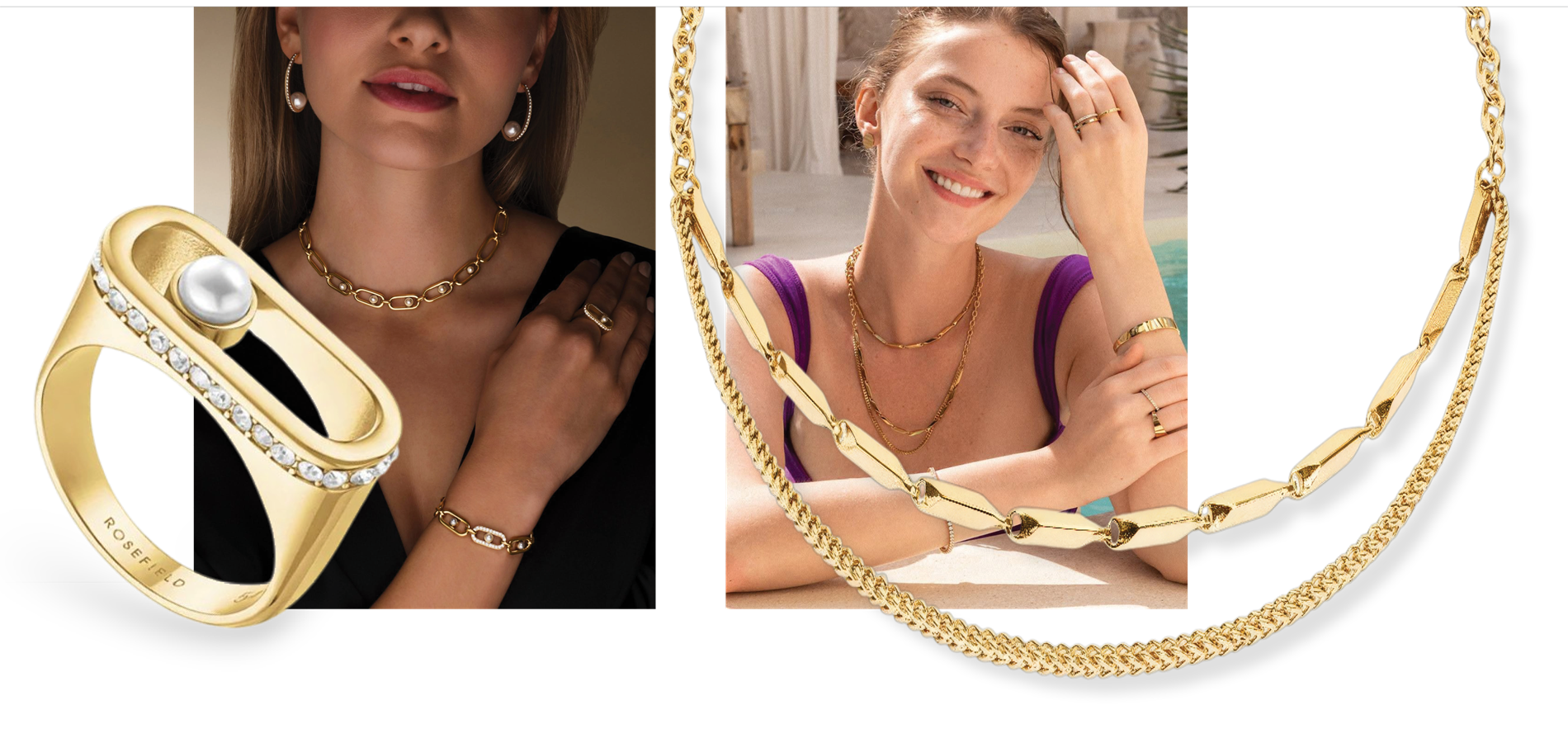 |
| Rosefield - Designa Accessories | Coeur de Lion - Timesupply |
This is particularly relevant in jewellery because purchases are rarely driven by raw function alone. Jewellery is inherently emotional. It celebrates milestones, expresses personal identity, and often serves as a visible reflection of taste and lifestyle.
As a result, consumers frequently seek validation that they are making the ‘right’ choice before committing to a purchase, because they are trying to send the ‘right’ message to those around them.
Social media has amplified this behaviour considerably. Where shoppers once relied on word-of-mouth recommendations from a small circle of friends and family, they now have access to thousands of reviews, testimonials, influencer endorsements, and user-generated images at the touch of a screen.
The effect is powerful: when consumers see others engaging positively with a brand, their confidence increases. The purchase feels less risky because the brand has already been validated by a wider community.
This helps explain why successful jewellery brands invest so heavily in building online audiences. They are not merely promoting products. They are cultivating trust and social proof.
By the time a consumer enters a store, much of the emotional groundwork has already been completed.
For independent retailers, that trust represents one of the most valuable assets any brand can provide.
The ready-made audience
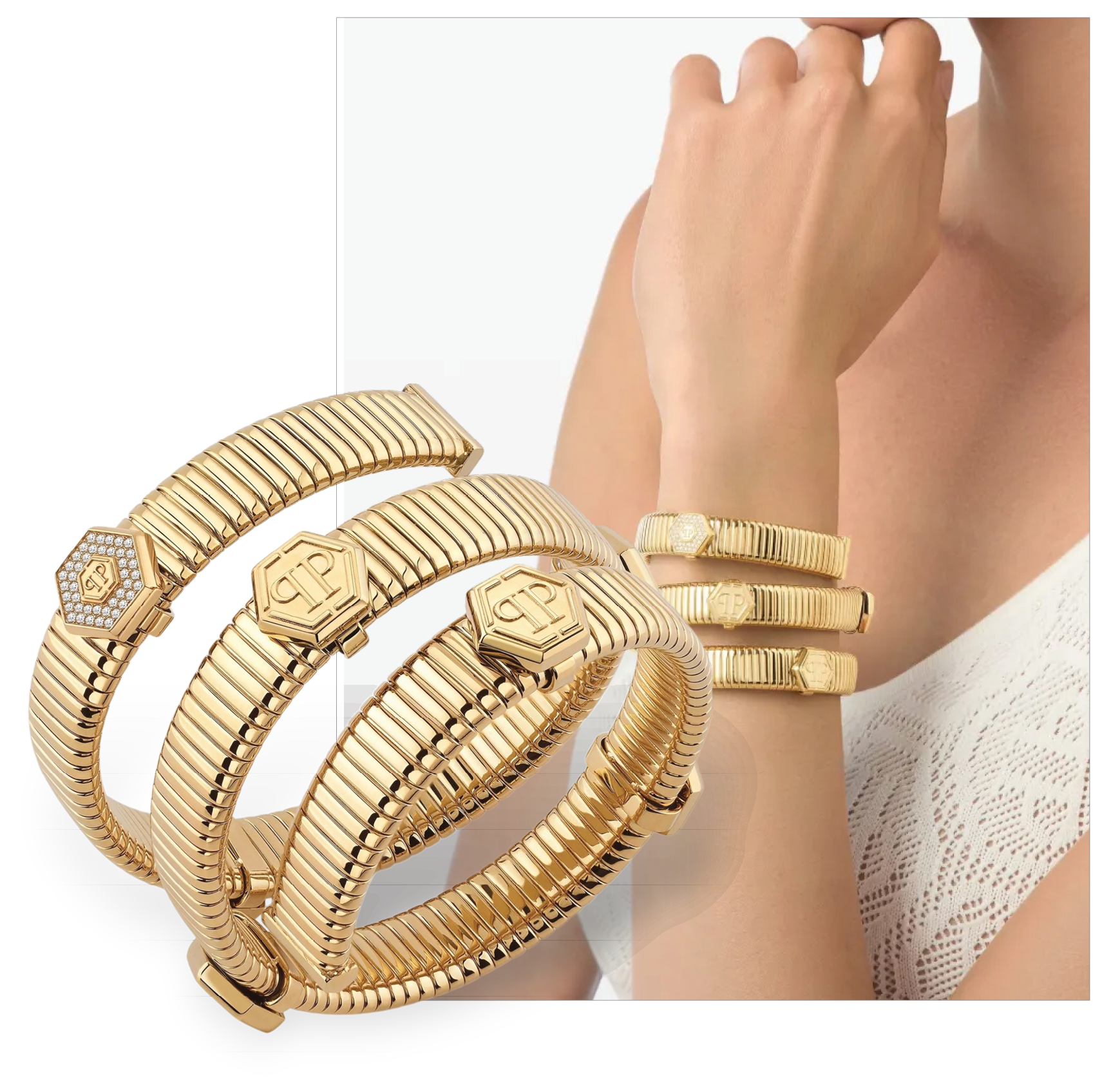 |
| Philipp Plein - Designa Accessories |
This is where branded jewellery delivers its greatest commercial advantage. Every successful jewellery brand effectively maintains
a community of consumers who have already demonstrated interest in its products.
Through social media, email marketing, digital advertising, and online engagement, these brands communicate with potential customers daily. The scale of these audiences is significant.
It’s an obvious starting point; however, Pandora has amassed more than 11 million followers on Instagram alone. Other internationally recognised brands, such as Vivienne Westwood, Furla, and Philipp Plein, maintain audiences numbering in the millions, while established jewellery specialists, including Thomas Sabo, Nomination Italy, and Coeur de Lion, continue to cultivate highly engaged communities.
Each follower represents a potential customer who is actively consuming brand content, viewing new product releases, and engaging with marketing campaigns.
For independent retailers, access to these audiences can be invaluable – because building that kind of following, even in a loyal local community, can literally take generations.
Rather than relying solely on local marketing efforts to generate awareness, retailers benefit from national and international campaigns that continually reinforce brand visibility. The brand creates demand, and the retailer fulfils it.
In many respects, branded jewellery functions as much as a customer acquisition tool as it does as a product category.
Consumers searching online for a specific brand frequently use retailer locators, Google searches, or social media recommendations to identify stockists.
As a result, branded jewellery can generate new customer traffic that may not otherwise have even considered a particular store.
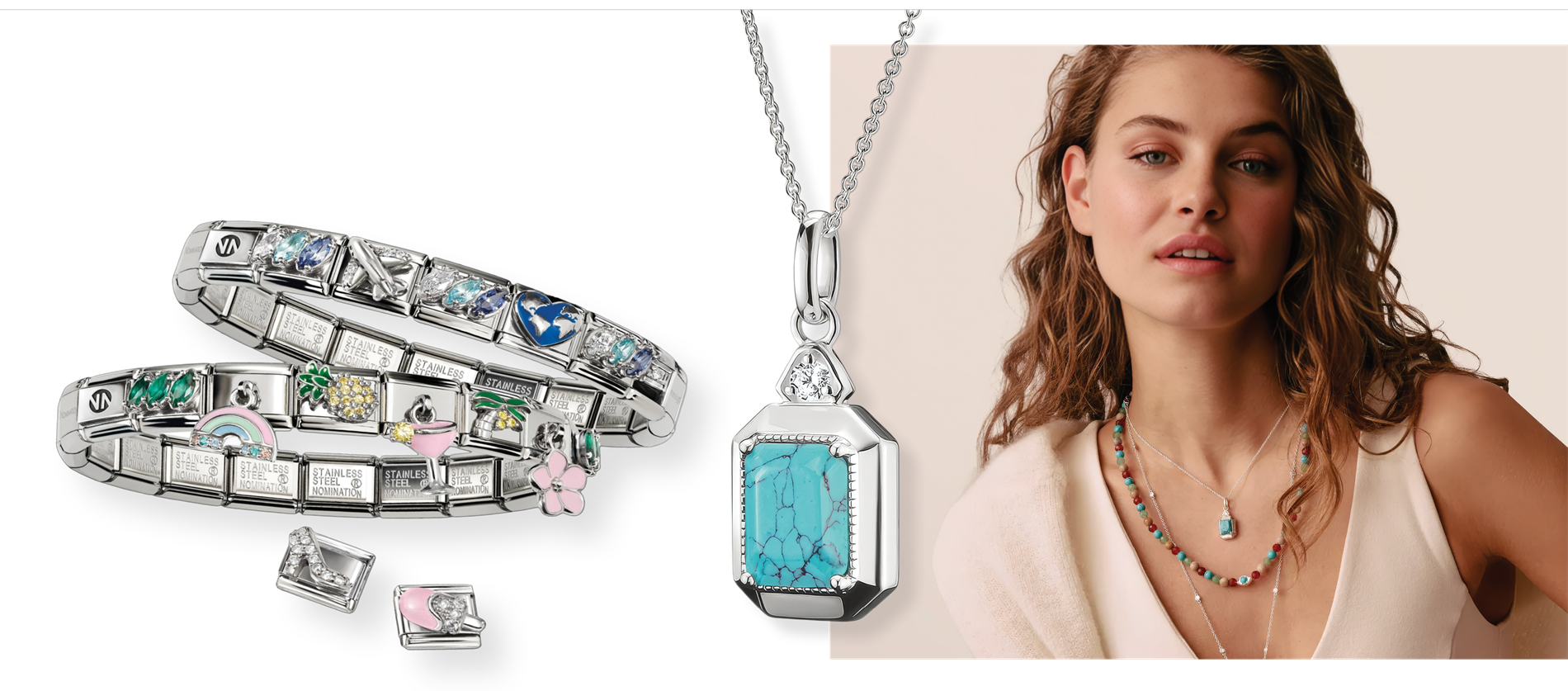 |
| Nomination - TImesupply | Thomas Sabo - Duraflex Group Australia |
This represents a significant competitive advantage, particularly for independent businesses competing against larger retail groups with greater marketing resources.
Beyond consumer awareness, branded jewellery also provides retailers with access to professionally developed marketing assets, seasonal campaigns, point-of-sale materials, and product launches that would be difficult or costly to replicate independently.
Retailers gain the support of an established ‘marketing engine’ while retaining control over their own business and customer relationships – which is, of course, the most important factor of all in the retail game.
Beyond the initial sale
The true value of branded jewellery has always extended well beyond attracting customers through the front door for a simple sale. Once a consumer enters the store to view a specific branded collection, the retailer has the chance to showcase the broader business.
This is where effective selling and customer service become critical. A customer may initially visit to purchase a branded charm, bracelet, necklace, or ring; however, the in-store experience provides opportunities to introduce complementary products, discuss other collections, and build a relationship that extends beyond a single transaction.
The objective is not to divert attention away from the branded product. Rather, it is to use that initial interest as the starting point for a wider conversation and a long-term relationship.
A customer drawn to one brand may discover another collection that aligns with their personal style. They may learn about bespoke services, repair capabilities, or premium diamond offerings. They may simply become familiar with the store and choose to return in the future.
In other words, it might start one day as the purchase of a branded necklace for a girlfriend, and end another day with the purchase of an engagement ring for a future wife. The most effective retailers understand that branded jewellery should not be viewed as a destination in itself, but as an entry point.
Once a customer has crossed the threshold, there is an opportunity to demonstrate expertise, build rapport, and showcase the business’s broader strengths.
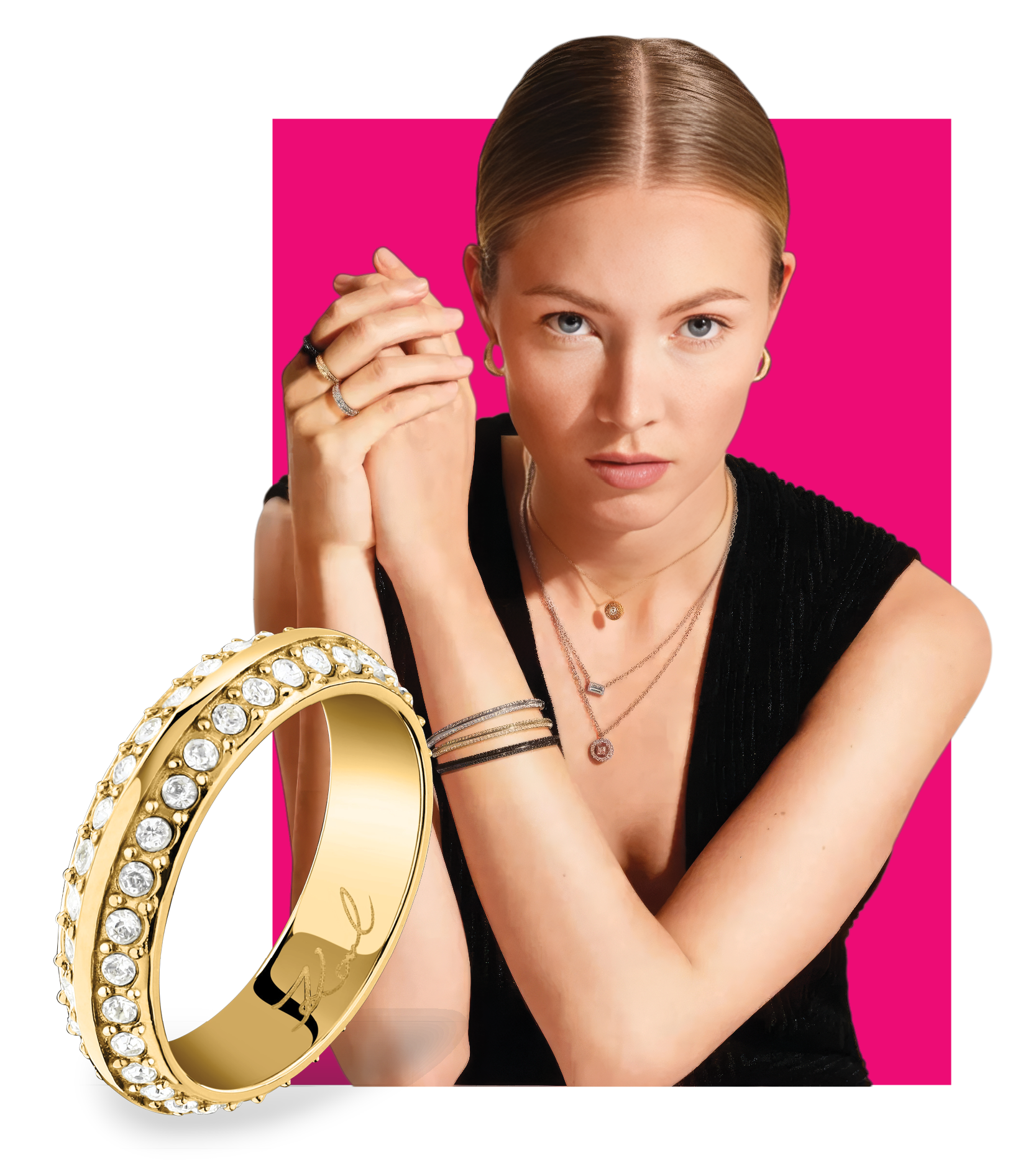 |
| Karl Lagerfeld - West End Collection |
In this way, branded jewellery acts as a gateway. The brand establishes the initial connection; however, the retailer retains ownership of the customer experience. Over time, that experience can transform a brand-driven shopper into a loyal store customer.
Modern retail advantage
The jewellery industry’s embrace of branding has fundamentally altered the relationship between retailers and consumers. Where previous generations of shoppers often discovered products only after entering a store, today’s customers are increasingly influenced by what they encounter online.
Brands now play a crucial role in shaping purchasing intentions long before a transaction occurs. Branded jewellery combines the strengths of digital marketing, consumer trust, and physical retail in a single proposition. It enables retailers to tap into audiences already cultivated through years of brand-building while maintaining the personal service, expertise, and connections that independent businesses do best.
In an era where consumer attention is increasingly difficult to capture, that may be the greatest advantage of all. The hard work of building awareness, generating trust, and creating desire has already begun long before the customer reaches the store.
For independent jewellers, branded jewellery is more than a product category. It is a strategic shortcut to the modern consumer.
After that, the rest is up to you.
Read eMag