The calendar has flipped, and another wave of future brides and grooms are diving headfirst into the digital world searching for engagement ring inspiration. Will your jewellery store offer what they need?
From social media to search engines, today’s engagement journey often begins long before a customer ever steps into a store. For jewellery retailers, this reality is an opportunity and a challenge.
Consumers are arriving more informed and more opinionated than ever before, yet they are still seeking reassurance and expertise before making one of the most significant purchases of their lives.
The jewellery industry has long been grounded in tradition. Engagement rings are steeped in symbolism and heritage. With that said, what continues to set this industry apart is its ability to evolve and adapt without losing footing.
Trends may shift, aesthetics may change, and consumer values inevitably evolve; however, the core promise of quality craftsmanship, emotional resonance, and irreplaceable timelessness remains a constant in jewellery stores.
Indeed, that promise is what keeps consumers returning, wave after wave.
Jewellery store owners understand this balance intuitively. Undoubtedly, you have navigated decades of changing tastes, from diamond cuts, colour gemstone choices, and precious metal preferences to evolving attitudes around individuality, pricing, and design.
As we head into another new year, engagement trends are once again reshaping this landscape – sometimes subtly, sometimes decisively.
The key for retailers is not to chase every passing idea, but to recognise which shifts represent genuine change and which are another fleeting flash in the pan.
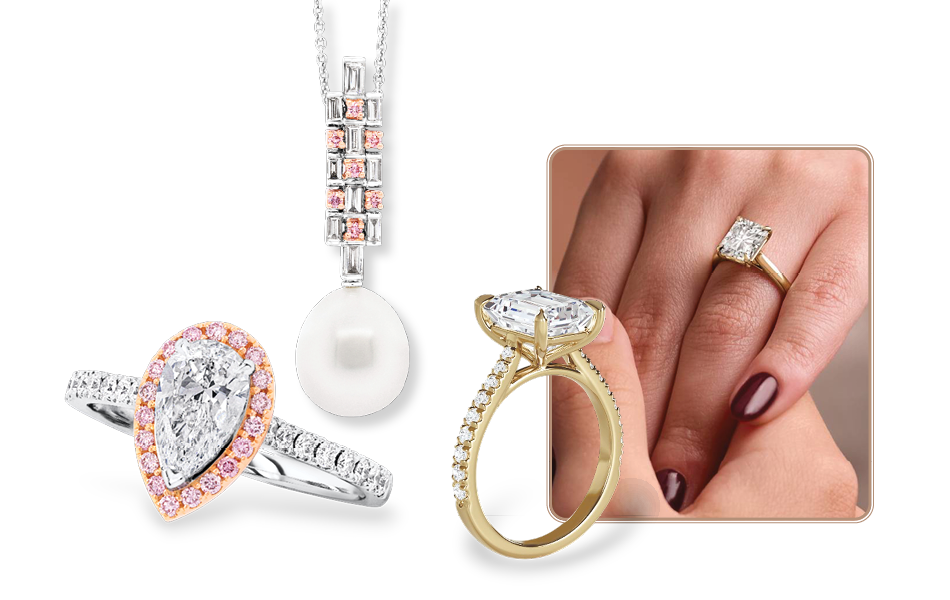 |
| L to R: Ellendale Diamonds | Stuller |
Understanding what today’s committed couples are researching, prioritising, and responding to online allows store owners to make confident decisions about stock, storytelling, and in-store experiences.
From evolving design preferences to shifting purchasing motivations, the following is designed to help you anticipate demand, refine your stock, and continue positioning your store as the trusted expert in an increasingly crowded, digitally-driven marketplace.
For more than two decades, ‘individuality’ has been preached as an engagement ring trend, often framed around custom-made pieces.
With that said, it is clear that for today’s consumers, individuality is no longer a stylistic preference; it is an expectation.
Engaged couples are not simply looking for something different; they are looking for something that feels right for them.
For jewellery store owners, this shift requires a mindset change rather than a merchandising one. In a recent interview, Olivia Cummings, founder of Melbourne-based Cleopatra’s Bling, told Vogue that identity would remain a core theme in the jewellery market this year.
“The overarching theme will be intentional individuality,” Cummings explains.
“We’ve moved through the eras of minimalism and maximalism, and now it’s about meaning, pieces that feel like heirlooms of the self.
“Clients are gravitating towards rings that combine old-world techniques with contemporary silhouettes, and there’s a return to slow craft and human touch, which I think speaks to a deeper cultural craving for connection.
“People are drawn to that sense of lineage and craftsmanship, to the idea that their ring could have existed a century ago or a century from now.”
This sentiment was echoed by London-based jeweller Jessica McCormack, a renowned designer who has a high-profile customer base that includes Zoë Kravitz, Zendaya and Dakota Johnson.
“Where an engagement ring is concerned, it’s about wearability, character, and longevity, rather than following a trend,” McCormack tells WhoWhatWear.
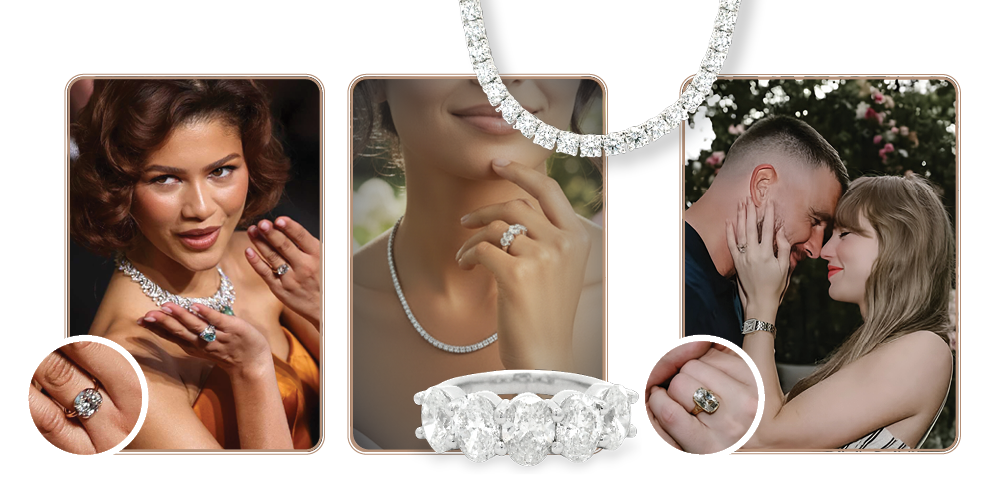 |
| L to R: Zendaya | ADTC | Taylor Swift |
“I think couples are looking for something that feels personal and timeless.
“Finding a design that you’ll want to wear every day comes first, so I always recommend really loving the stone. Couples need to consider the comfortability of the ring; how it sits and looks on their finger, if it moves around and whether that is something that works for them and fits into their daily lives.”
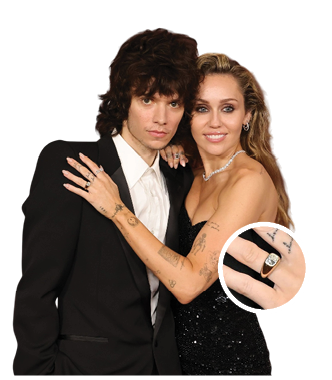 |
| Miley Cyrus |
It’s important to note that individuality cannot be addressed by stocking a single product category or by chasing a particular design aesthetic.
Of course, there is no universal ‘individual’ ring style. Instead, this trend manifests in countless ways: classic solitaires chosen for their timeless appeal, reimagined with subtle personal touch.
That might mean vintage-inspired designs selected for their sense of history; or contemporary pieces that reflect a couple’s modern values.
The common thread is not the ring itself, but the consumer’s desire to feel seen, understood, and supported in their decision. This places the responsibility on retailers to ensure their business approach is flexible, consultative, and inclusive.
Store owners who succeed in this environment position themselves as guides rather than gatekeepers. It’s about listening carefully, asking the right questions, and adapting their recommendations to suit each customer’s story, budget, and priorities.
Indeed, training staff to confidently navigate diverse tastes and expectations is just as critical as the product offering itself.
Ultimately, being the ‘right’ store for consumers searching for individuality does not mean being everything to everyone in terms of stock. It means creating an environment where every customer feels their choice, whether traditional or unconventional, is celebrated.
In the coming year, retailers who embrace individuality as a service philosophy rather than a fleeting trend will be best placed to build trust, drive engagement ring sales, and foster long-term customer relationships.
Winding back the clock
Antique and vintage-inspired jewellery continue to gain momentum, driven by consumers seeking character, romance, and a sense of history in their engagement rings. Much of this interest is fuelled by online imagery, heirloom storytelling, and a broader appreciation for design eras that prioritise individuality over uniformity.
“Modern diamond cutting reaches new heights every year. Today’s cutters can achieve mathematical precision that maximises sparkle in remarkable ways,” writes Grant Mobley for the Natural Diamond Council.
“But with that precision comes a uniformity that many consumers no longer want. If every modern brilliant of the same cut and carat weight looks nearly identical, where does individuality live?
“Antique-inspired cuts answer that question. These stones carry character, charm, and an unmistakable sense of history. Antique diamonds were cut initially to glow in candlelight, not under modern LEDs, and their broader facets create a softer, more romantic light performance.”
Mobley highlighted an example of an antique-inspired cushion-cut diamond purchased by actor Tom Holland for actress and bride-to-be Zendaya, which sparked worldwide interest.
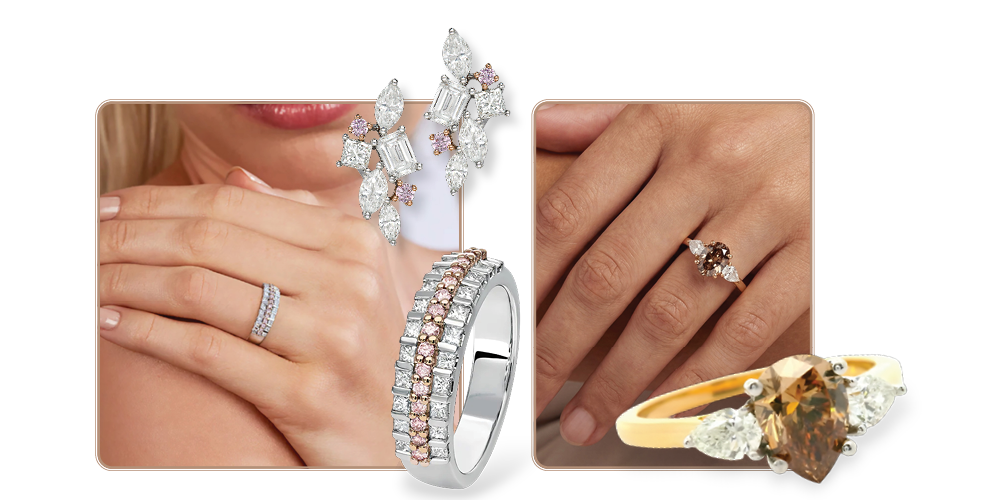 |
| L to R: Pink Kimberley | Australian Chocolate Diamond |
Zendaya’s east-west emerald-cut diamond ring captured the imagination of consumers, and Mobley suggests that many now gravitate toward diamonds that feel ‘soulful’ rather than appear perfect.
“True antique diamonds remain scarce because many cutters recut them over the last century to satisfy modern styles,” he continues.
“That scarcity made demand spike. Now, some cutters intentionally return to past techniques to craft diamonds with antique faceting, making it more possible than ever to have your dream natural diamond with that antique charm.”
Celebrity news sources erupted last year when the world’s biggest celebrity pairing, Taylor Swift and Travis Kelce, became engaged. Swift and Kelce have been dating since 2023 and recently announced their engagement on social media.
Swift’s ring features an elongated cushion-cut diamond set in 18-carat yellow gold. This old mine cut, square with a tall crown, small table, and open culet, reflects craftsmanship predating the standardisation of the round brilliant.
In a recent interview, diamond industry analyst Paul Zimnisky discussed the so-called ‘Swift Effect’ on the broader trade.
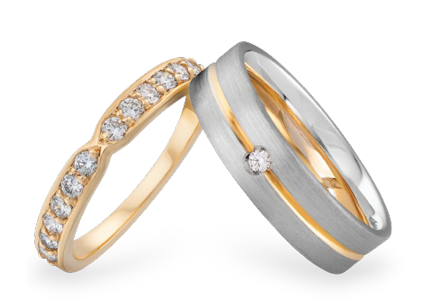 |
| Becks |
“Not just Taylor Swift, but also Zendaya and Miley Cyrus, have garnered significant publicity over the last year with diamond rings fit for a fantasy,” says Zimnisky.
“All three feature large stones, but all are unique in style: Swift’s antique-cut diamond, Zendaya’s east-west setting and Cyrus’s bezel.”
He continues: “Diamonds are all about emotion, romance and selling a dream, and the industry thrives on PR like this.”
For jewellery retailers, these rings offer an opportunity to connect emotionally with customers who value timeless design with a personal, storied feel. It’s a chance to maintain the enduring appeal of diamond engagement rings with a fresh coat of paint.
More meat on the bone
Thicker engagement ring bands are emerging as a natural response to evolving consumer preferences for presence, longevity, and
visual balance.
Influenced by vintage design, fashion-led jewellery trends, and social media imagery, wider bands offer a sense of substance that resonates with couples seeking rings that feel significant and enduring.
“Chunky gold rings lead the charge in engagement ring trends for 2026. Gold prices sit at record highs, and consumers recognise that nothing feels more luxurious than a substantial amount of gold paired with a natural diamond,” writes Mobley.
“Designers embrace the opportunity to sculpt gold in bold ways, which gives these rings a presence that feels both modern and timeless.
This style also offers an underrated advantage: durability. Engagement rings live through decades of daily wear, and these heavier, more substantial settings hold up beautifully over time.
Mobley points to Miley Cyrus as an example, suggesting that her choice reflects what is being seen across the industry.
The singer is sporting a cushion-cut diamond on a thick, 14-carat yellow gold band, made custom by designer Jacquie Aiche. The ring has been described as bridging old-world charm with contemporary, refined details.
“These rings stand out simply because of their scale. They showcase the central stone with confidence and give couples a design moment that feels fresh,” Mobley continues.
“Sculptural gold rings create engagement rings with long-lasting visual weight, heirloom potential, and unmistakable personality.”
Cummings echoed this sentiment, suggesting that rings with more weight are increasingly appealing among today’s consumers.
“Thicker bands are definitely coming through, rings that feel substantial and almost architectural,” confirms Cummings.
“Bands with intricate textures or pavé-set stones are also becoming more sought after.
“There’s a move away from dainty minimalism towards something that feels both strong and sentimental, rings that have a presence and reflect personal style more.”
This shift is not necessarily about boldness, but about proportion. It’s an opportunity to pair larger centre stones with bands that feel intentionally designed rather than delicate or understated.
For jewellery store owners, thicker bands also open conversations around durability, comfort, and long-term wear, reinforcing the value of thoughtful design choices that align with both aesthetic preference and practical considerations.
Something for the boys?
Men’s engagement rings are gaining increased visibility as evolving relationship norms reshape the engagement narrative.
What was once considered niche is becoming a more mainstream consideration, particularly among younger couples who view engagement as a shared milestone rather than a one-sided tradition.
This position was evident in a survey of more than 1,000 consumers conducted in the UK by online jewellery retailer 77 Diamonds last year. Nearly 40 per cent of respondents suggested that they would wear an engagement ring.
According to co-founder Tobias Kormind, those who responded negatively said it was unnecessary or that they would not want to wear jewellery every day.
“The growing interest in male engagement rings reflects a meaningful shift in how modern couples express love and commitment,”says Kormind.
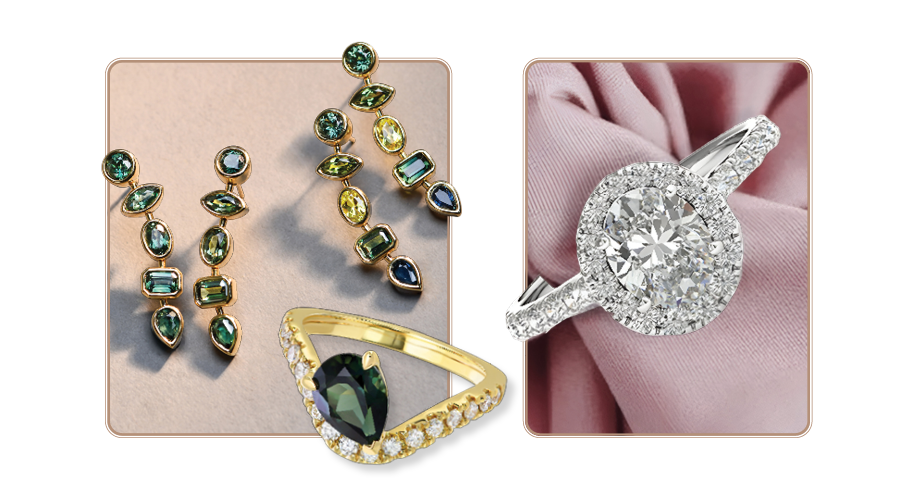 |
| L to R: Sapphire Dreams | World Shiner |
“For many men, choosing to wear an engagement ring is about more than tradition; it’s a shared symbol of intention, equality, and emotional connection.”
Design preferences range from understated bands to diamond-accented or custom pieces, often reflecting personal style rather than convention.
“I love that more men are wearing engagement rings,” reveals Cummings.
“It feels like such a positive shift towards equality and shared celebration.
“My husband wears an Asscher-cut cognac diamond from Western Australia, and I love that it mirrors the symbolism of mine.
“It’s a beautiful reminder that jewellery is not just about adornment, it’s about marking shared meaning.”
For jewellery retailers, this trend represents an opportunity to expand engagement conversations beyond a single product category.
By confidently introducing men’s engagement options and normalising the discussion in-store, retailers can position themselves as inclusive and attuned to the changing expectations of modern couples.
Conclusion
As these emerging engagement trends illustrate, the year ahead is less about radical reinvention and more about thoughtful evolution.
From antique-inspired diamond cuts and thicker bands to the increasing acceptance of men’s engagement rings, today’s consumers are reinterpreting tradition rather than abandoning it.
The enduring symbolism of the engagement ring remains intact. How that symbolism is expressed is becoming increasingly personal.
For jewellery store owners, this reinforces a familiar truth. Success lies in balancing heritage with adaptability. Stock selection will always matter, but the greater differentiator is approach.
Individualisation is no longer a trend to accommodate; it is the lens through which every engagement purchase is made. Couples expect to be guided, not directed, and to feel confident that their choice reflects both timeless value and personal meaning.
Retailers who continue to honour tradition while remaining open, flexible, and responsive to evolving expectations will be best positioned to capture the next wave of engaged couples.
In doing so, they not only meet changing consumer demand but reaffirm their role as trusted custodians of one of life’s most significant milestones.
Read eMag