It’s a controversial decision that left me pondering an interesting question. When exactly did we start calling these diamonds ‘lab-grown’?
I attended the CIBJO Congress in early September. Udi Scheintal, head of the Diamond Commission, asked this very question while advocating for the removal of the phrases ‘lab-grown’ and ‘lab-created’ from CIBJO’s Diamond Blue Book: “Who invented those terms? Where are they coming from?”
It’s a fair question. After a bit of digging, this is my best answer.
Contrary to what some people believe, the term was not introduced during the Federal Trade Commission (FTC) revision of the Jewelry Guides in 2018.
The Federal Trade Commission (FTC) is a US government agency that promotes consumer protection – an organisation similar to that of the Australian Competition and Consumer Commission (ACCC). The FTC began issuing the Jewelry Guides in 1957 to prevent deceptive advertising and unfair trade practices in the industry.
The FTC first approved the term ‘lab-grown’ in its 1996 Jewelry Guides, which can be seen here.
With that said, before we get to 1996, here’s a brief – and almost certainly incomplete – look at the history of lab-grown diamond nomenclature.
Time Machine
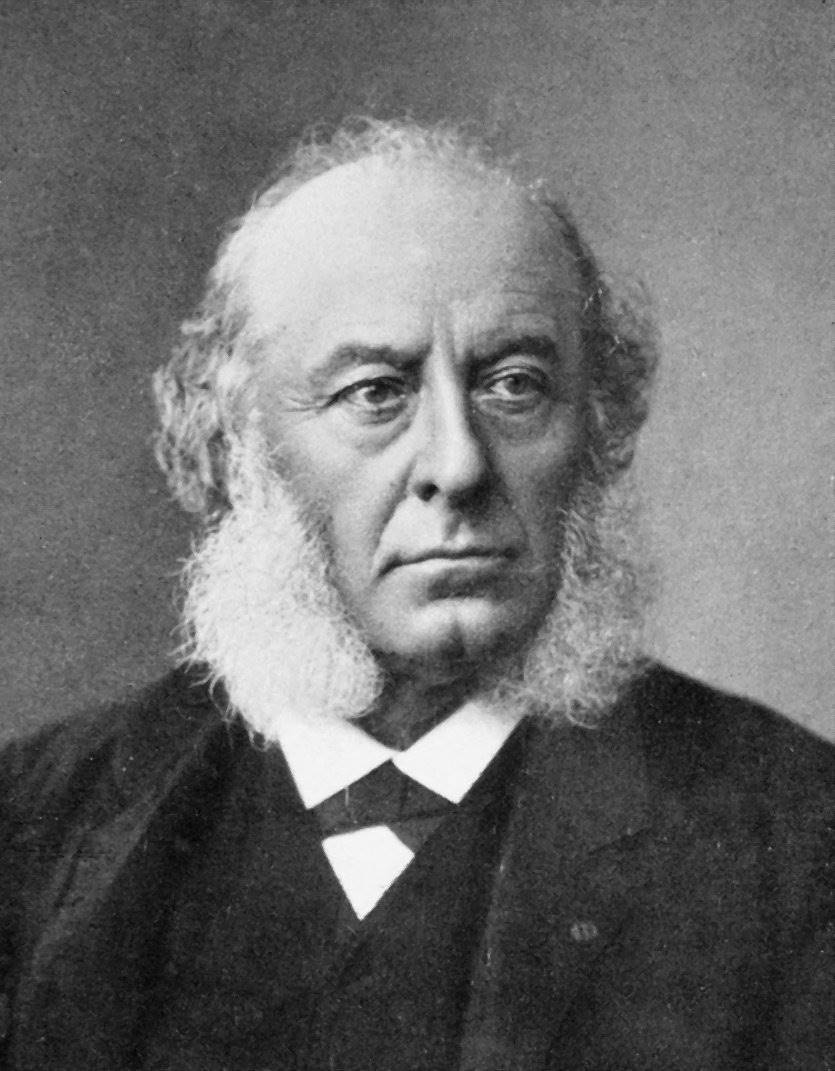 |
| Aristide Auguste Stanislas Verneuil (1823-1895) invented the first commercially viable process for manufacturing gemstones, describing the result as ‘synthétique’. |
According to Tom Moses, a former executive vice president of the Gemological Institute of America (GIA), the broader industry used the term ‘synthetic’ for a range of reasons long before the 1970s.
He pointed to French chemist Auguste Verneuil, who invented the first commercially viable process for manufacturing gemstones. Verneuil publicised his methods for synthesis of rubies by flame fusion in 1902, described the result as ‘synthétique’ – French for ‘synthetic’.
James Evans of Lustre Gemology, founded in 2018 and publisher of the Gemmology Bulletin, argues that ‘synthetic’ became widely adopted in industry circles in the 1940s. He says that ruby growers preferred the term over ‘artificial’, which was, at the time, the dominant descriptor of their products.
In 1938, Carroll Chatham created an emerald crystal in a San Francisco laboratory. More than 20 years later, the FTC allowed the chemist to call his gemstones ‘Chatham-created’ – but only after a long and bitter fight.
As son Tom recalls in his book, The Chatham Legacy (2023), the FTC had ordered the elder Chatham to stop calling his gems ‘cultured’. He refused to use the term ‘synthetic’, and the case went to court. (See Breakout Box below)
Decision Time
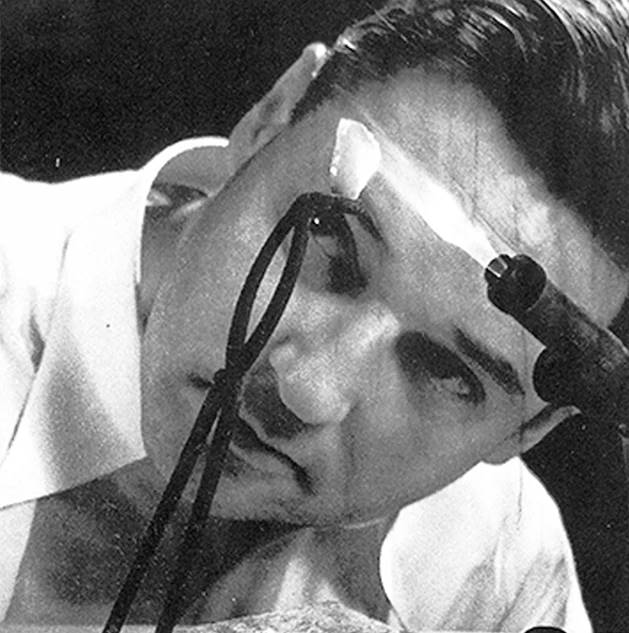 |
| Carroll Chatham (1914-1983) created an emerald crystal in a laboratory in 1938 and spent years in court arguing about the appropriate terminology. |
And so it seems that, for decades, the FTC’s only recommended descriptors for manufactured diamonds and gemstones were either ‘synthetic’ or ‘[company name]-created’. During this time, the issue was primarily of interest to the colour gemstone business, as lab-created diamonds were not yet available.
Interestingly, in 1954, when General Electric scientists famously grew diamonds, they labelled them ‘man-made.’
One of the pioneers of diamond research at the GIA, Robert Crowningshield, was given the opportunity to examine some of the diamonds General Electric produced in 1970. He published a report in Gems & Gemology in 1971, referring to the diamonds as ‘synthetic’.
When the FTC revised its Jewelry Guides in 1996, the American Gem Trade Association (AGTA) argued — as it does today — that the best name for non-natural diamonds and gemstones was ‘synthetic’.
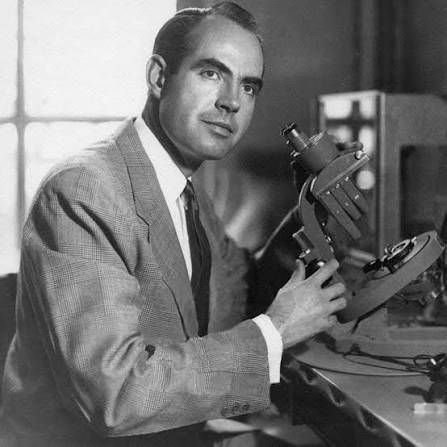 |
| Robert Crowningshield (1919-2006) was a pioneer of diamond research at the GIA. He published a report in 1971, referring to the diamonds as ‘synthetic’. |
The FTC did not agree. “The term ‘synthetic’,” it wrote, “as applied to gemstones, is misunderstood by some consumers to mean something fake or artificial.”
Furthermore, the FTC noted that American Gemological Laboratories (AGL) had “introduced the term ‘Laboratory Grown (Synthetic)’ some time ago.” AGL is a New York-based gemmological testing facility founded in 1977.
AGL is now a part of the International Gemological Institute (IGI); however, in 1996, it was still owned by its founder, C.R. ‘Cap’ Beesley, who was always something of an industry gadfly.
AGL told the FTC that the “colored stone industry opposed this change” because it wanted to limit sales of manufactured gemstones.
The FTC, however, liked the term. “Laboratory-grown” is “clear immediately, without further explanation,” regulators wrote. They added both ‘laboratory-grown’ and ‘laboratory-created’ to the Jewelry Guides as recommended descriptors. They’re still listed as such today, though when used, they’re generally shortened to ‘lab’.
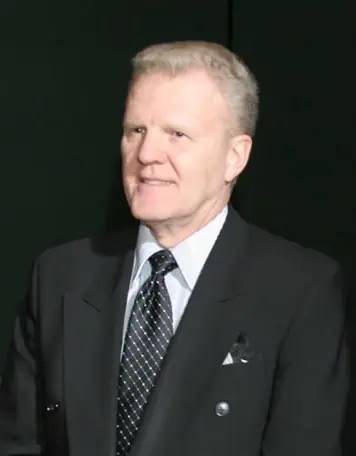 |
| C.R. ‘Cap’ Beesley of American Gemological Laboratories was credited during FTC deliberations in the 1990s as being an early adopter of the term 'lab-grown diamond'. |
And it seems that this is how those terms entered the trade lexicon — including, until very recently, CIBJO’s Diamond Blue Book.
Since that decision in 1996, the term ‘lab-grown’ has spread to other sectors, particularly lab-grown meat – and one can also find lab-grown flowers and fruit.
Those industries, too, have sometimes tried for less sciencey-sounding terms to describe their products, such as ‘cultivated’ and ‘cultured’ – and yet some also use ‘lab-grown’. Is that because of the jewellery industry? Perhaps… but that is a story for another day.
And finally, what about ‘man-made’, the original alternative descriptor? Oddly, the FTC doesn't seem to have ever given that term its official blessing, though it’s generally considered acceptable, and the agency itself has, on occasion, used it.
Author’s Note: During my research for this project, I tried to contact Cap Beesley to see if he could provide any more information on this subject; however, he did not get back to me. If anyone has any further insight, please feel free to email me.
Excerpt - The Chatham Legacy by Tom Chatham (2023)Eventually, the judge called both sides into his chambers and asked: “Isn’t there any other phrases we can use?” 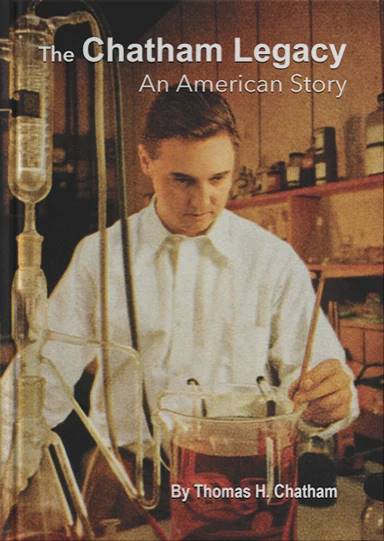 | | The Chatham Legacy |
“We have tried, your honor, and even hired a linguist named S.I. Hayakawa in San Francisco, and he came up empty-handed,” my father said. “Here is the list we rejected: re-crystalized, re-grown, re-constituted, manmade. The list went on and on. Some were as problematic as cultured, and some trademarked by others already.” The judge turned to the attorneys and asked, “What did we determine Chatham creates?” All answered, “Emerald.” “Why don’t you call them Chatham-created emerald?” My father and his attorneys were shocked. “We never thought of that word. It’s perfect.” |
More reading
Lost in Translation: When language starts to lose all meaning
CIBJO approves lab-created diamond terminology shift
Synthetic spreads: Debate continues around lab-created diamonds
Industry Hijacked: Who gave Pandora the right to rewrite?
Interesting isn't enough: A three-billion-year-old problem