Indeed, we live in an era increasingly shaped by self-expression and colour gemstone jewellery has emerged as a defining category in modern retail. The search for something ‘personal’ has an easy-to-understand motivation: the thirst for rarity is embedded in human behaviour.
Scarce resources have long signified power and advantage, while socially, exclusivity reinforces identity and individuality. Jewellery has always reflected these impulses, and today, that instinct is being reflected through an intensified appreciation for gemstones with natural variation and character.
For younger consumers in particular, this shift is pronounced. Personalisation and individuality do not need to be aspirational, and can, in fact, be expected – and jewellery stores can deliver. Consumers want jewellery that tells a story, reflects their personality, and offers a way to differentiate the wearer from the ‘mainstream.’ Unlike mass-produced designs or uniform materials, each colour gemstone is inherently unique, shaped by geological processes that cannot be replicated.
Fortunately, Australian jewellers are uniquely positioned to meet this demand. The ancient landscape, formed over billions of years, hosts a remarkable diversity of gemstones, many of which are deeply embedded in the nation’s cultural and economic history. This connection between land, history, and material is increasingly valuable in a market that prizes authenticity.
In many ways, we’ve found that at the forefront of this narrative is opal, a gemstone that occupies a singular place in Australia’s identity.
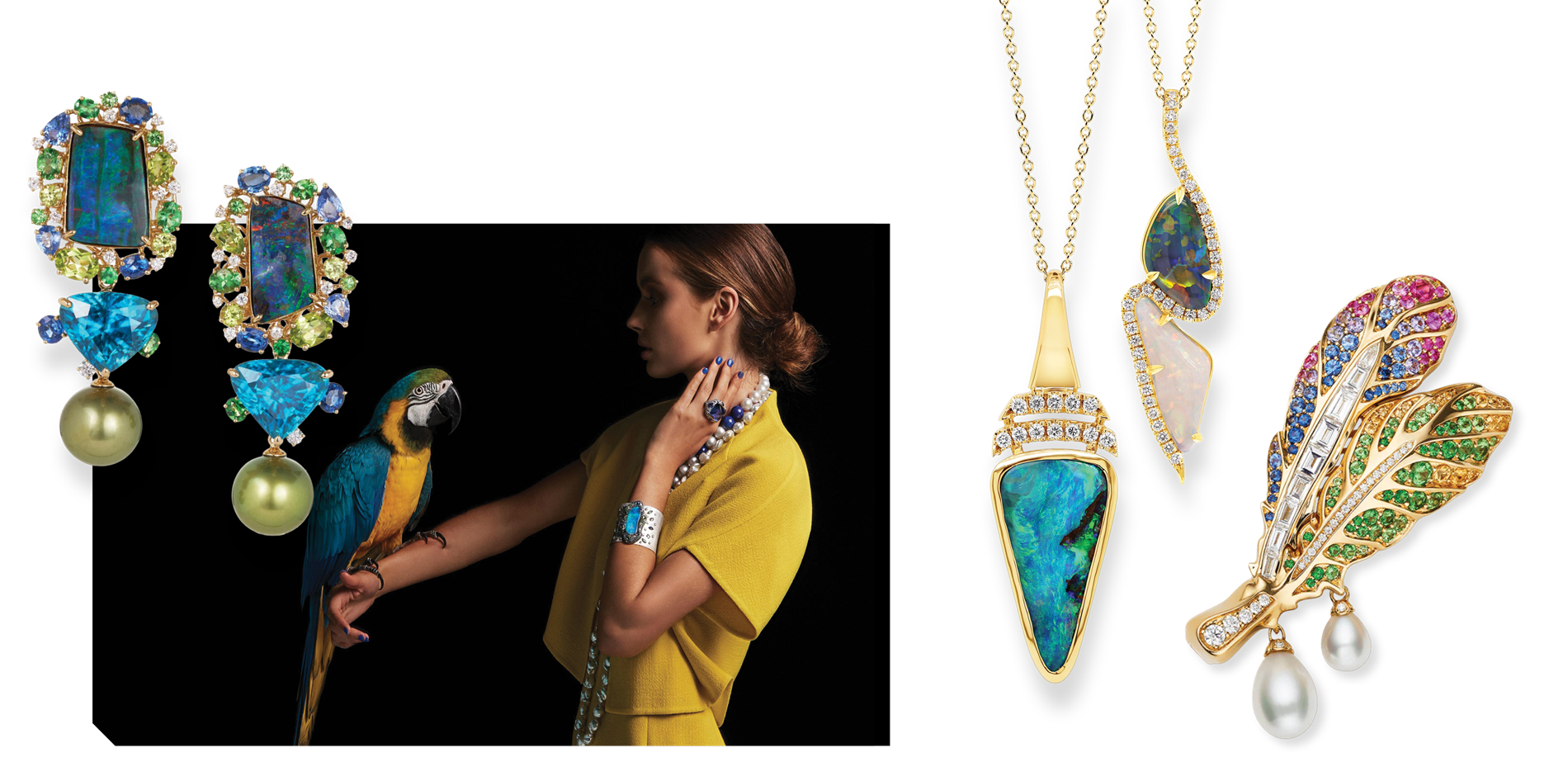 |
| Margot McKinney | Ellendale Diamonds | Paspaley |
More than a visually striking material, opal is the nation’s officially recognised gemstone, acknowledged alongside the flag, coat of arms, and floral emblem as a symbol of national significance. This designation reflects not only its beauty but also its profound ties to the country and its people.
Although opal is found in other parts of the world, Australian precious opal is widely regarded as unmatched in both quality and character. Its famed ‘play of colour’ is a shifting display of spectral hues and sets it apart from all other gemstones.
This phenomenon occurs as light diffracts through an orderly array of silica spheres within the gemstone’s amorphous structure, producing flashes of colour that can range from cool blues and greens to the highly prized reds and oranges, often referred to as the stone’s ‘fire’.
The origins of Australian opal stretch back millions of years, to a time when much of central Australia was covered by an inland sea and formed part of the supercontinent Gondwana. These ancient geological conditions laid the foundation for opal deposits, creating gemstones that are, quite literally, fragments of deep time.
Opal’s significance extends beyond science into culture. It features in First Nations storytelling, including accounts of the Rainbow Serpent, and appears as opalised fossils. These are extraordinary specimens that preserve ancient plants and animals in luminous detail. Such connections enrich the gemstone’s narrative, offering retailers a powerful story that resonates with consumers seeking both meaning and beauty.
From a gemmological perspective, opal is classified into two primary types: common opal and precious opal. Precious opal, which displays play of colour, is the more valuable and widely recognised variety. Common opal, while lacking this optical effect, can still exhibit appealing body colours and patterns, and is sometimes described as ‘ornamental’ rather than ‘common’ to better reflect its aesthetic qualities.
Valuing precious opal is a complex process involving multiple factors. Body tone is a key consideration, ranging from light to dark to black, with black opal generally commanding the highest prices due to its dramatic contrast and vivid colour display.
Additional factors include brightness, colour range, pattern, and the consistency of colour play across the stone. Crucially, no two opals are alike, a defining characteristic that enhances their desirability in a market driven by individuality.
Australia’s opal fields, located across New South Wales, Queensland, and South Australia, have dominated global supply since mining began in the late 19th century. Iconic regions such as Lightning Ridge, Coober Pedy, and Andamooka are synonymous with opal production, their remote and often harsh environments contributing to the mythology and romance of the gemstone.
These landscapes, shaped by isolation and extremes, mirror the qualities that define Australia itself.
While opal may be the most emblematic of Australia’s gemstones, sapphire tells an equally compelling story.
First discovered during the gold rush of the 1850s, Australian sapphires initially attracted little attention as miners focused on gold. It was not until the early 20th century that commercial sapphire mining began in earnest.
What distinguishes Australian sapphires is their geological origin. Unlike the metamorphic sapphires of Kashmir or Sri Lanka, Australian gemstones are primarily basalt-related and classified as xenocrysts.
These are crystals that formed deep within the Earth’s upper mantle before being transported to the surface by volcanic activity during the Cenozoic era. This unusual journey imparts a unique chemical signature, characterised by higher iron content.
This composition gives rise to the so-called ‘BGY suite’ of colours—blue, green, and yellow—that defines much of Australia’s sapphire output. Historically, these darker, iron-rich stones were considered less desirable than the lighter ‘cornflower blue’ sapphires of other regions. However, changing consumer preferences have dramatically reshaped this perception.
Today, Australian sapphires are enjoying a resurgence in popularity, driven in part by the rise of unconventional engagement rings and a broader embrace of colour in jewellery design.
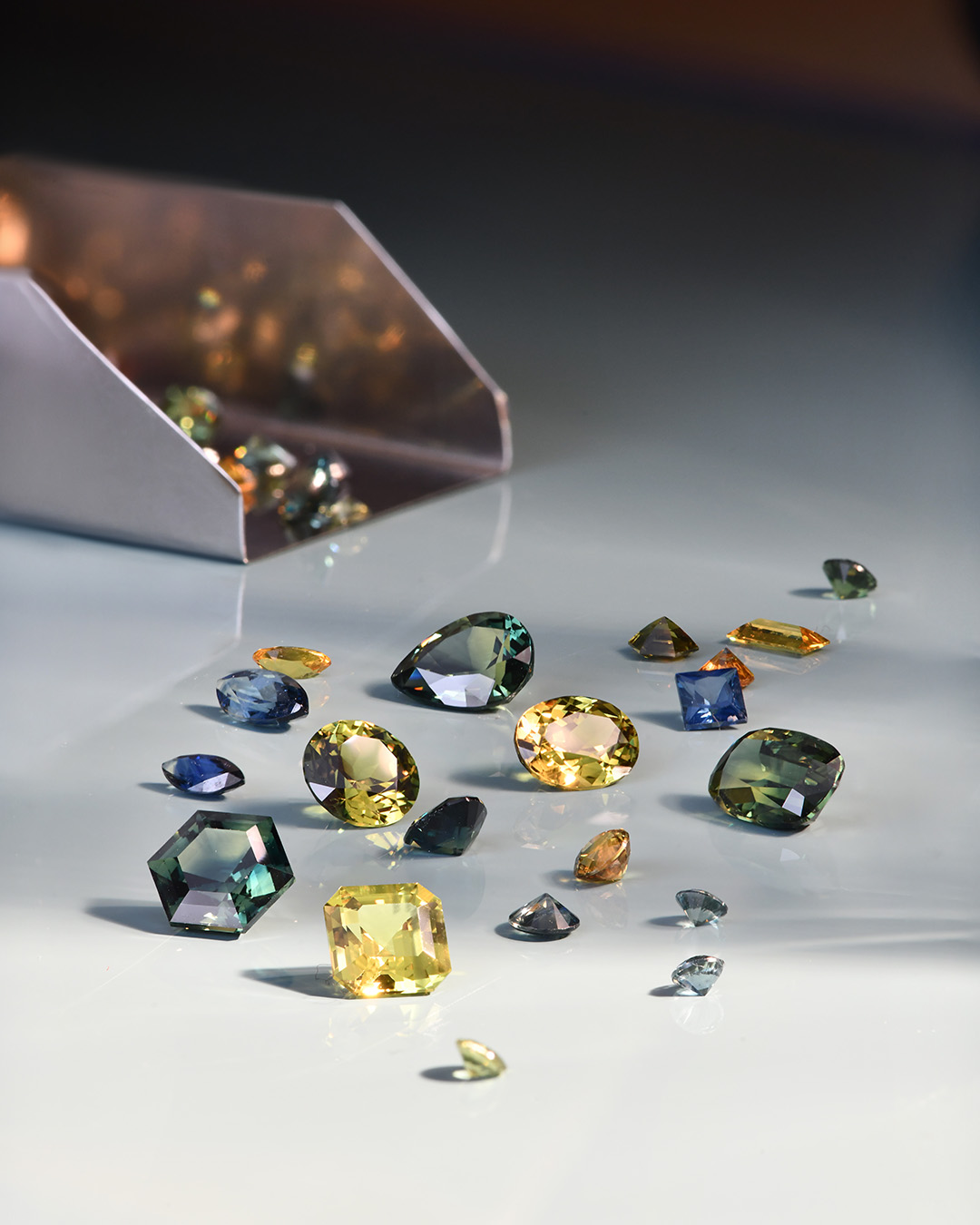 |
| Sapphire Dreams |
Parti-coloured sapphires, which display two or three distinct colours within a single crystal, have become especially sought after. Once overlooked, these gemstones are now celebrated for their individuality and visual complexity. These are qualities that align perfectly with contemporary tastes.
Australia’s principal sapphire-producing regions include the gemfields of Central Queensland, as well as areas in northern Queensland and the New England region of New South Wales.
At its peak, New South Wales supplied a significant proportion of the world’s sapphires, although many operations have since declined due to rising costs and lower yields.
From a gemmological standpoint, Australian sapphires are notable for their distinctive internal characteristics. Strong colour zoning, caused by variations in chemical conditions during crystal growth, is common. Inclusions such as rutile ‘silk’, zircon, and feldspar provide further evidence of their magmatic origin. Additionally, many gemstones exhibit pronounced dichroism, shifting between blue and greenish-blue depending on the viewing angle. This feature requires careful cutting to maximise visual appeal.
Alongside opal and sapphire, pearls form a third pillar of Australia’s gemstone heritage. The country is internationally recognised as a leading producer of South Sea pearls, cultivated primarily from the oyster Pinctada maxima. These pearls are prized for their large size, exceptional lustre, and subtle natural colours, which range from white and silver to champagne and deep gold.
Australia’s pearling history dates back to the late 19th century, when divers sought mother-of-pearl shells along the north-west coast, particularly around Broome. Initially valued for their use in decorative objects, these shells occasionally yielded natural pearls of extraordinary worth. These treasures were so valuable that they were carefully guarded during transport.
The industry underwent a dramatic transformation in the mid-20th century with the decline of the shell market, brought about by the introduction of plastics. In response, Australian producers turned to pearl cultivation, drawing on techniques developed in Japan. By the 1950s, the first successful pearl farms had been established, and Australia soon emerged as a major player in the global market.
Today, Australian South Sea pearls are among the most sought-after in the world. The industry has evolved to incorporate advanced cultivation methods and place a strong emphasis on sustainability and traceability, attributes that resonate with modern consumers.
Farms along the Kimberley coast and beyond operate in pristine environments, ensuring quality and integrity.
The pearling sector has also demonstrated a capacity for innovation and adaptation. In recent years, many producers have embraced eco-tourism, offering visitors insight into the intricate process of pearl cultivation. These experiences not only generate additional revenue but also deepen consumer appreciation for the craftsmanship and care involved.
As with other gemstones, pearls offer a significant variety. Australian South Sea pearls can reach sizes of 21mm and display natural hues, while Akoya pearls, cultivated along the east coast, are smaller but valued for their lustre and classic appearance. Even within specialised categories such as keshi pearls—non-bead-cultured pearls formed as by-products of the grafting process – there is nuance that underscores the importance of education in the trade.
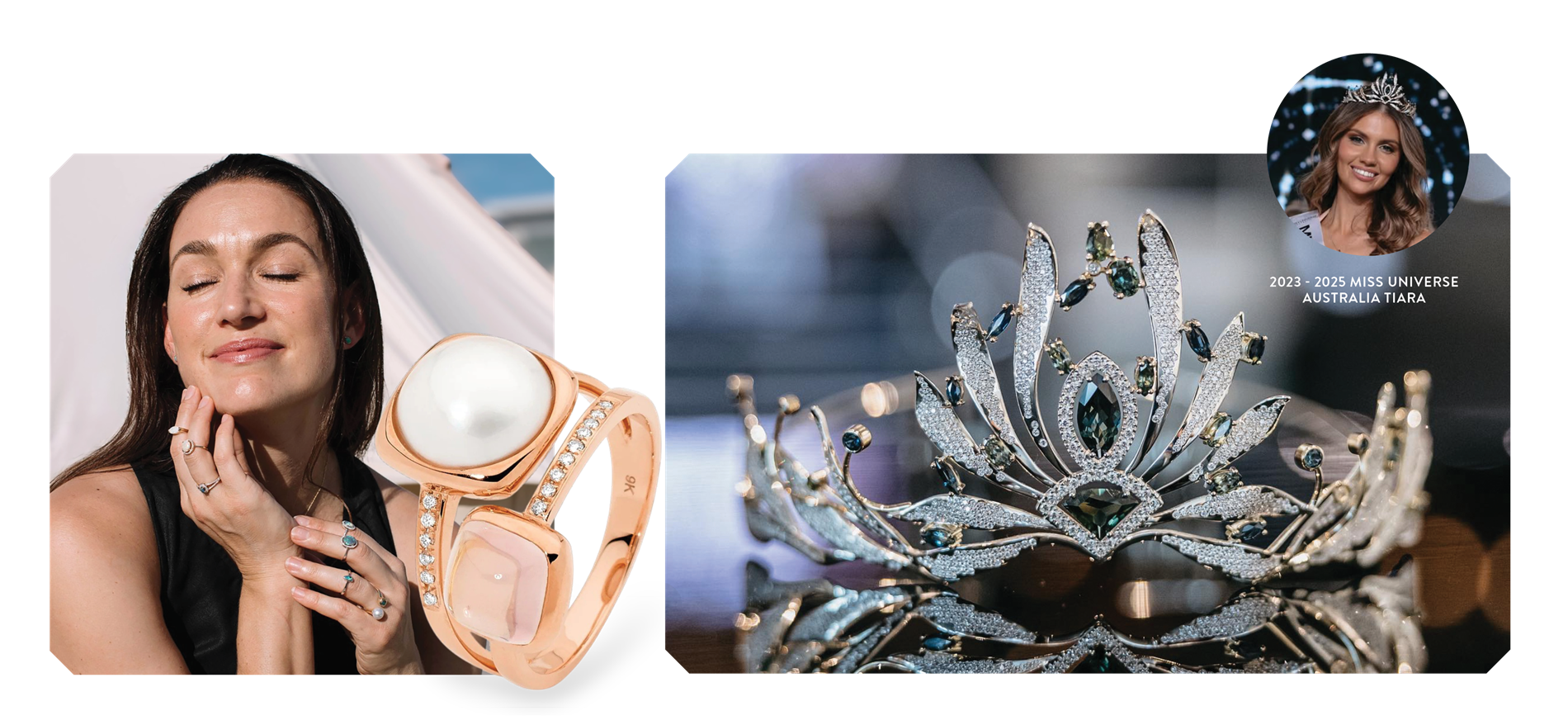 |
| Ikecho Australia | Stelios jewellers |
Taken together, opals, sapphires, and pearls illustrate the extraordinary breadth of Australia’s gemstone resources. More importantly, they embody qualities that are increasingly valued in today’s marketplace: authenticity, individuality, and a connection to origin.
For jewellery retailers, this presents a clear opportunity. The demand for colour gemstone jewellery is not a passing trend but a reflection of deeper shifts in consumer behaviour. Younger consumers, in particular, are prioritising pieces that feel meaningful and unique, and they are willing to invest in products that align with these values.
Australia’s gemstones offer a compelling proposition in this context.
Their geological history, cultural significance, and natural diversity provide rich material for storytelling. This remains an essential component of modern retail. By highlighting these attributes, jewellers can differentiate their offerings and engage customers on a more emotional level.
At the same time, the emphasis on ethical sourcing and traceability plays to Australia’s strengths. With well-regulated industries and a reputation for quality, Australian gemstones meet the expectations of consumers who are increasingly concerned about the origins of their purchases.
The challenge and the opportunity for the trade lies in recognising the full potential of this category. Colour gemstones are not merely an alternative to traditional diamond jewellery; they represent a distinct segment with its own appeal. By embracing this shift and investing in education, design, and storytelling, retailers can position themselves at the forefront of an evolving market.
Ultimately, the appeal of colour gemstones lies in their individuality. No two gemstones are ever identical, and it is this inherent uniqueness that resonates so strongly with today’s consumers. In a world where personal expression is paramount, jewellery that reflects the wearer’s identity holds value.
Australia’s long and storied connection with colour gemstones provides a powerful foundation for the future. From the ancient origins of opal to the volcanic journeys of sapphire and the enduring allure of pearls, these materials tell stories that are as rich and varied as the landscape itself. For an industry seeking to engage a new generation of consumers, the message is clear: colour is no longer optional, it is essential.
Read eMag